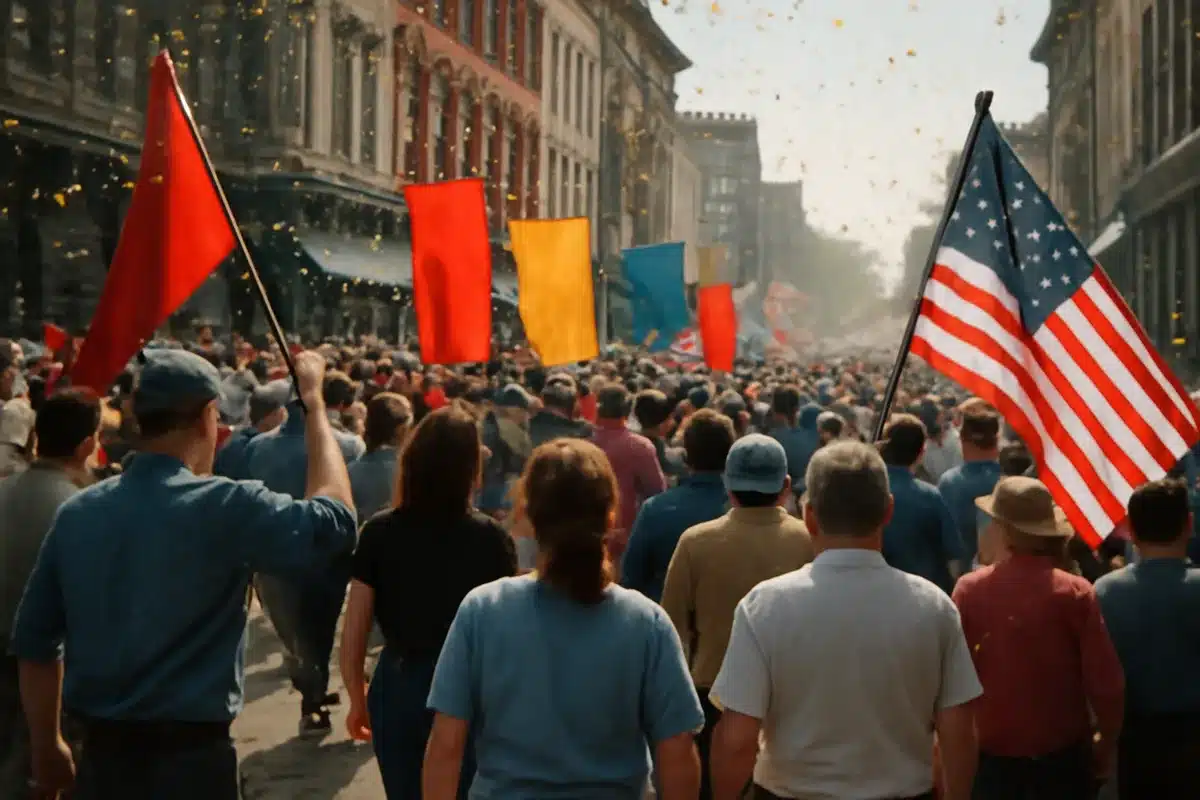
Labor Day 2026 falls on Monday, September 7, marking the nation’s annual celebration of American workers and their contributions to the country’s social and economic achievements. Observed on the first Monday of September each year, the federal holiday has been a cornerstone of American civic life since 1894.
The holiday traces its roots to the labor movement of the late 19th century, a period when the Industrial Revolution transformed American employment but often left workers in dangerous, exhausting conditions. In the late 1800s, the average American laborer worked 12-hour days, seven days a week, according to the History Channel, and children as young as 5 or 6 toiled in mills, factories and mines for a fraction of adult wages.
Labor unions grew increasingly vocal in demanding better conditions and pay. On September 5, 1882, 10,000 workers took unpaid time off to march from City Hall to Union Square in New York City, holding the first Labor Day parade in U.S. history, per History.com. The idea of a “workingmen’s holiday” on the first Monday in September spread to other industrial cities, and many states began recognizing it through legislation.
Congress did not formalize the holiday at the federal level until 1894, following a watershed moment in American labor history. On May 11, 1894, employees of the Pullman Palace Car Company in Chicago went on strike to protest wage cuts and the firing of union representatives. When the American Railroad Union called for a nationwide boycott of Pullman railway cars, the federal government dispatched troops to break the strike, triggering riots that killed more than a dozen workers and leading to the arrest of union leader Eugene V. Debs.
In the aftermath of that violence—and to repair ties with essential American workers—Congress passed legislation making Labor Day a federal holiday. President Grover Cleveland signed the act into law on June 28, 1894, establishing the first Monday in September as a permanent national observance, according to the U.S. Department of Labor.
Today, Labor Day weekend symbolizes the unofficial end of summer for many Americans and is celebrated with parades, picnics, barbecues, fireworks displays and other public gatherings across the country. The holiday remains the nation’s most explicit way of recognizing the contributions of workers and the history of the American labor movement that fought for eight-hour workdays, minimum wage laws, workplace safety standards, and other protections now considered fundamental to modern employment.
Sources
- History.com — Labor Day 2026 date, origins during Industrial Revolution, first Labor Day parade in 1882, Pullman Strike details, and federal holiday creation in 1894
- U.S. Department of Labor — Labor Day history, congressional act of 1894, and President Cleveland’s signing
- Wikipedia — Labor Day as federal holiday on first Monday of September
- Britannica — Labor Day meaning and holiday creation in 1894