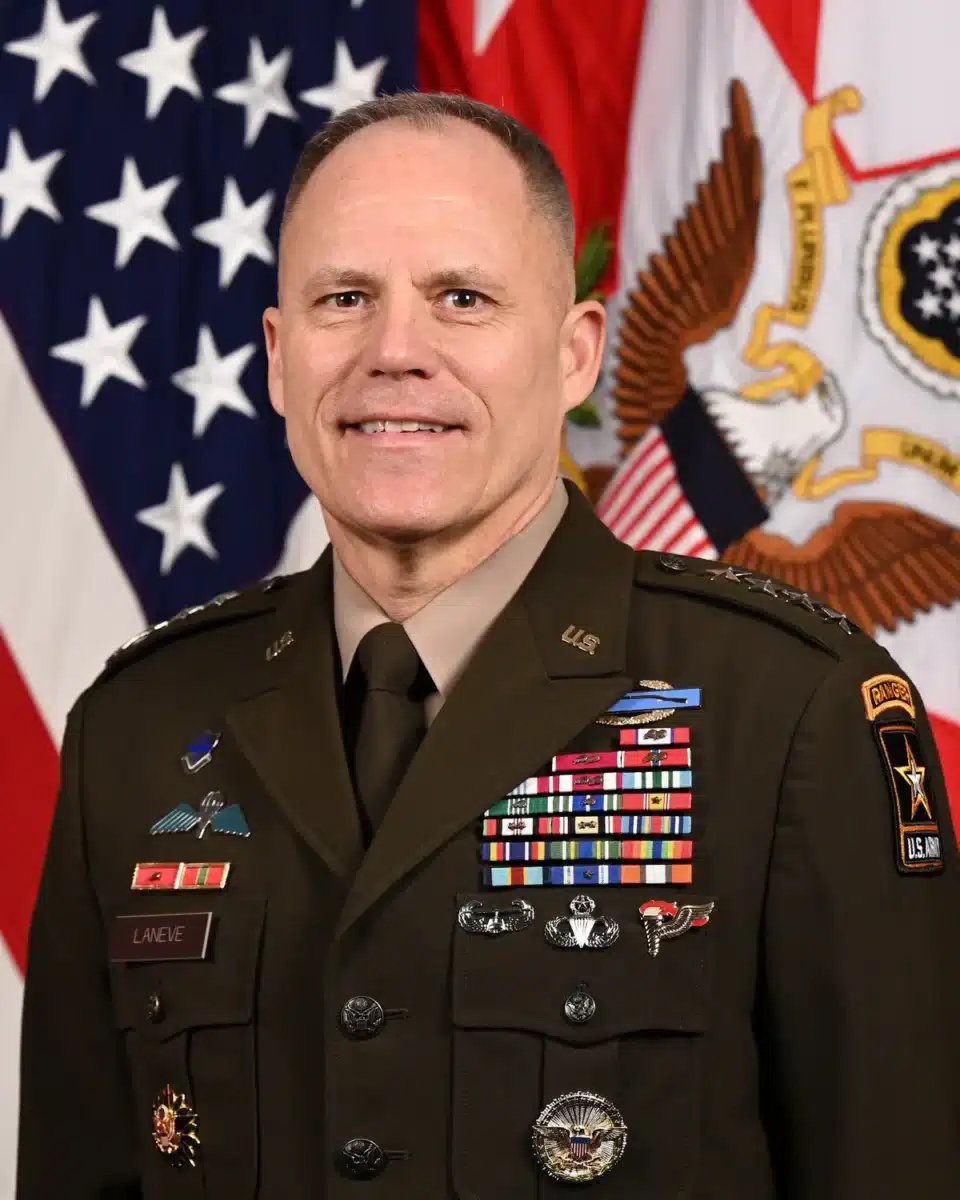
The Pentagon is working to “lock in” Gen. Christopher LaNeve’s nomination for Army Chief of Staff, according to a statement from Defense Secretary Pete Hegseth’s office on August 26, amid mounting resistance from Senate Republicans and Democrats who have raised questions about his readiness for the role.
LaNeve, who has served as acting Army chief of staff since April 2026, previously worked as Hegseth’s senior military aide before his appointment to the top uniformed Army position. Hegseth fired the previous chief, Gen. Randy George, in early April, clearing the way for LaNeve’s interim role. The Pentagon has not yet formally submitted LaNeve’s nomination to the Senate, but Sean Parnell, the Pentagon’s chief spokesman, said the department is “actively coordinating with our Senate partners to lock in the optimal moment to formally submit his nomination.”
The core issue facing LaNeve’s confirmation is his limited time at four-star rank. According to reporting from The Wall Street Journal and confirmed by Senate sources, LaNeve has held the rank of four-star general for approximately six months, while military tradition and Senate expectations typically require chiefs of staff to serve at least 18 months in a four-star position before ascending to the Army’s top job. Sen. Joni Ernst, an Iowa Republican and key committee member, has expressed hesitation about the nomination partly on these grounds, according to multiple sources.
LaNeve needs unanimous Republican support to advance his nomination out of the Senate Armed Services Committee, where both GOP and Democratic members have raised concerns. Sen. Richard Blumenthal, a Connecticut Democrat on the committee, told reporters he was “very concerned” that Hegseth “seemed to have reached for someone who was less qualified than previous chiefs of staff, apparently for political reasons, which should have no place in this choice.” Committee Chair Roger Wicker, a Mississippi Republican, acknowledged being “aware of some” Republican opposition to the nomination on the panel.
Hegseth has publicly defended LaNeve, stating that the general is “precisely the kind of leader the U.S. Army needs right now” and is “decisive, focused on strengthening our Army, and not interested in playing politics in Washington.” Hegseth also criticized LaNeve’s opponents, saying they represent “out-of-touch so-called insiders who’ve spent years undermining our military with woke policies and endless wars.”
LaNeve’s potential confirmation comes amid broader turbulence in Army leadership. Army Secretary Dan Driscoll, the civilian head of the service, has been reported to be considering stepping down as soon as Labor Day, according to NBC News and other outlets. If Driscoll departs while LaNeve’s nomination remains unconfirmed, the Army would lack Senate-confirmed leadership in both its top uniformed and civilian positions during a period when U.S. military forces are engaged in operations against Iran and undertaking major modernization efforts.
LaNeve, a Pittsburgh native commissioned in the infantry in 1990, previously commanded the famed 82nd Airborne Division at Fort Bragg, North Carolina, and served as commander of the Eighth Army in South Korea as a three-star general. He first drew Trump’s attention during the presidential inauguration in January 2025, when Trump remarked after meeting him: “Is this man central casting or what? If I’m doing a movie, I’d pick him to play my lead.”
Sources
- Breaking Defense — Pentagon’s coordination strategy to lock in LaNeve’s nomination, Hegseth’s defense of LaNeve, Driscoll’s potential departure, and details of Senate concerns
- The Hill — Senate Armed Services Committee dynamics, bipartisan opposition, Ernst’s concerns about four-star experience, and LaNeve’s military background
- Wall Street Journal — Initial reporting on Republican Senate opposition and the four-star experience gap