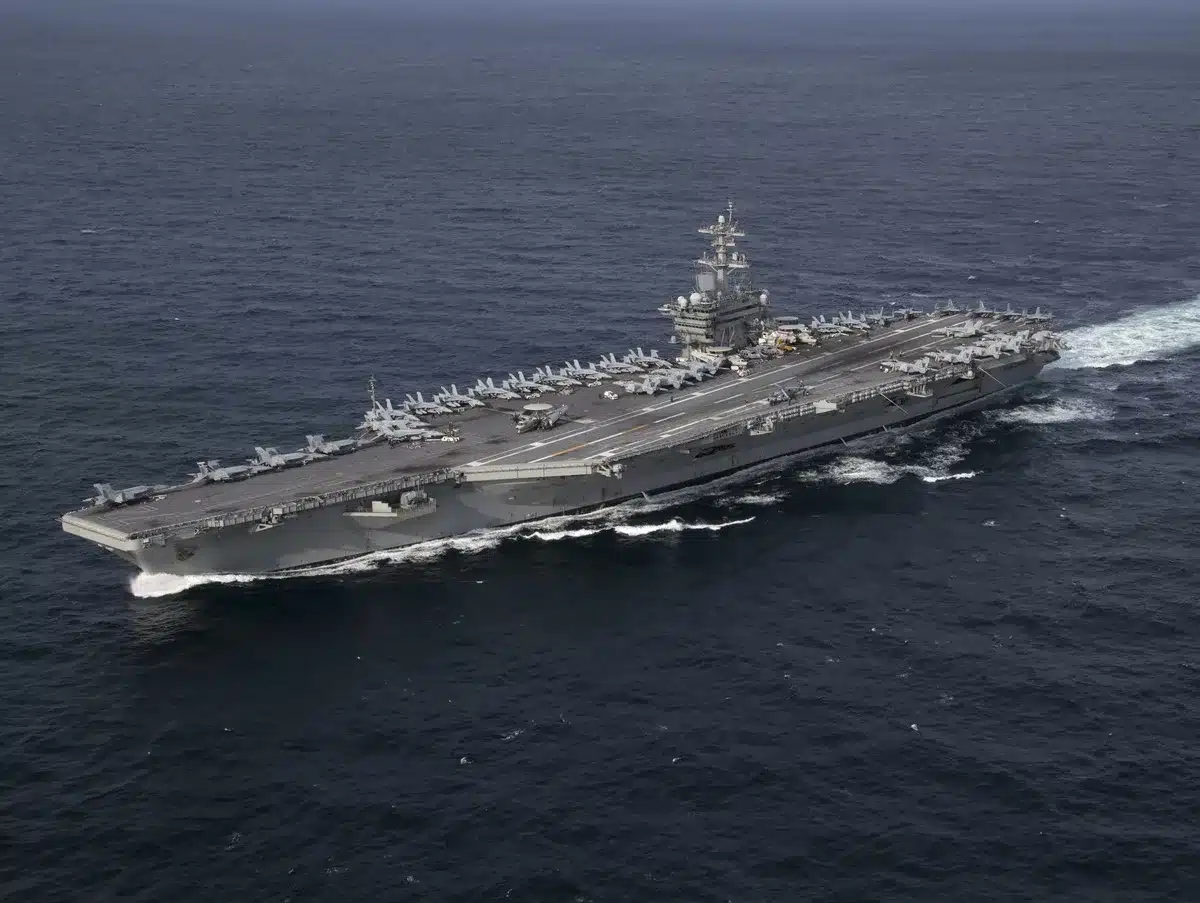
The USS Abraham Lincoln has returned to San Diego after a record 260-day deployment marked by reports of deteriorating crew conditions, including food shortages, water disruptions, and mental health crises among its roughly 5,000 sailors and Marines. The carrier departed San Diego on November 21, 2025, originally scheduled for a six-to-seven-month deployment, but was extended as the U.S. remained engaged in war against Iran following strikes that began on February 28, 2026.
The Lincoln spent more than 250 consecutive days at sea without a port call, the longest continuous stretch for a modern aircraft carrier. According to naval records, the ship’s last port visit was in December 2025 in Guam, followed by a brief stop in Oman in July—meaning the crew went months without fresh supplies or respite from the confined shipboard environment.
Military families and Congress members raised urgent concerns about crew welfare as the deployment dragged on. Multiple sailors reportedly attempted or prepared to jump overboard, according to reporting from Navy Times and Stars and Stripes. One sailor’s wife told Navy Times that her husband tried to jump overboard after his deployment was repeatedly extended, fearing that burnout would end his 13-year Navy career with a dishonorable discharge.
Conditions aboard the carrier deteriorated significantly. Photos emerged in April showing poor-quality and rationed food, while family members and sailors reported water shortages lasting days, moldy showers, broken laundry machines, and periods without hot water. One congressman from California, Mike Levin, described the crew’s situation on social media as “moldy showers, broken toilets, laundry down for weeks, long stretches with no hot water, a meal that came down to half a cup of rice and two tortillas. No soap, deodorant, or toothpaste.”
The deployment’s extension stemmed directly from the escalating conflict with Iran. The Lincoln was originally operating in the Philippine Sea when it was redirected to the Middle East in January 2026 to support U.S. operations. When the U.S. and Israel launched strikes against Iran on February 28, the ship’s mission became tied to the ongoing war, and the Navy repeatedly extended the deployment to maintain a carrier presence in the region.

The mental health toll mounted as weeks became months. At an emotional town hall meeting with Navy leaders in San Diego, about 200 family members vented concerns about loved ones aboard the Lincoln. One spouse reported that her husband texted her saying “he hopes he doesn’t wake up tomorrow.” Navy officials acknowledged that extended deployments strain service members and their families, but stated they had not identified an increase in reported suicidal ideation aboard the ship compared to other carriers.
A study from last year on Navy personnel found that sailors commonly cited loud noises, lack of rest, and inadequate mental and physical healthcare as major stressors during deployments. Researchers surveyed deployed sailors and found that nearly half reported not receiving adequate help coping with stress at sea, leading to calls for improved mental health resources on ships.
The Lincoln’s record deployment came as the USS Gerald R. Ford had recently set a post-Vietnam War record with a 309-day deployment in May 2026. However, the Lincoln’s 250+ consecutive days without a port call represents a particularly grueling stretch—most carriers make regular stops to refresh supplies and give crews brief respite.
Defense Secretary Pete Hegseth dismissed reports of poor conditions as “completely misrepresented,” while President Trump said the deployment was “not nearly long enough.” However, CENTCOM Commander Admiral Brad Cooper acknowledged the crew’s sacrifice, telling sailors aboard: “You have delivered a performance for the ages, and now you are going home.” The USS George Washington arrived in the Middle East on Wednesday to relieve the Lincoln and assume the carrier mission supporting operations against Iran.
Sources
- The Guardian — reported on multiple sailors attempting to jump overboard, crew conditions including food and water shortages, and family concerns about mental health
- NBC News — confirmed the 260-day deployment, extended timeline due to Iran war, 250+ consecutive days at sea without port call, and crew condition reports
- Navy Times — detailed accounts of attempted overboard incidents and sailor family testimonies about deployment extension stress
- Stars and Stripes — covered town hall meeting with families, mental health concerns, and food/supply shortages aboard the Lincoln
- Naval History and Heritage Command / Military.com — provided historical context on aircraft carrier deployment records and the USS Gerald R. Ford’s 309-day deployment