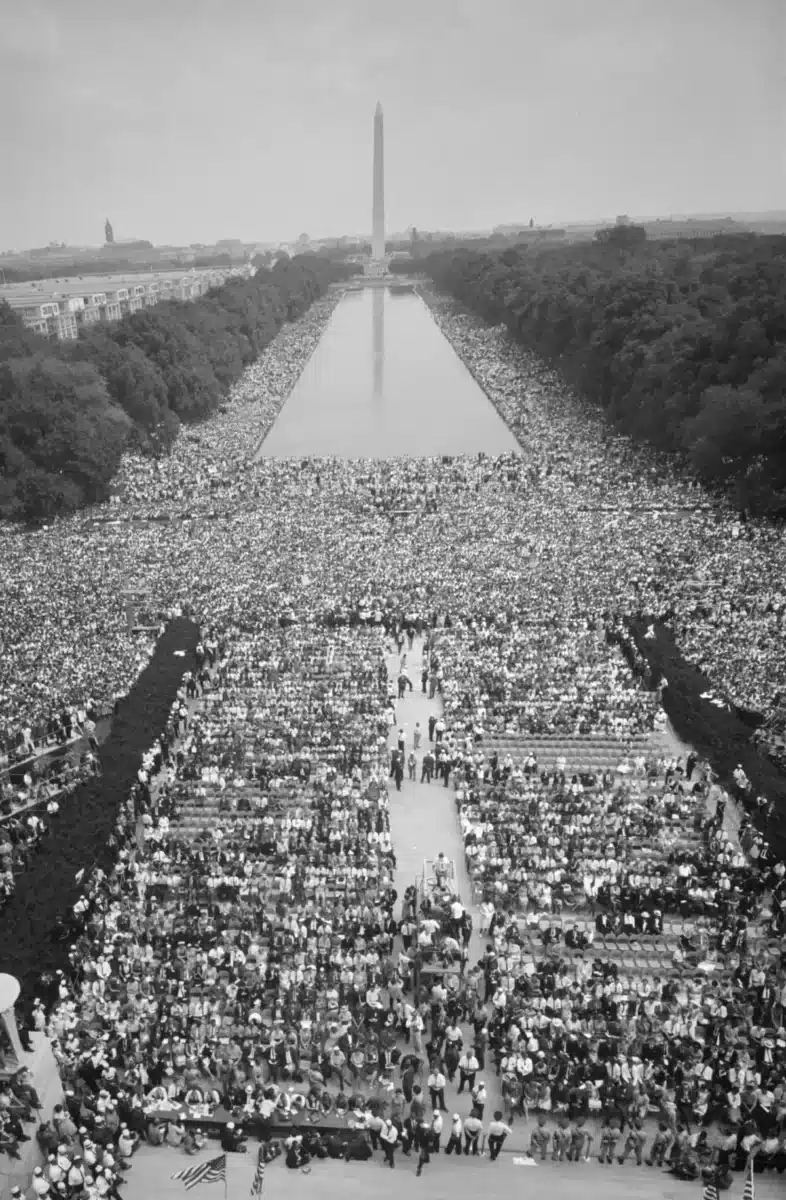
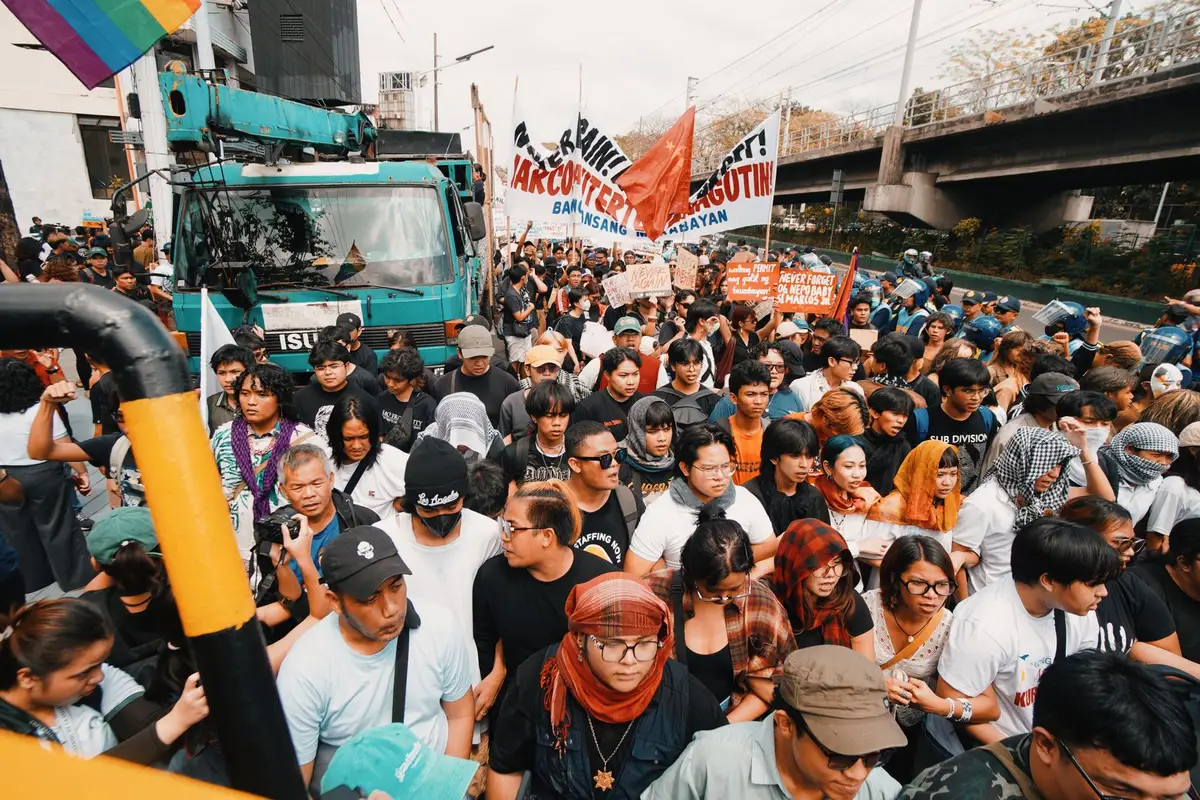
Thousands of demonstrators gathered at the Lincoln Memorial in Washington on Friday for the “March on Washington 2026: Defend the Vote,” echoing the civil rights movement’s most iconic call for voting rights protection as the nation faces what organizers describe as unprecedented rollbacks of electoral access and civil rights.
The march drew union members, students, and activists from across the country to the National Mall, where civil rights leaders warned that voting rights and other freedoms fought for during the 1960s are under renewed threat. According to Reuters, the event was organized by Rev. Al Sharpton’s National Action Network, Martin Luther King III, and more than 90 partner organizations including the NAACP and National Urban League.
The march came four months after the Supreme Court weakened a cornerstone of voting rights protections. On April 29, 2026, the Court ruled in Louisiana v. Callais by a 6-3 majority to effectively limit Section 2 of the Voting Rights Act, which had allowed voters to challenge racially discriminatory voting maps and election laws. According to the League of Women Voters, the Court rewrote the rules to make it nearly impossible for plaintiffs to succeed in vote-dilution cases.
The weakened protections triggered a wave of redistricting changes. Reuters reported that Republican-led statehouses moved quickly—in some cases within days—to redraw congressional maps after the ruling, affecting nearly 70 of the 435 congressional districts that had been protected by Section 2, according to election law expert Nicholas Stephanopoulos.
Beyond the Court’s decision, the march also protested the Trump administration’s efforts to restrict mail-in voting. According to PBS and multiple sources, an executive order issued by Trump sought to impose new restrictions on mail ballots ahead of the November 2026 midterm elections. Federal courts have repeatedly blocked or paused implementation of the order, but the legal battle continues. The U.S. Postal Service finalized new rules on August 25 requiring states to submit mail ballot envelope designs for federal review, according to WHYY.
Speakers at the march included U.S. Senator Bernie Sanders of Vermont, Democratic Representative Alexandria Ocasio-Cortez of New York, and House Minority Leader Hakeem Jeffries. According to Reuters, Jeffries stated: “Black unemployment is up, Black homeownership is down and Black political representation is under assault with Jim Crow-like tactics all throughout the South.”
Marc Morial, president of the National Urban League, told Reuters: “We know in this fight we’re fighting powerful forces, but this is why we rally today. This is why we seek to bring Americans together of goodwill from all races, from all sections of the country to push back as forcefully as we can.”
The timing of the march held symbolic weight. August 28 marks the 63rd anniversary of the 1963 March on Washington for Jobs and Freedom, where Dr. Martin Luther King Jr. delivered his “I Have a Dream” speech. According to the NAACP, the 1963 march drew approximately 260,000 people and helped catalyze passage of the Civil Rights Act of 1964 and the original Voting Rights Act of 1965. Martin Luther King III said in a statement: “Sixty-three years after my father stood at the Lincoln Memorial, we are called to march again, not only in remembrance, but in action.”
Rev. Sharpton wrote in a letter to supporters that voting rights remain under siege. “The right to vote, the very foundation of our power, is being chipped away in statehouse after statehouse,” he wrote, according to Reuters. “When the vote is weakened, every other right grows fragile with it.”
The march takes place ahead of critical midterm elections in November 2026, with voting rights expected to remain a central issue. States have sued to block Trump’s mail-voting restrictions, and election officials in key states have vowed to protect voting access from what they view as federal overreach.
Sources
- Reuters — core reporting on the march, speakers, organizers, and the Supreme Court’s April 2026 ruling on Section 2 of the Voting Rights Act
- Associated Press — confirmed the march drew thousands to the National Mall and reported on civil rights leaders’ statements
- League of Women Voters — analysis of the Supreme Court’s April 2026 decision weakening Section 2
- NAACP — historical context on the 1963 March on Washington and attendance figures
- PBS NewsHour — coverage of the 2026 march and voting rights issues
- PBS — reporting on Trump’s mail-in voting executive order and court blocks
- WHYY — details on USPS mail ballot rule changes effective August 25, 2026