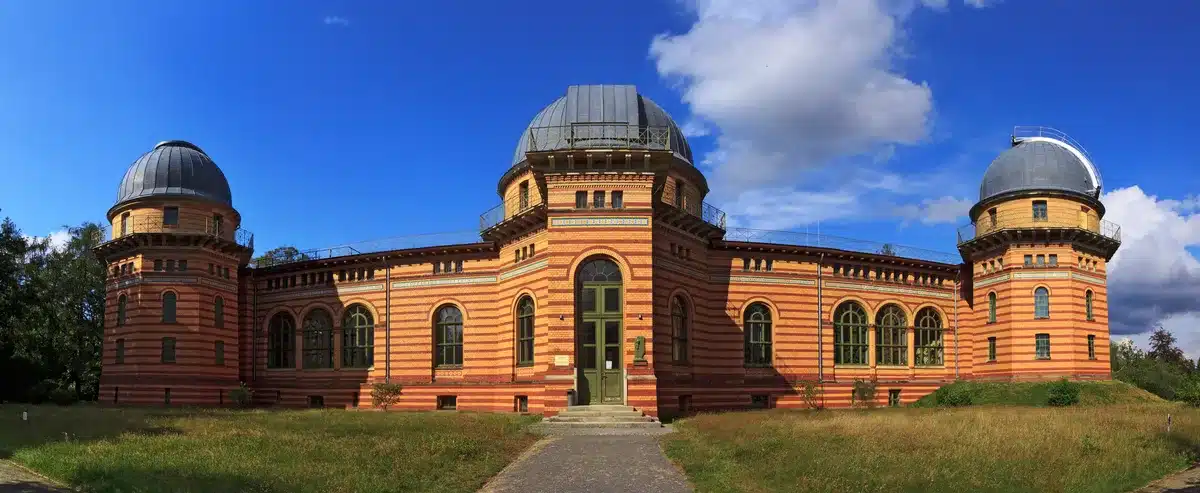
Global climate change is accelerating faster than previously documented, with Earth warming at roughly 0.35°C per decade over the past ten years—nearly double the rate from 1970 to 2015. Researchers at the Potsdam Institute for Climate Impact Research detected this acceleration with more than 98% statistical certainty after filtering out natural temperature swings like El Niño and volcanic eruptions.
The analysis examined five major temperature datasets (NASA, NOAA, HadCRUT, Berkeley Earth, and ERA5) and found consistent evidence of the shift. “We can now demonstrate a strong and statistically significant acceleration of global warming since around 2015,” said Grant Foster, a U.S. statistics expert and co-author of the study published in Geophysical Research Letters.

The acceleration became visible around 2013 to 2014, with the evidence becoming clearer by 2015. Foster explained that researchers filtered out what climate scientists call “noise”—short-term temperature changes caused by natural factors. “We filter out known natural influences in the observational data, so that the ‘noise’ is reduced, making the underlying long-term warming signal more clearly visible,” he said.
The recent warming rate is the fastest recorded since instrumental temperature measurements began in 1880. The study did not identify the specific cause of the acceleration, though researchers noted that climate models can produce periods of accelerating warming, suggesting the pattern is consistent with current climate simulations.
The implications are significant for global climate targets. Stefan Rahmstorf, the study’s lead author and a researcher at the Potsdam Institute, warned that “if the warming rate of the past 10 years continues, it would lead to a long-term exceedance of the 1.5°C limit of the Paris Agreement before 2030.” The Paris Agreement aims to restrict warming to 1.5°C above preindustrial levels, a threshold scientists view as critical to avoiding severe climate impacts.

Zeke Hausfather, a climate scientist at Berkeley Earth who was not involved in the study, confirmed the broader finding: “There is now pretty widespread—if not quite universal—agreement that there has been a detectable acceleration in warming in recent years.” However, he noted uncertainty about whether the additional warming is driven entirely by increased greenhouse gas emissions or partly by natural variability.
The past three years have been the hottest three-year period on record, according to the World Meteorological Organization. Scientists continue to document record levels of planet-heating pollution while raising concerns that natural carbon sinks—ecosystems that absorb CO₂ from the atmosphere—may be starting to fail.
Rahmstorf emphasized that the future trajectory depends on human action: “How quickly the Earth continues to warm ultimately depends on how rapidly we reduce global CO₂ emissions from fossil fuels to zero.” The study’s findings underscore the narrowing window for limiting warming even to 2°C above preindustrial levels, a threshold some scientists consider a safer margin than 1.5°C.
Sources
- ScienceDaily / Potsdam Institute for Climate Impact Research — the acceleration detection methodology, statistical certainty, and the 0.35°C per decade rate over the past decade
- The Guardian — confirmation of the acceleration rate, researcher commentary from Stefan Rahmstorf and Zeke Hausfather, and the 1.5°C threshold timeline
- World Economic Forum — Paris Agreement 1.5°C threshold breach projection before 2030