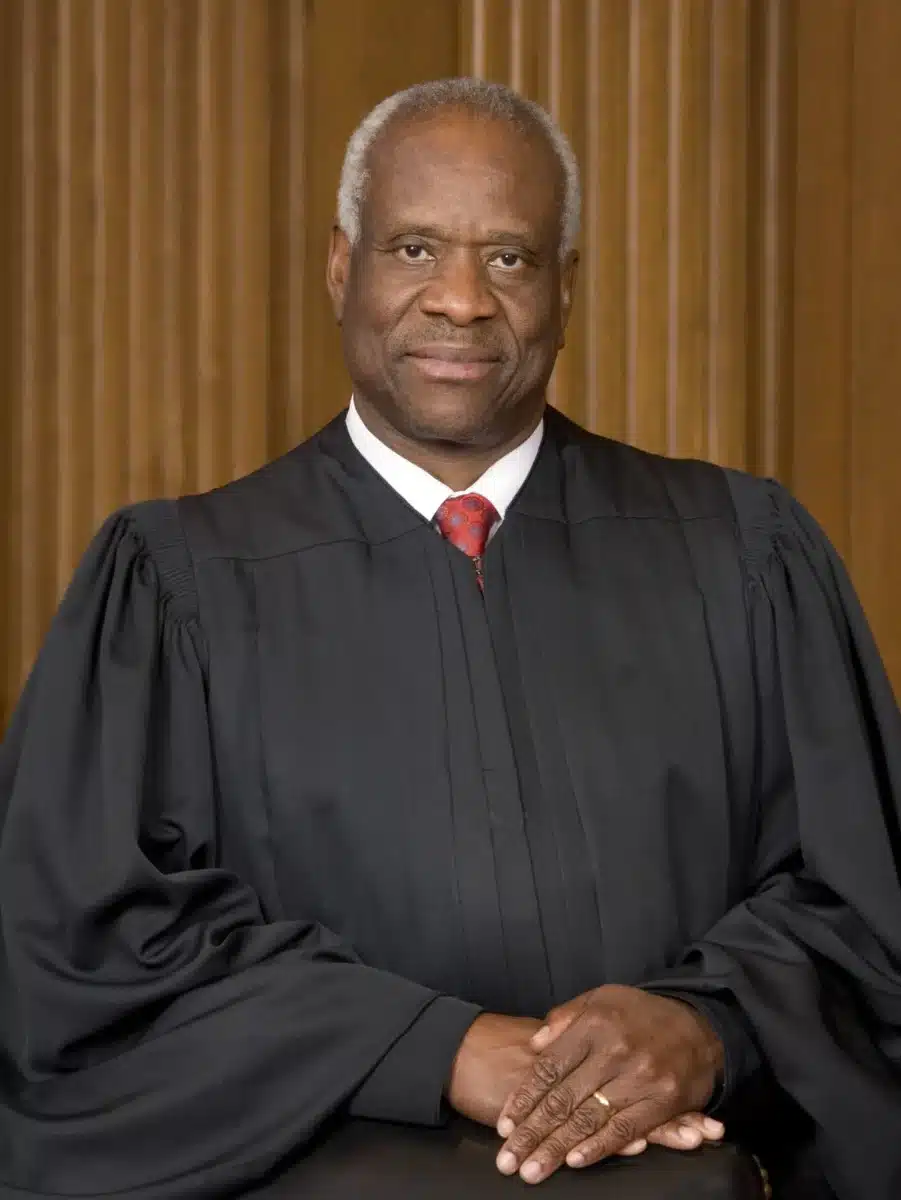
Supreme Court Justice Clarence Thomas became emotional while recalling the promise he made to honor his grandparents after their deaths in 1983, during a conversation with Peter Robinson at the Hoover Institution’s Thomas Sowell Legacy conference in August 2026. “When both my grandparents died suddenly in 1983, the decision I made was to live the rest of my life as a memorial to theirs,” Thomas said, his voice breaking as he reflected on the pair who shaped his character and values.
Thomas’s maternal grandparents, Myers and Christine Anderson, took him and his younger brother into their Savannah home in 1955 when he was seven years old. Myers Anderson, a successful Black businessman who had only nine months of formal education himself, enrolled the boys in Catholic schools and instilled in them the values of hard work, self-reliance, and dignity that would define Thomas’s path from the segregated Georgia community of Pin Point to the nation’s highest court.

In his April 2026 address at the University of Texas at Austin, Thomas had already referenced the formative moment when his grandparents “heroically, quietly, without fanfare” sat him and his brother down at the kitchen table in August 1955 to teach them about equality and human dignity. That conversation became a cornerstone of his worldview, one he has carried through his legal career and returned to repeatedly in public remarks about the principles that guide him.
The Hoover Institution conversation, part of a series examining economist Thomas Sowell’s influence on American thought, allowed Thomas to connect those early family lessons to the intellectual mentors who reinforced them. Thomas discovered Sowell’s work as a young lawyer and credited the economist’s ideas about self-reliance and individual liberty with deepening his understanding of the values his grandparents had taught him—values he has sought to honor through his judicial philosophy and public life.
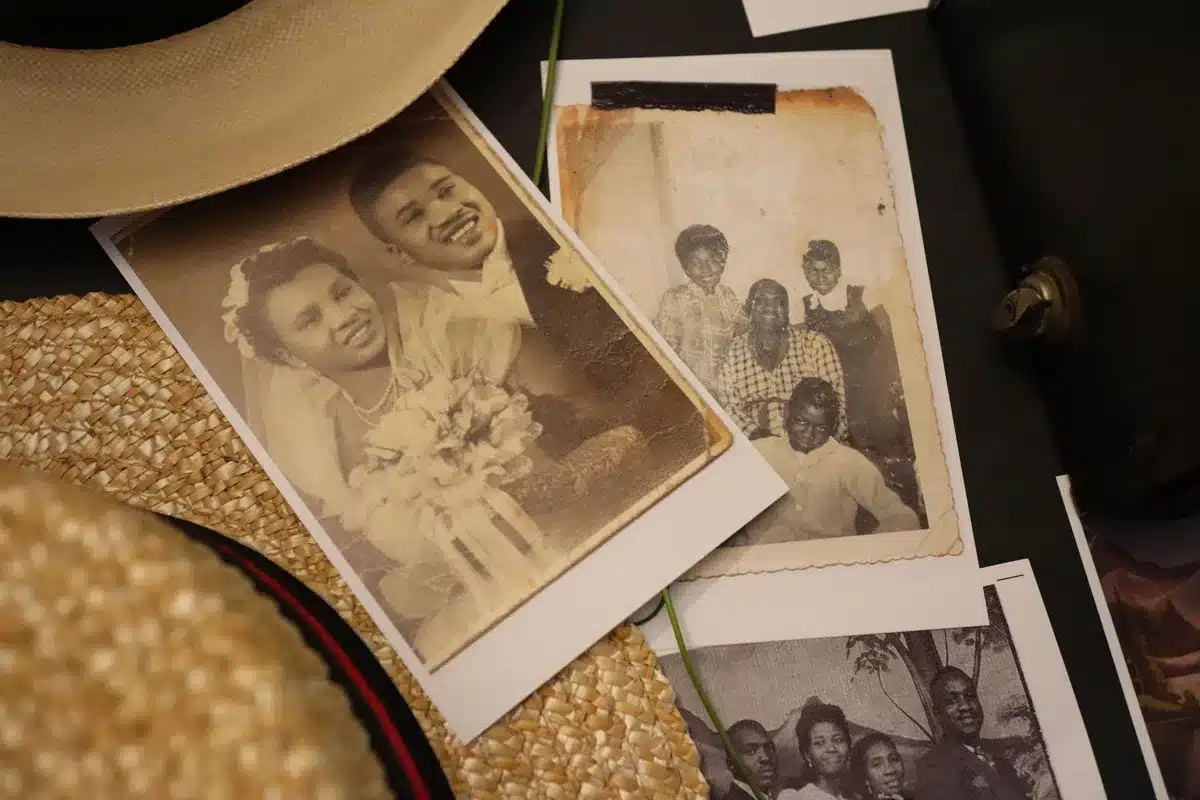
The emotional moment reflected the depth of Thomas’s lifelong devotion to his grandparents’ memory. In his 2007 autobiography, “My Grandfather’s Son,” Thomas dedicated the entire work to Myers Anderson, underscoring how completely his grandfather’s influence had shaped his identity. The book chronicles how Anderson’s quiet strength and moral conviction sustained Thomas through segregation, poverty, and the complex journey of his own public life.
Sources
- Fox News — coverage of Thomas’s emotional remarks about his grandparents’ deaths in 1983 and his promise to live as a memorial to them, during the August 2026 conversation with Peter Robinson.
- Hoover Institution — details of the Thomas Sowell Legacy conversation series and Thomas’s discussion of his grandparents’ formative influence, held in August 2026.
- The Oklahoma — biographical information on Myers Anderson raising Clarence Thomas in 1955 and his role as his maternal grandfather.
- Wall Street Journal — confirmation that Thomas’s maternal grandparents died in spring 1983 and details of their influence on his life.