A federal appeals court on August 17 rejected the Trump administration’s strategy for appointing U.S. attorneys, ruling that the attorney general violated federal vacancy laws by circumventing Senate confirmation. The Ninth Circuit Court of Appeals unanimously held that Sigal Chattah, a Trump ally, was unlawfully designated as acting U.S. attorney in Nevada after serving unlawfully in that role for more than a year.
The panel found that former Attorney General Pam Bondi violated the Federal Vacancies Reform Act by shifting Chattah’s title to “first assistant” to an already-vacant U.S. attorney office, a maneuver designed to bypass the requirement that U.S. attorneys be confirmed by the Senate. “The Attorney General cannot make someone an Acting United States Attorney by designating that person as the first assistant to an already-vacant office of U.S. Attorney,” the three-judge panel, composed of two Trump appointees and one appointed by former President Bill Clinton, unanimously ruled.
Chattah will likely remain as first assistant, the second-in-command position, but will not hold all the powers granted to an acting U.S. attorney. The panel also upheld the district court’s disqualification of Chattah from supervising three criminal cases, a restriction that could extend to other cases she oversees.
This ruling marks the latest in a series of court decisions striking down Trump administration efforts to place loyalists in U.S. attorney positions without Senate approval. In December 2025, a federal appeals court disqualified Alina Habba, Trump’s former personal lawyer, from serving as acting U.S. attorney in New Jersey, finding her appointment equally unlawful. That same month, courts ruled that a Trump-appointed U.S. attorney in California, Bill Essayli, was serving unlawfully.
More recently, in August 2026, another appeals court ruled that a Trump-picked U.S. attorney in Albany was serving unlawfully and could no longer investigate New York Attorney General Letitia James. According to reporting from Democracy Docket, the Ninth Circuit ruling marks the third appeals court rejection of Trump’s efforts to bypass the U.S. attorney appointment process.
How the Vacancy Law Works
Under the Federal Vacancies Reform Act, when a U.S. attorney position becomes vacant, the first assistant to that office automatically becomes the acting U.S. attorney. However, the law does not authorize the attorney general to simply designate someone as first assistant to a vacant office in order to install them as acting U.S. attorney—a distinction the courts have now clarified repeatedly.
The Trump administration’s strategy relied on creating or manipulating the “first assistant” designation to sidestep Senate confirmation. Chattah, a former Republican National Committee official, used her post to open investigations into her political enemies and urge the FBI to pursue partisan probes into the 2020 election, according to reporting from Democracy Docket and Bloomberg Law.
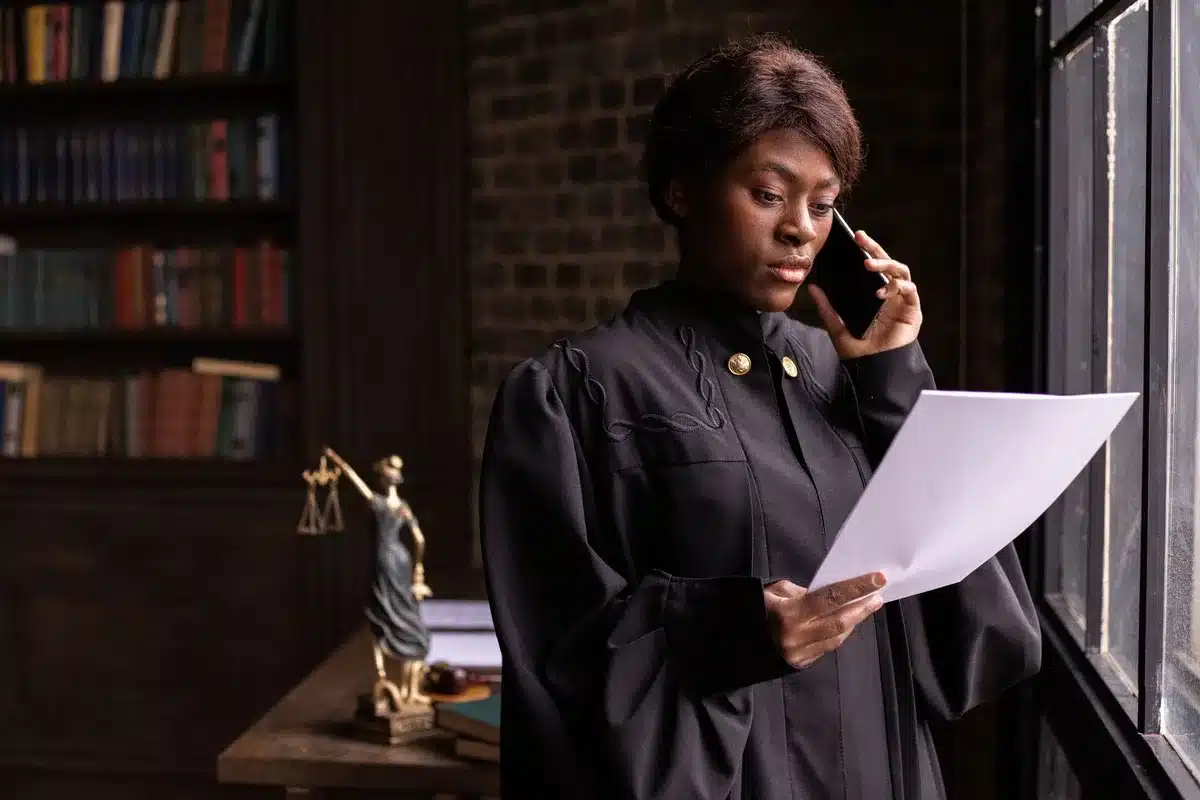
The Ninth Circuit panel also held that the attorney general cannot delegate all of a U.S. attorney’s powers to a single person, further constraining the administration’s approach. These rulings from multiple circuit courts suggest that the Trump administration’s attempt to populate U.S. attorney offices with loyalists while avoiding Senate confirmation has faced consistent legal barriers.
Sources
- Democracy Docket — Ninth Circuit ruling on Sigal Chattah’s unlawful appointment, the panel’s legal reasoning, and context on prior similar rulings
- U.S. News & World Report — Details on Chattah’s appointment timeline and Senate confirmation status
- Reuters — Reporting on multiple appeals court rejections of Trump’s appointment strategy as of August 21, 2026
- CNN — Coverage of the August 2026 Albany U.S. attorney ruling and its implications