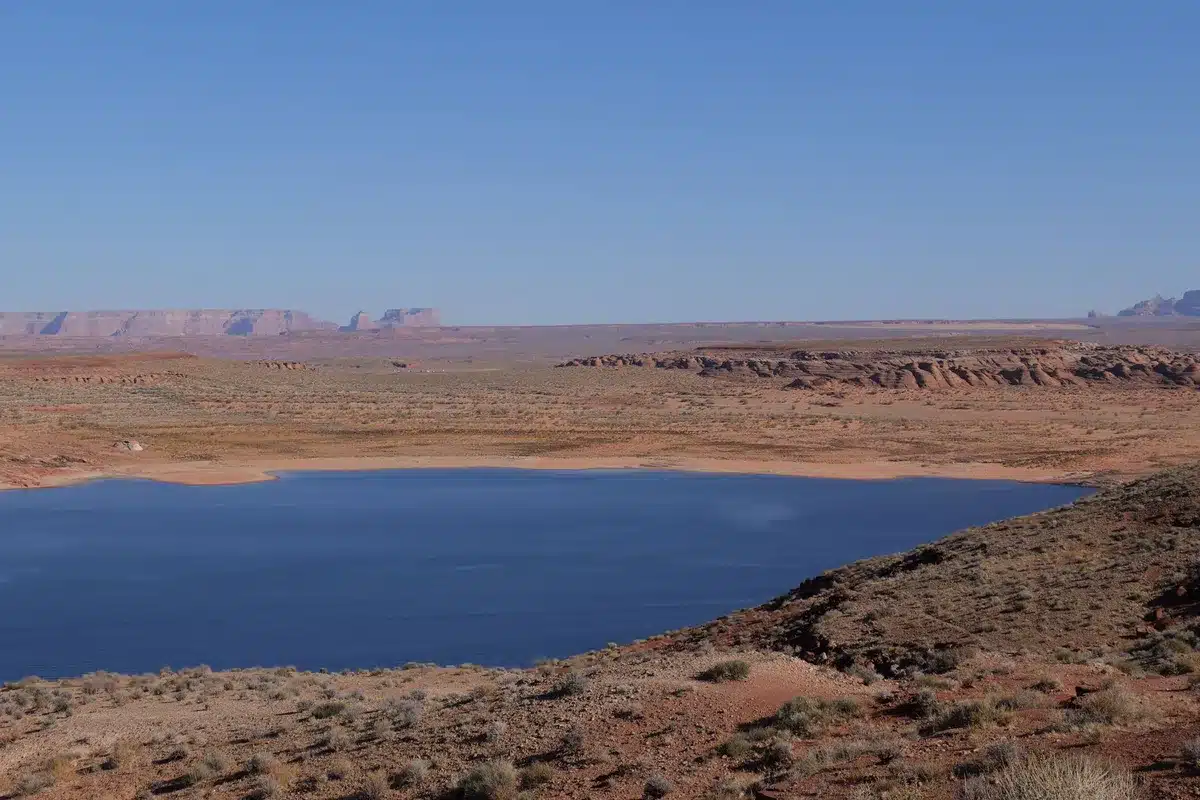
Lake Powell, the nation’s second-largest reservoir, dropped to a record low elevation of 3,519.91 feet on Saturday, August 16, marking a historic low for the critical Colorado River infrastructure that supplies water and power to millions across the West.
The water level breach surpassed the previous record of 3,519.92 feet set in April 2023, according to multiple sources tracking the reservoir. Lake Mead, the largest U.S. reservoir, hit its own record low around the same time in early August, underscoring the severity of the drought gripping the Colorado River Basin.
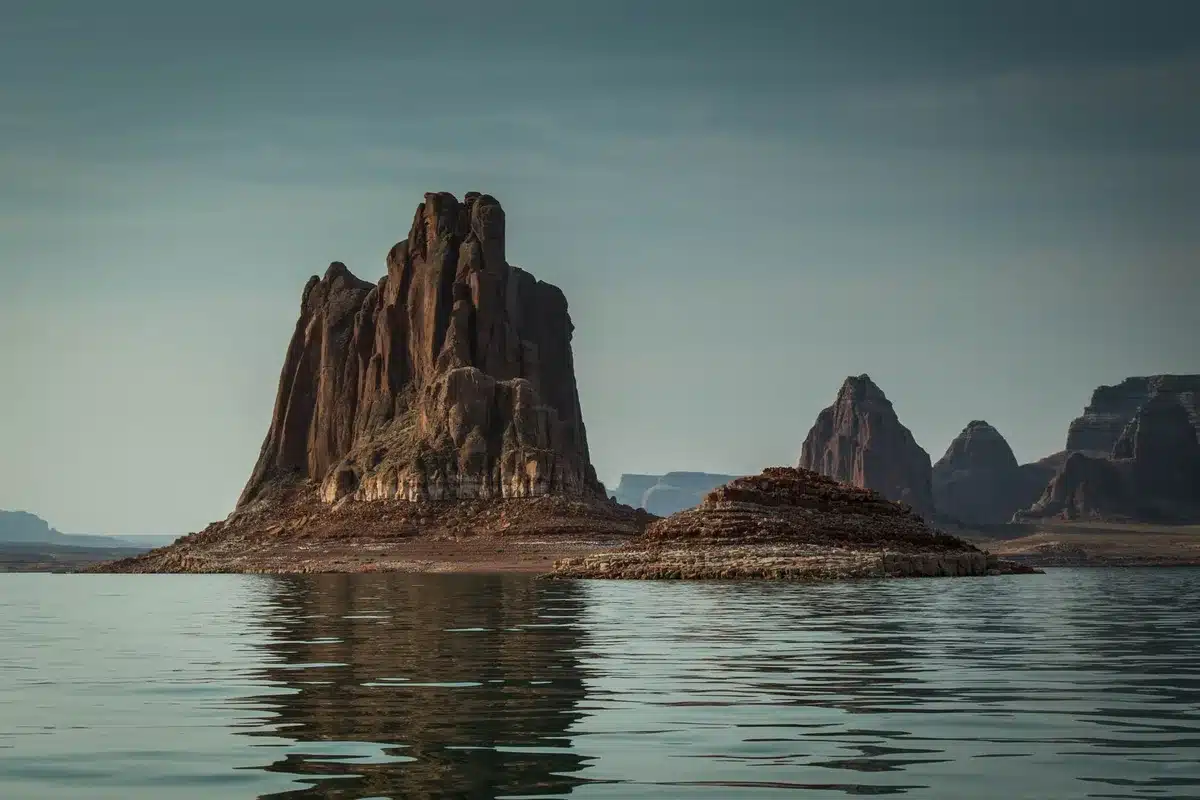
The crisis stems from a 26-year drought that has cut the Colorado River’s flow by approximately 20 percent over the past two decades. Dry and hot conditions across the basin, combined with record-low snowpack, have created what scientists describe as an “unprecedented megadrought” in the Southwest.
Climate change is a major driver of the crisis. Research shows that this year’s devastating snow drought in the Upper Colorado River Basin was made 14 times more likely by years of global warming, according to analysis from the Colorado Sun. The region is now experiencing its worst dry spell in at least 1,200 years.
The implications extend far beyond the reservoir itself. Lake Powell is now only about 30 feet above the minimum elevation of 3,490 feet needed for Glen Canyon Dam to generate hydroelectricity normally. If water levels drop further, the facility could lose its ability to produce power for approximately 6 million users across the West.
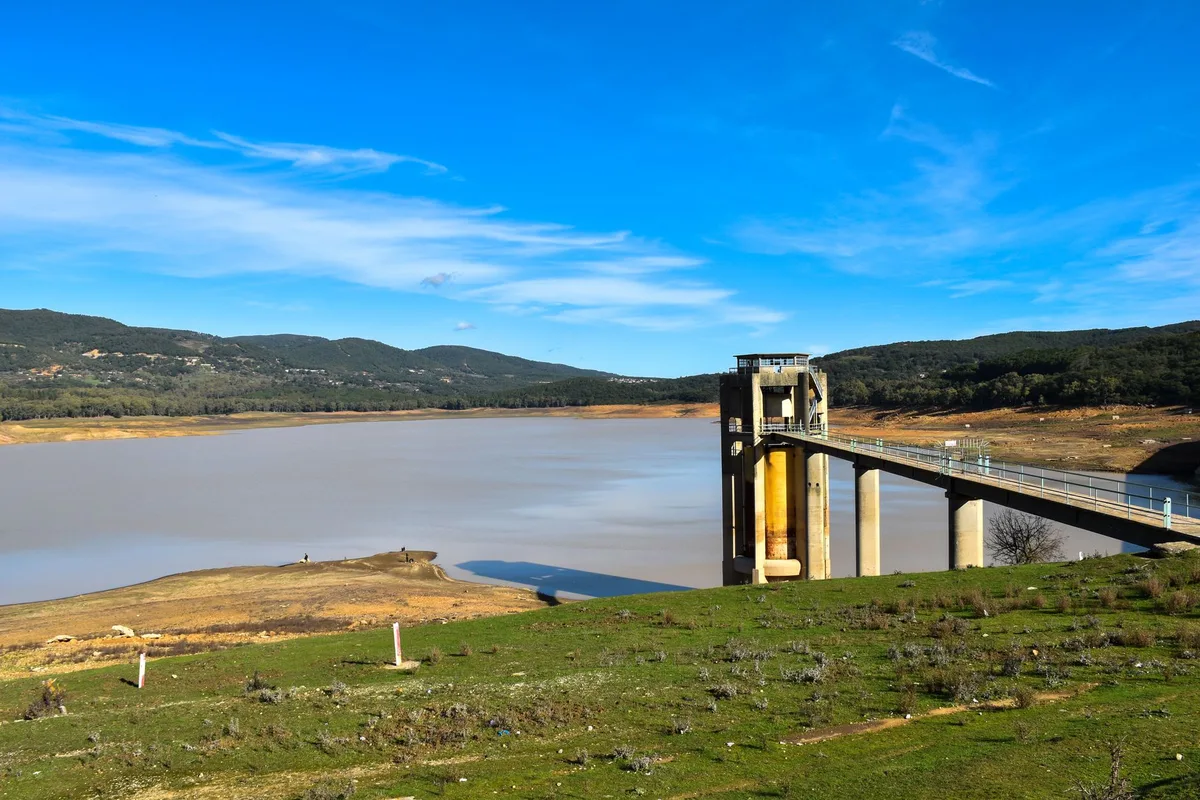
The crisis has triggered sweeping water allocation cuts. In late July 2026, federal officials finalized a plan requiring California, Arizona, and Nevada to slash their Colorado River water use by 16 to 20 percent through 2028. Arizona faces the steepest cuts, reducing its share by approximately 31 percent, while Nevada will cut about 28 percent and California around 12 percent.
The 40 million people who depend on the Colorado River for drinking water, irrigation, and electricity face an uncertain future. A related analysis of the deepening Colorado River crisis details how the drought is affecting water supplies across the region. The Bureau of Reclamation’s April 2026 forecast had already warned that Lake Powell could decline below the minimum power pool level by August 2026 without major intervention—a projection now realized.
Federal officials are exploring post-2026 operations for both Lake Powell and Lake Mead, signaling that long-term management changes are coming. The current water allocation agreements expire at the end of 2026, leaving policymakers to negotiate new terms amid historically low reservoir levels and a shrinking river.
Sources
- New York Times — Lake Powell record low elevation of 3,519.91 feet on August 16, 2026; Lake Mead record low in early August; Colorado River flow reduction of 20% over past two decades
- ABC News — Lake Powell elevation dropped to 3,519.91 feet, breaking previous record of 3,519.92 feet set in April 2023
- Los Angeles Times — California cutting 12%, Arizona 31%, Nevada 28% of Colorado River water use under new federal plan
- CNN — New Colorado River plan requiring 16-20% water cuts through 2028 for California, Arizona, and Nevada
- Sierra Club — 26-year drought and unprecedented heat; record-low snowpack conditions
- Colorado Sun — Climate change made 2026 drought 14 times more likely; analysis of warming impacts
- PBS NewsHour — Lake Powell elevation of 3,519.91 feet; minimum power pool level of 3,490 feet; 30-foot buffer above minimum generation capacity
- Circle of Blue — Colorado River Basin water crisis overview; Lake Powell at 25% capacity as of late April 2026
- The Hill — Lake Powell faces critical water levels by March 2027; power generation threat for 6 million users
- Bureau of Reclamation — April 2026 forecast projecting Lake Powell decline below 3,490 feet by August 2026 without major intervention