
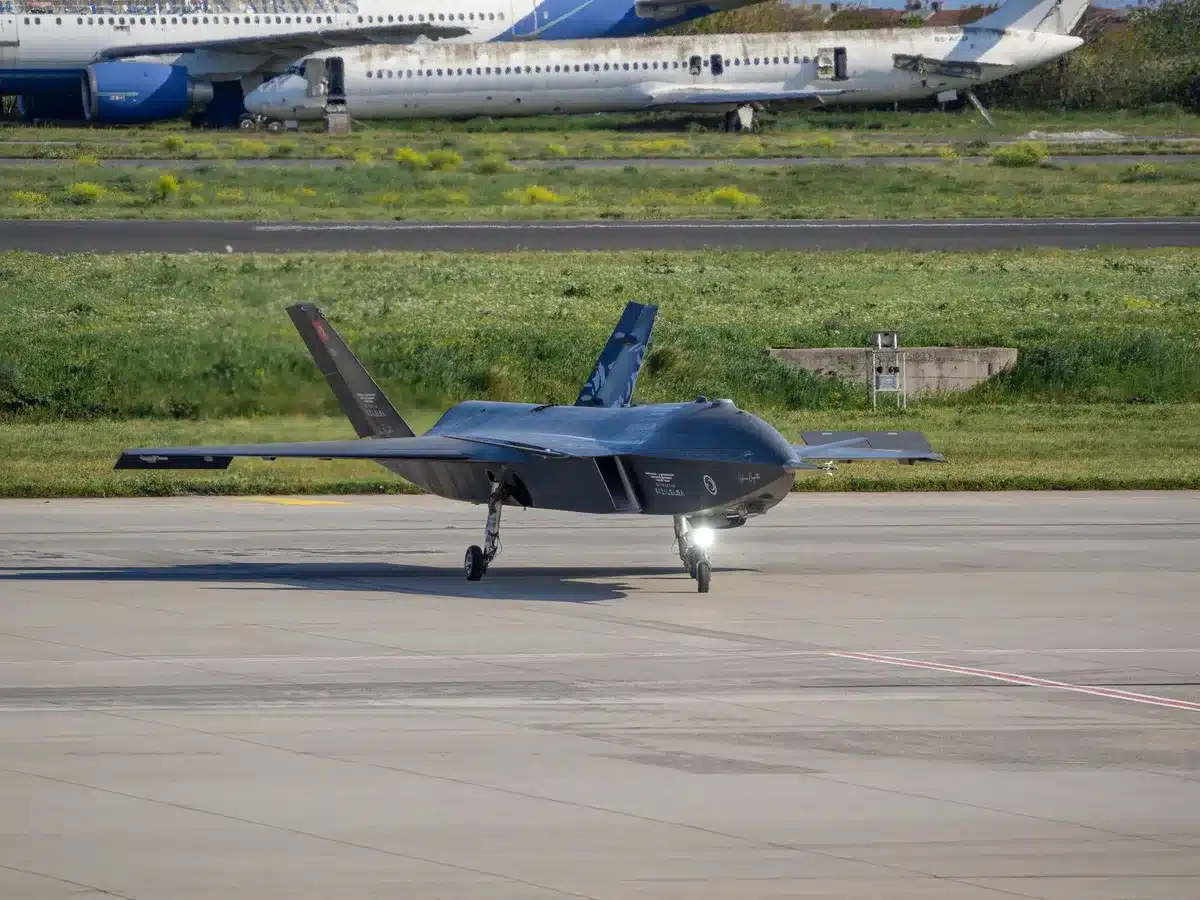
U.S. Central Command announced on August 13 the creation of Task Force Falcon Strike, the first-ever multinational, multi-domain unmanned combat aerial vehicle task force, marking a significant expansion of drone warfare capabilities in the Middle East. The unit will employ one-way attack drones—unmanned systems that operate from above, on, and below the sea—operated by military personnel from the United States and regional partner nations.
The task force represents a shift toward pooling attack drone resources with allied nations in the region. CENTCOM has initiated consultations with and formally invited regional partners to join, though the command has not yet publicly identified which nations will participate. As partners formally join, Task Force Falcon Strike will scale attack drone capabilities across the Middle East into what CENTCOM describes as a unified multi-domain, multinational deterrent.
Personnel from U.S. Special Operations Command Central (SOCCENT), headquartered at MacDill Air Force Base in Tampa, will lead Falcon Strike’s staff of U.S. and regional representatives. SOCCENT plans and conducts special operations across CENTCOM’s 21-country area of responsibility spanning the Middle East, Central Asia, and South Asia.
Building on Scorpion Strike’s Success
Task Force Falcon Strike builds directly on the achievements of Task Force Scorpion Strike, the U.S. military’s first dedicated one-way attack drone squadron, which CENTCOM established nine months earlier in December 2025. Scorpion Strike rapidly achieved operational milestones that demonstrated the viability and effectiveness of one-way attack drones in the Middle East.
In December 2025, Scorpion Strike conducted the first-ever launch of an aerial attack drone from a U.S. Navy warship, a historic first for the U.S. military. The squadron subsequently deployed one-way unmanned aerial systems during Operation Epic Fury in February 2026 and during strikes on Iranian port facilities in July 2026 using unmanned attack vessels at sea. According to Admiral Brad Cooper, CENTCOM commander, these successes demonstrated both the capability and the regional appetite for integrated drone operations.
“Task Force Falcon Strike will expand on Scorpion Strike’s success given the tremendous innovation happening among our regional allies and partners,” Cooper said in the announcement. “Integrating and deploying our new capabilities together will help us rapidly realize the new possibilities that are on the horizon.”

One-way attack drones, also called loitering munitions or kamikaze drones, are low-cost unmanned systems designed to crash directly into targets with explosive payloads. They have become central to modern warfare, offering precision strike capability at a fraction of the cost of conventional missiles. The global one-way attack munitions market is projected to grow from $11.67 billion in 2026 to $29.26 billion by 2034, according to industry analysis, reflecting the rapid expansion of these systems across militaries worldwide.
The multinational structure of Falcon Strike signals a broader strategic shift: the U.S. military is moving beyond unilateral drone operations to build coalitions that can coordinate unmanned systems across air, surface, and subsurface domains. This approach mirrors recent multilateral defense initiatives in the region, such as the Panama Canal exercise that brought the U.S. and 18 nations together for defense coordination.
Sources
- U.S. Central Command (CENTCOM) — official announcement of Task Force Falcon Strike on August 13, 2026; details on task force composition, mission scope, and leadership structure.
- Defense News — reporting on Falcon Strike’s multi-domain capabilities and regional partner integration strategy.
- Breaking Defense — coverage of one-way attack drone employment and Task Force Scorpion Strike’s operational history.
- The Aviationist — details on Task Force Falcon Strike’s relationship to Scorpion Strike and regional partner consultation process.
- Fortune Business Insights — market analysis on one-way attack munitions growth projections through 2034.