
NASA and Katalyst Space have cancelled a $30 million rescue mission for the agency’s aging Swift telescope after the robotic spacecraft sent to save it suffered irredeemable attitude control failures in orbit. The cancellation, announced on August 19, 2026, means the Neil Gehrels Swift Observatory—a $500 million satellite that has studied gamma-ray bursts and other cosmic phenomena for over 22 years—is now doomed to reenter Earth’s atmosphere later this year.
The LINK spacecraft, launched on July 3, 2026, was designed to rendezvous with Swift and boost it to a higher, safer orbit. Swift had been falling faster than expected due to increased solar activity, losing altitude at a rate that put it below the critical threshold needed to avoid atmospheric reentry. By early 2025, NASA models showed Swift had a 50 percent chance of uncontrolled reentry by mid-2026, rising to 90 percent by year’s end.
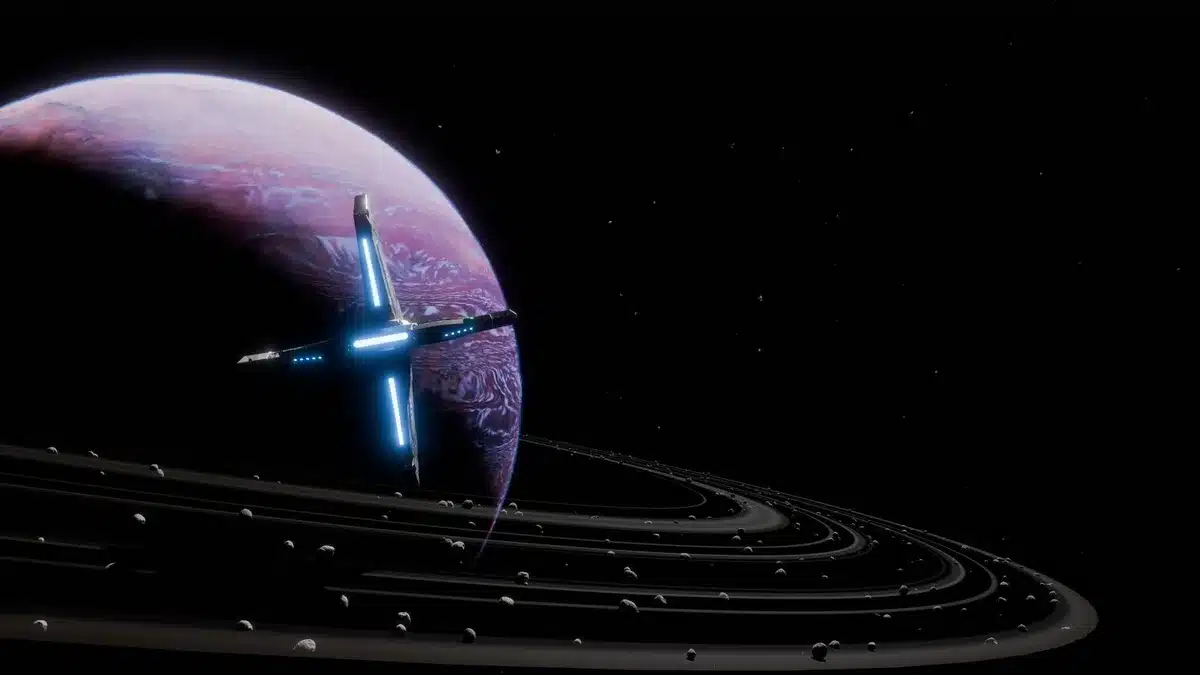
Within weeks of launch, LINK began experiencing problems. On July 28, 2026, the spacecraft lost attitude control, causing it to spin uncontrollably. Over the following weeks, the team at Katalyst Space attempted multiple fixes, but the issues persisted. By mid-August, the situation had deteriorated further when LINK lost two of its three reaction wheels—the spinning devices that control a spacecraft’s orientation—leaving it unable to stabilize itself or approach Swift safely.
Swift itself was never designed for on-orbit servicing. Launched in November 2004 with a nominal two-year mission, the telescope lacks docking fixtures or navigation markers that would make capture easier. Its longevity—more than a decade beyond its original design life—was itself remarkable, allowing it to discover approximately 100 gamma-ray bursts per year and make observations of supernovae and other high-energy cosmic events.

The Swift Boost mission represented an unprecedented attempt to extend a satellite’s life through commercial in-orbit servicing. Katalyst Space was awarded the contract in September 2025 after NASA determined that Swift’s rapid orbital decay left no other option. The effort reflected growing interest in satellite servicing as a way to extend the operational lives of valuable space assets, a capability the space industry is increasingly pursuing as the global on-orbit servicing market grows.
When Swift falls back to Earth later this year, experts expect the 22-year-old satellite to burn up almost entirely during reentry, posing minimal risk to people on the ground. The loss will end one of NASA’s most productive gamma-ray observatories and mark a significant setback for the emerging commercial space servicing industry, which has positioned itself as a solution for aging satellites and failed missions.
Sources
- WRAL (AP) — rescue mission cancellation announced August 20, 2026, citing Swift’s fiery reentry later this year
- Reuters — mission cancelled after LINK lost control; $30 million effort ended due to attitude control issues
- NASA Science Blog — Swift launched November 2004; studies gamma-ray bursts and other cosmic phenomena
- Space.com — LINK launched July 3, 2026; goal was to return Swift to original altitude of 373 miles (600 km)
- Smithsonian Magazine — NASA discovered in 2024 that Swift was falling faster than expected due to strong solar activity
- Katalyst Space — attitude control issues prevent LINK from capturing and boosting Swift
- CNN — LINK lost two of three reaction wheels, leaving it unable to control its orientation