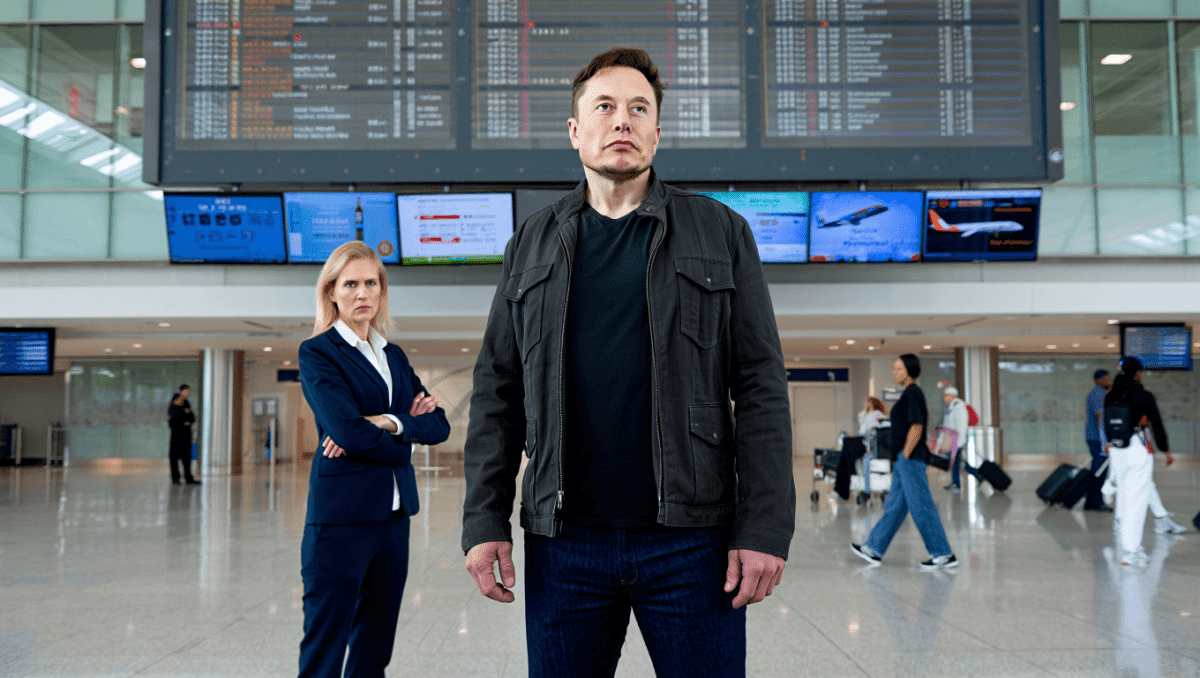
A brief public clash between a budget airline boss and a tech billionaire turned into a marketing win for the carrier after a discount campaign drew more customers — highlighting how social media spats can reshape airline tactics and passenger choices. The episode, sparked by a dispute over the cost implications of installing satellite internet on aircraft, matters because it exposed both the commercial stakes of onboard connectivity and how quickly public arguments can influence bookings.
Ryanair’s chief executive argued that fitting planes with satellite systems like Starlink would raise operating costs considerably, citing an annual fuel penalty figure in the triple-digit millions. The comment quickly attracted attention from Elon Musk, who used social media to mock the estimate, turning a technical debate into a broader public exchange.
Rather than letting the controversy fade, Ryanair responded with a time-limited fare sale. The promotion coincided with a measurable uptick in reservations, according to the airline’s reporting, suggesting the dispute had become a useful marketing moment. For a low-cost carrier whose model depends on high load factors and continuous seat turnover, even small shifts in demand can matter to quarterly results.
Why this matters now
– The airline industry is reassessing inflight connectivity as a competitive feature. Decisions about whether to adopt satellite internet involve trade-offs between passenger experience and added weight, power use, and installation costs.
– High-profile exchanges on social platforms amplify operational debates into consumer-facing events, giving airlines and tech firms both reputational risks and opportunities.
– Short-term promotions triggered by public disputes can alter booking patterns quickly, demonstrating how PR and pricing connect in modern airline strategy.
Operational context and commercial trade-offs
Installing systems like Starlink requires hardware on the fuselage, additional wiring and power management, and potentially heavier payloads, which can marginally increase fuel burn. Carriers must weigh those incremental costs against potential revenue from selling Wi‑Fi or from attracting premium passengers.
But the economics are not only technical. Adoption also depends on:
- How airlines expect to monetize connectivity — subscription fees, sponsorship or fare premiums.
- Regulatory approvals and certification timelines in different markets.
- Competitive positioning: legacy carriers and low-cost operators may reach different conclusions based on target passengers and route lengths.
A PR moment that became a pricing tactic
This episode shows how quickly operational arguments spill into the public sphere. A CEO’s cost estimate, a tech CEO’s retort, and an airline’s rapid fare promotion combined to create a narrative that engaged consumers and drove behavior. For Ryanair, a carrier built on aggressive pricing and publicity, the incident reinforced a familiar playbook: use attention to stimulate demand.
Broader implications
Airlines contemplating satellite connectivity should prepare for two separate but related challenges: managing the technical and economic realities of installation, and handling the public-relations consequences when those calculations are debated in public. Tech providers, meanwhile, face scrutiny not just on service performance but on cost claims and public communications.
In the immediate term, passengers benefited from lower fares and a lively debate about the true cost of inflight internet. For airlines and the companies that supply them, the situation is a reminder that technical choices can become strategic and media-driven decisions overnight — and that a public spat, handled deftly, can translate into bookings.