President Donald Trump’s administration asked the Supreme Court on Friday to allow construction of a $400 million White House ballroom to continue while it appeals a lower court’s order to halt the work, setting up a high-stakes test of executive power and congressional authority over the nation’s most iconic building.
Trump’s solicitor general filed an emergency petition asking the justices to suspend last week’s decision by a three-judge panel from the U.S. Court of Appeals for the District of Columbia Circuit. Chief Justice John Roberts set a deadline of Tuesday for a response from plaintiffs challenging the ballroom project, according to PBS News.
The divided appeals court panel ruled on August 7 that the Trump administration must stop construction of the 90,000-square-foot ballroom because Congress has not approved the project. The panel’s majority said Trump lacks the unilateral authority to build the structure where the White House’s East Wing stood before he ordered its demolition last fall. The panel’s 2-1 decision sided with historic preservationists from the National Trust for Historic Preservation who sued to stop construction.
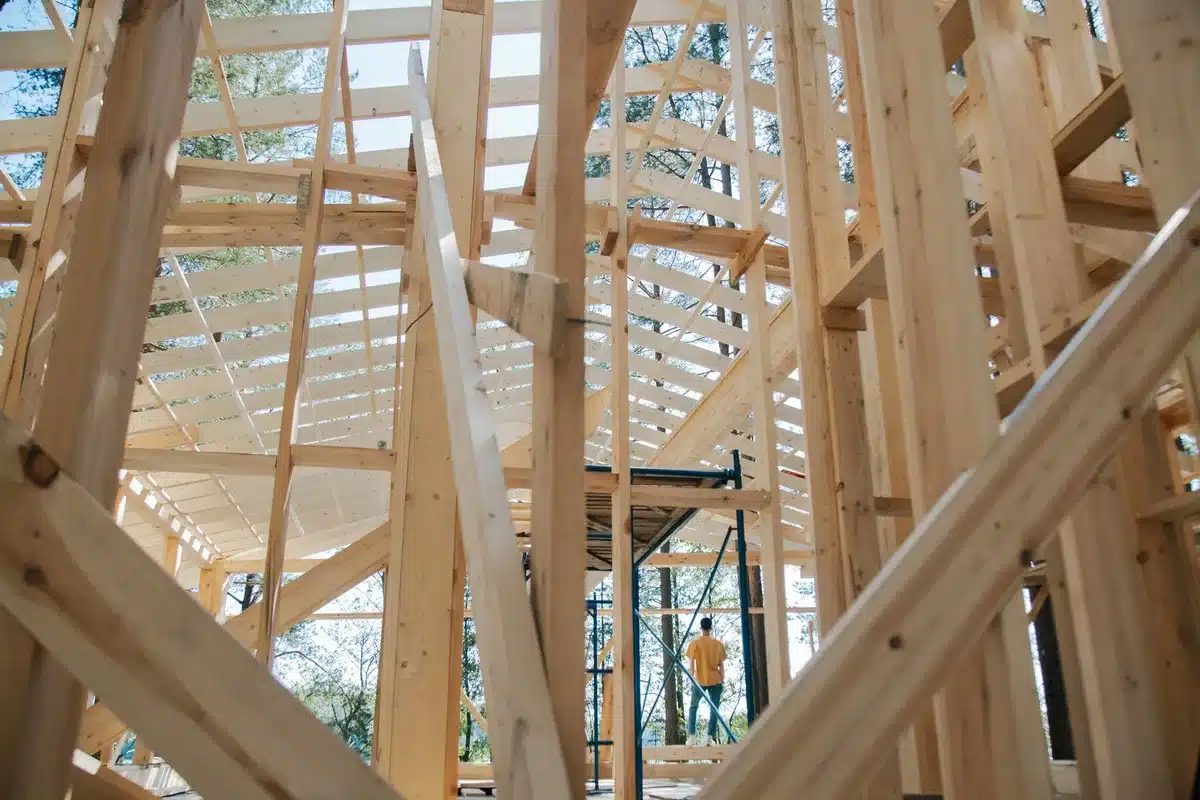
The appeals court suspended its own ruling for two weeks to give Trump’s administration time to appeal to the Supreme Court, with the decision set to take effect on August 21. In his petition, Solicitor General D. John Sauer argued that the ballroom is “vitally required by national security” and that the current open construction site makes it harder to protect the White House. The Justice Department contends the ballroom is part of an integrated military complex, including secure spaces and medical facilities.
The Trump administration has been fighting this case since April, when a district court judge first ordered a halt to aboveground construction. However, the judge exempted underground work, allowing the administration to continue constructing bunkers, military installations, and medical facilities beneath the surface. The administration says the ballroom project is roughly 65% finished after 10 months of construction.
The National Trust for Historic Preservation accused the White House of trying to “outrun the courts” by accelerating work. In a statement, the plaintiffs said the administration’s “transparent efforts to evade the rule of law, frustrate judicial review, and limit the availability of meaningful relief in the courts must stop here.” They pointed to plans to install 1 million pounds of rebar and pour 3,000 cubic yards of concrete in the following week alone.
The case hinges on a fundamental constitutional question: whether a president can unilaterally reshape major portions of the White House without Congress’s approval. During an appeals court hearing in June, a Justice Department lawyer defended a broad view of presidential control, stating that the government could theoretically bulldoze the Statue of Liberty and the White House itself, and that descendants of immigrants or enslaved people who built the White House would lack legal standing to sue. The appeals court judges rejected this expansive view, with the majority concluding that “whether or not a massive ballroom should be constructed is for Congress to decide and is not a matter for Executive self-help,” according to PBS News.
Judge Neomi Rao, appointed by Trump, dissented from the majority decision, arguing that the preservationist group had no legal right to sue and that the lower court had “elevated the aesthetic displeasure of a single passerby over the government’s security interests in the ballroom.”
Sources
- PBS News — Trump’s Supreme Court petition, the appeals court 2-1 decision, the ballroom size and military complex details, the April lower court ruling, the security arguments, and the June hearing testimony
- Associated Press — The appeals court ruling, the ballroom project details, and the Supreme Court petition timeline
- Washington Post — Confirmation of the Supreme Court petition and appeals court decision
- Reuters — The appeals court decision and the two-week suspension with August 21 deadline
- The Hill — The 90,000-square-foot ballroom size and Chief Justice Roberts’s deadline