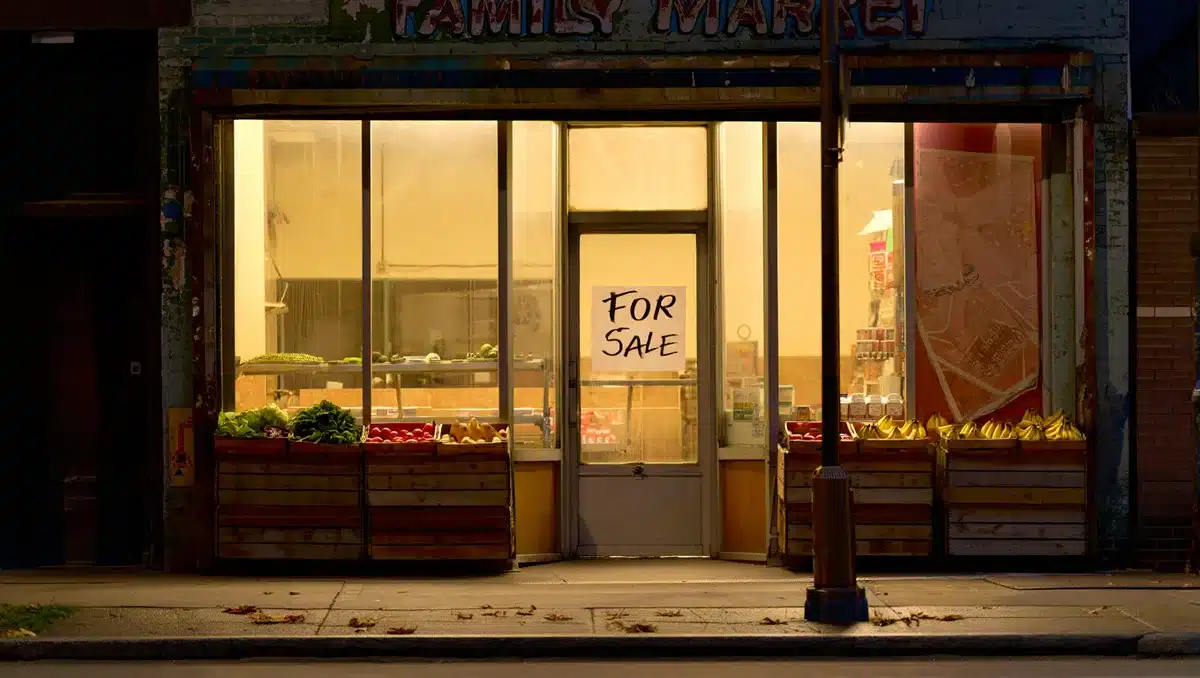
O’Brien’s Market is closing both of its Modesto locations on September 26 and 27, 2026, ending 49 years of family-owned grocery operations in California’s Central Valley. The permanent closures will affect 117 employees across the two stores at 839 W. Roseburg Avenue and 4120 Dale Road, according to Worker Adjustment and Retraining Notification filings reviewed by TheStreet.
Founder and President Chuck O’Brien is retiring from the business, and the company said it never fully recovered from pandemic-era disruptions. “The current business climate has forced us to make some tough decisions,” O’Brien’s stated in a message to customers titled “Chuck’s Retirement,” calling the decision to close both markets the most difficult one the family has faced.
Charles O’Brien began his grocery career as a bagger at Save Mart while still in high school, according to Modesto Bee archives. At 29, working at Raley’s, he learned that Angelo’s Market was for sale and made an offer to his former boss. The first O’Brien’s Market opened at 1406 Ardmor Avenue in early 1978. A second store opened in Keyes in 1983, and in June 1987, O’Brien relocated his Modesto store to a larger 20,000-square-foot unit in Roseburg Square, upgrading to electric scanners and adopting his motto: “We like to be old-fashioned but not outdated.” O’Brien later opened locations in Riverbank in 1994 and Dale Road in Modesto in 2002. The Riverbank store was sold to Cost Less Food Company in July 2024, leaving only the two Modesto stores.

The Dale Road store is expected to close to the public around September 20, with employees continuing through the wind-down until approximately September 27. The layoffs will affect nearly every department: 16 deli clerks, 10 service clerks, 8 checkers, as well as assistant managers, baristas, butchers, meat clerks, and produce employees, according to WARN filings.
O’Brien’s is actively seeking a buyer for the Roseburg Avenue location. If a sale is not completed by September 26, that store will also permanently close to the public, affecting approximately 50 additional workers. If purchased, employees may continue employment without interruption under the new owner.
The company specifically cited the Covid pandemic as a turning point, saying it forced unprecedented changes across the industry. While O’Brien’s said it successfully kept employees safe, fed the community, and cared for customers during the crisis, it acknowledged that “in other ways, it never fully recovered.” The retailer is holding a retirement sale with discounts on most items while continuing to restock fresh groceries through the wind-down.
California Grocery Market Shift Accelerates in 2026
O’Brien’s departure comes amid a broader reshuffling of California’s grocery landscape. TheStreet’s review of California employment records, company announcements, government filings, and verified local reporting identified at least 49 grocery locations in the state that have closed or announced closures so far in 2026, potentially affecting more than 4,600 workers.
The closures span national chains, regional grocers, and family-owned operators. Amazon’s decision to discontinue its Amazon Fresh and Amazon Go physical formats accounts for 22 of those closures, affecting 3,855 workers. The company said it had not created a sufficiently distinctive customer experience or an economic model capable of scaling those formats, and is instead increasing investment in Whole Foods Market and grocery delivery.
Beyond Amazon, closures have involved Albertsons-owned banners including Vons and Safeway, Kroger-owned Foods Co. and Food 4 Less, Raley’s, Grocery Outlet, Lucky Supermarkets, and New Leaf Community Markets. Kroger is closing 60 underperforming stores nationwide as part of a broader restructuring, with two locations in California. The reasons behind the various closures differ: some chains are targeting underperforming stores, others are shifting business models, and some regional operators have reduced their footprints without abandoning the state entirely.
The emotional impact on communities is significant. Customers of O’Brien’s expressed on the company’s Facebook page that the stores represented neighborhood staples where they had built traditions around wine tastings, deli sandwiches, and community involvement. One commenter expressed hope that O’Brien’s would succeed in selling the Roseburg Avenue location so employees there could keep their jobs, reflecting how the disappearance of a family-owned grocer extends beyond the loss of another retail storefront.
A broader trend of supermarket consolidation and closures has reshaped California’s grocery landscape, with major chains like Safeway continuing to downsize their presence in the state.
Sources
- TheStreet — Confirmed at least 49 California grocery closures in 2026, founder Chuck O’Brien’s retirement, pandemic impact on recovery, WARN filings, employee counts by department, closure dates, and broader market context
- Modesto Bee — Charles O’Brien’s career history from high school through founding, store locations and opening dates, 1987 Roseburg Square relocation details, Riverbank store sale in 2024, and community reaction
- California Employment Development Department WARN filings — 117 employees affected, specific closure dates (September 26-27, 2026), department breakdowns, and sale contingency for Roseburg Avenue location