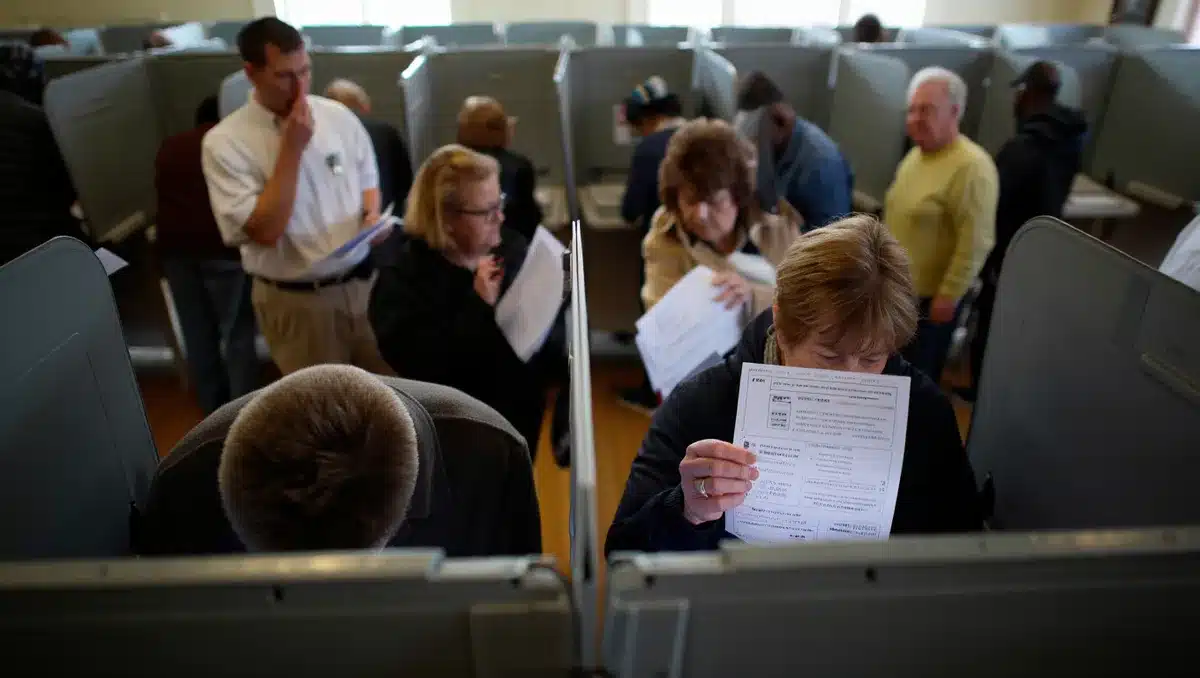
South Carolina Republicans held a special primary election on August 11 to choose a nominee to replace the late Senator Lindsey Graham, with his sister Darline Graham advancing to an August 25 runoff after finishing first with 29.5% of the vote in a crowded field.
Darline Graham, who was appointed to temporarily fill her brother’s seat after his unexpected death on July 11, faced nine other Republican challengers in the special primary. Representatives Russell Fry and Ralph Norman finished second and third with 24.5% and 24.1% respectively, setting up a two-candidate runoff for the GOP nomination.
The special primary was compressed into a remarkably short timeframe. Lindsey Graham had won the regular Republican primary on June 9 with 56.8% of the vote, but his death just over a month later triggered South Carolina’s special election process. Under state law, a special primary and potential runoff were required to select a replacement candidate for the November general election.
Darline Graham’s path to the runoff was aided by Trump’s endorsement, which she received shortly after being appointed to the Senate seat. However, many conservative activists in South Carolina expressed skepticism about her candidacy, citing her lack of a voting record and limited political experience. Her background as commissioner of the South Carolina Commission for the Blind from 2019 to 2026 and decades as a public administrator stood in contrast to the résumés of her main rivals.
Russell Fry, a U.S. representative from Myrtle Beach, and Ralph Norman, who has served in Congress since 2017 and is a wealthy real estate developer, both brought established political infrastructure to the race. Former Governor Mark Sanford, a household name in South Carolina politics, finished fourth with 15.2%. Businessman Mark Lynch, who had challenged Lindsey Graham in the June primary, received 4.9% in the special primary.
The runoff will test whether Trump’s endorsement can consolidate Republican voters behind Darline Graham. In South Carolina’s gubernatorial race earlier this year, Trump initially endorsed one candidate in the primary, then issued a dual endorsement after that candidate struggled, according to reporting from the Washington Post. The eventual winner was a different candidate than Trump’s first choice, suggesting that his endorsement alone may not be decisive in crowded primary contests in the state.

The winner of the August 25 runoff will advance to face Democratic nominee Annie Andrews, a pediatrician who won her party’s primary in June. Andrews faces a significant challenge in a state that typically votes Republican, but the compressed timeline and crowded field on the GOP side may create opportunities.
Sources
- The Washington Post — primary results showing Darline Graham in first place with 29.5%, Russell Fry second with 24.5%, Ralph Norman third with 24.1%, and confirmation that no candidate reached 50%, triggering a runoff on August 25
- The Guardian — background on Lindsey Graham’s death, Darline Graham’s appointment and background as commissioner of the South Carolina Commission for the Blind, Trump’s endorsement, and conservative skepticism about her candidacy
- Ballotpedia — Lindsey Graham’s death on July 11, 2026, his June 9 primary victory with 56.8%, and details of the special primary process
- NBC News — confirmation that a runoff is expected and details on Darline Graham’s expectations for the August 25 runoff