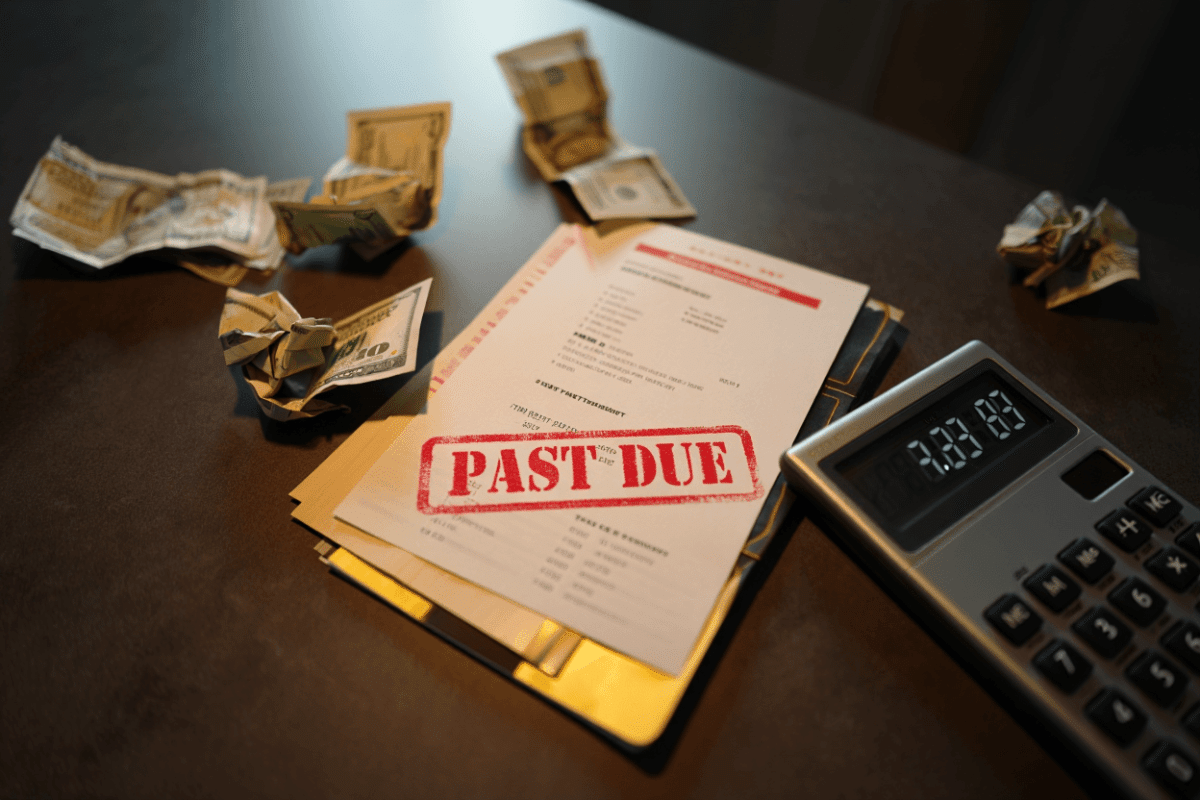
Credit card delinquencies in the United States have reached their highest level in 15 years, with 13.1% of credit card balances at least 90 days past due as of the first quarter of 2026, according to the Federal Reserve Bank of New York. The surge reflects mounting financial strain on American households as credit card debt remains elevated at approximately $1.25 trillion.
The delinquency rate represents the most significant deterioration since the aftermath of the 2008 financial crisis, when similar levels were last seen in late 2011. “Credit card delinquency rates are now the highest they have been in 16 years,” according to a May 2026 analysis from Protect Borrowers, which cited the Federal Reserve data.
Multiple factors are driving the surge in missed payments. Inflation and persistently high interest rates—averaging around 21% on credit cards as of early 2026—have squeezed household budgets. “The rise comes amid broader concerns about consumer financial health, including elevated inflation and higher borrowing costs,” according to reporting on the credit card delinquency trends. Many consumers have taken on additional debt to manage rising living costs, even as their ability to service existing obligations has weakened.
The Federal Reserve Bank of New York’s May 2026 Household Debt and Credit Report showed that credit card balances fell seasonally by $25 billion in the first quarter, bringing the total to $1.25 trillion. However, the year-over-year increase of $70 billion underscores the longer-term accumulation of debt. The report also noted that transitions into serious delinquency for credit cards remained relatively stable, with 7.1% of balances flowing into 90-day-plus delinquency status on an annualized basis in Q1 2026, compared to 7.04% in the prior year.
Recent data from TransUnion’s Q2 2026 Credit Industry Insights Report, released in early August 2026, provides additional context. While borrower-level credit card delinquency rates increased year-over-year, balance-level delinquency rates held relatively flat at 1.98%, suggesting that the rise in delinquencies is concentrated among a growing subprime population rather than spreading uniformly across all credit tiers. TransUnion noted that lenders are extending credit more broadly while maintaining disciplined underwriting, with smaller credit lines offsetting broader access.
The comparison to 2011 is instructive. When delinquencies last reached current levels in the aftermath of the Great Recession, the U.S. economy was in recovery mode with unemployment still elevated. Today’s delinquency surge occurs in a different economic context—one marked by persistent inflation, higher interest rates, and consumers who exhausted pandemic-era savings to maintain spending. Analysts caution that while the headline delinquency rate has reached a 15-year high, the underlying drivers differ from the systemic financial crisis of the prior decade.
Sources
- Federal Reserve Bank of New York — Household Debt and Credit Report for Q1 2026, released May 12, 2026, confirming $1.25 trillion in credit card debt and delinquency transition rates
- Protect Borrowers — Analysis citing Federal Reserve data on credit card delinquency rates reaching 16-year highs, May 12, 2026
- TransUnion — Q2 2026 Credit Industry Insights Report, released August 6, 2026, detailing borrower-level and balance-level delinquency trends and lender strategies
- CardRates.com — Reporting on credit card delinquency rates hitting 15-year highs with 13.12% of accounts 90+ days delinquent in Q1 2026, June 9, 2026
- USA Today — Analysis of credit card delinquency trends and interest rate pressures, June 12, 2026