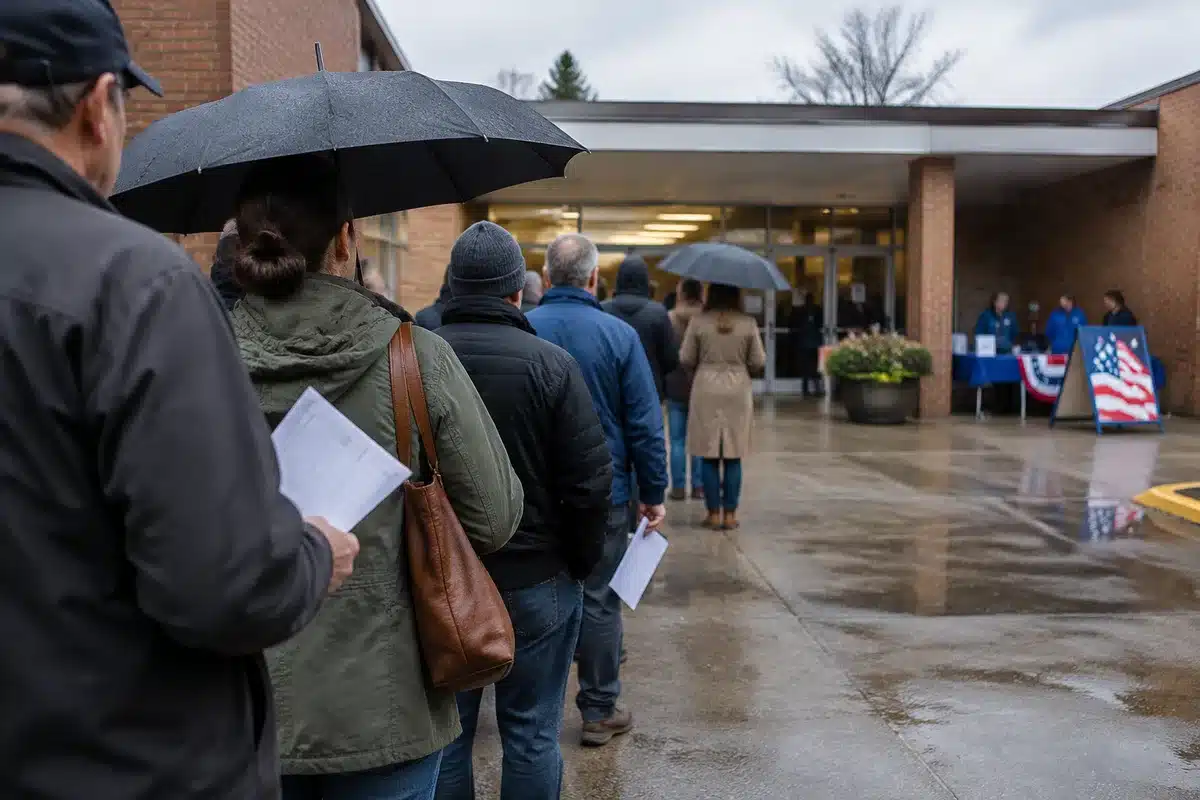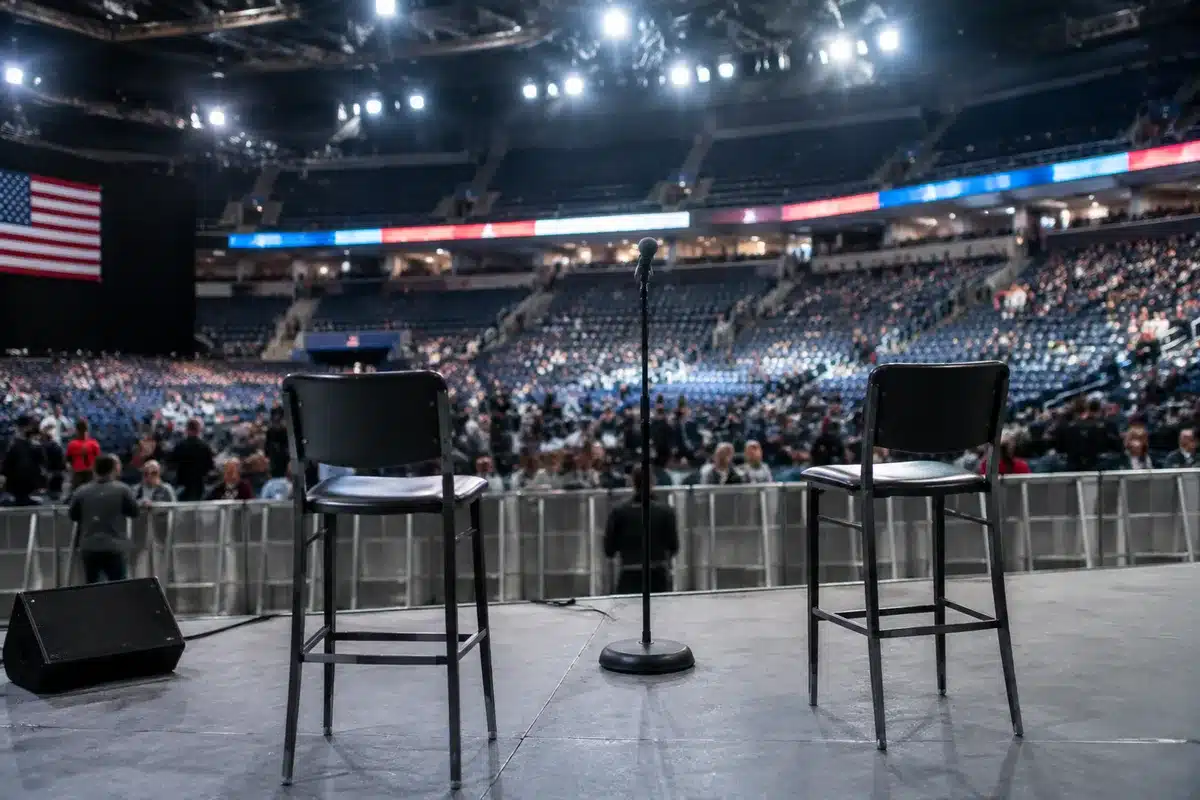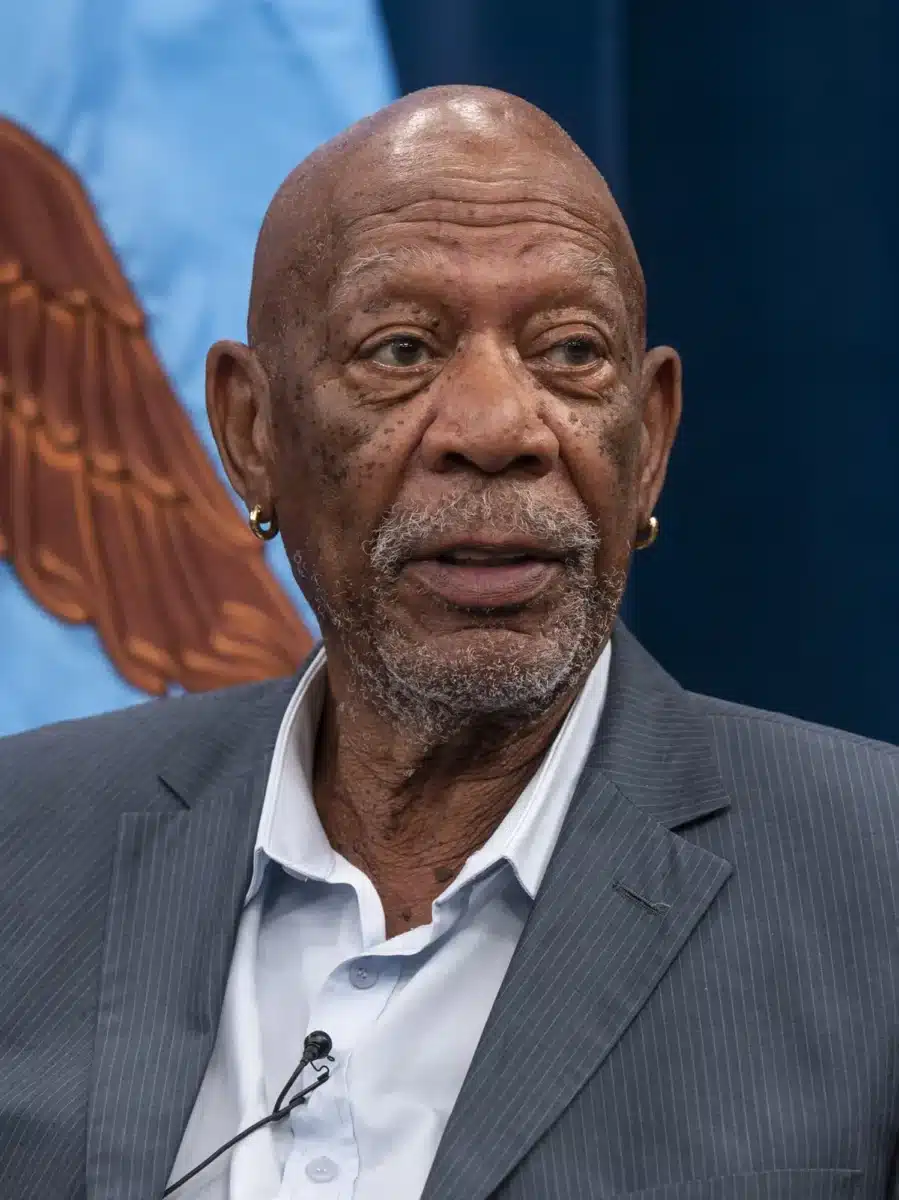
Francesca Hong leads the Wisconsin Democratic primary for governor tomorrow, August 11, with the 37-year-old chef and state representative poised to become the first democratic socialist to clinch a major-party gubernatorial nomination in a battleground state. Hong, who represents Madison’s 76th Assembly district, has built a grassroots campaign that consistently polled ahead of her rivals, with a late July survey showing her at 44 percent support compared to 16 percent for her nearest competitor.
Four candidates remain in the Democratic race: Hong, Milwaukee County Executive David Crowley, state Senator Kelda Roys, and Joel Brennan, a former secretary of the Wisconsin Department of Administration. The primary winner will face Republican Tom Tiffany, a U.S. representative from northern Wisconsin who voted against certifying the 2020 presidential election results, in what is expected to be a closely contested general election in November.
Hong’s path to the front-runner position has been shaped by her personal story and policy platform. Born and raised in Madison to parents who immigrated from South Korea in the 1980s, she worked her way up from dishwasher to executive chef, eventually owning a restaurant for seven years before being elected to the state Assembly in 2020 as Wisconsin’s first Asian American legislator. She does not shy away from the democratic socialist label, though she has clarified that she does not fully align with the Democratic Socialists of America platform and has moderated some earlier positions, such as her previous call to defund police.
Her campaign centers on progressive economic policies and emerging technological concerns. Hong is calling for universal childcare, full funding of Wisconsin’s public schools, and a one-year moratorium on datacenter construction—a centerpiece that differentiates her from other Democratic candidates and has resonated with voters worried about unregulated artificial intelligence expansion. “The urgency of this moment requires actually meeting the scale and speed in which these different things have become a problem,” she told the Guardian, citing mass income disparities and the need to change “a rigged system.”
Hong’s surge has triggered a last-minute scramble from the Democratic establishment. Governor Tony Evers, who announced in 2025 that he would not seek a third term, publicly questioned Hong’s electability in a general election, claiming her campaign was “in a tough place” because she had to spend time addressing old tweets. Evers endorsed David Crowley, who initially exited the race in early July before reentering it weeks later after Sara Rodriguez, the lieutenant governor, dropped out over campaign finance irregularities. Crowley’s reentry with Evers’ backing has become a flashpoint, with Hong framing it as evidence of establishment panic over her momentum.
Testing Democratic Socialism in a Swing State
Hong’s potential nomination arrives at a pivotal moment for the Democratic Party. Last week, progressive Abdul El-Sayed won the Michigan Democratic primary for U.S. Senate, raising questions about whether voters in swing states will embrace candidates further left than the party establishment prefers. Wisconsin’s stakes are especially high: the governor certifies presidential election results, and Tom Tiffany was part of efforts to overturn the 2020 results. Five of the last seven presidential elections in Wisconsin have come down to less than one percentage point, according to Ben Wikler, the former chair of the Wisconsin Democratic Party.
Some Democratic strategists have expressed skepticism about Hong’s general-election viability. David Axelrod, who helped Barack Obama win, has repeatedly criticized her, describing her as “a font of zany liberal, faculty lounge exotica.” However, Michael Wagner, director of the University of Wisconsin-Madison journalism school’s political communication research, argues that the party establishment may be overestimating the risk. “Sometimes the party establishment can get too cute with what they worry about,” Wagner said, noting that Wisconsin voters have shown willingness to elect candidates from across the political spectrum—the state has both progressive Senator Tammy Baldwin and Tea Party–aligned Senator Ron Johnson. Wagner said Hong’s strongest coalition is among young voters and that she has “a really good chance” at winning both the primary and the general election if turnout favors her base.
Hong has countered electability questions by pointing to her grassroots organizing success. “The person who wins the most votes is the most electable,” she said. “And we are fighting harder than any other campaign to win the most votes.” Her campaign has built enthusiasm through unconventional events—from karaoke nights to ramen pop-ups to participating in Milwaukee’s Riverwest 24-hour bike race, where she got a tattoo to commemorate the event. This grassroots approach stands in stark contrast to Republican Tiffany’s spending millions on folksy personal introduction ads, leading Hong to note that “to still be doing intro ads” after months as the presumptive nominee “is a little bit embarrassing.”
The winner of tomorrow’s primary will emerge as the Democratic standard-bearer in a state where control of the governor’s office could determine not only Wisconsin’s direction but also its role in future presidential elections. For Hong, a victory would represent a breakthrough moment for democratic socialism in American electoral politics at the statewide level.
Sources
- The Guardian — Hong’s background, grassroots campaign strategy, establishment skepticism, and policy platform including datacenter moratorium
- Wisconsin Public Radio — Four remaining candidates, primary date, Hong’s polling lead, Crowley’s reentry with Evers endorsement, general election stakes against Tiffany
- Ballotpedia — Confirmation of four Democratic candidates and August 11 primary date
- Time — Hong as democratic socialist frontrunner, David Crowley’s late reentry, establishment dynamics
- Politico — Hong as front-runner fueled by populist campaign, establishment scrambling
- State Navigate polling — Hong at 44 percent, Crowley at 16 percent in late July survey