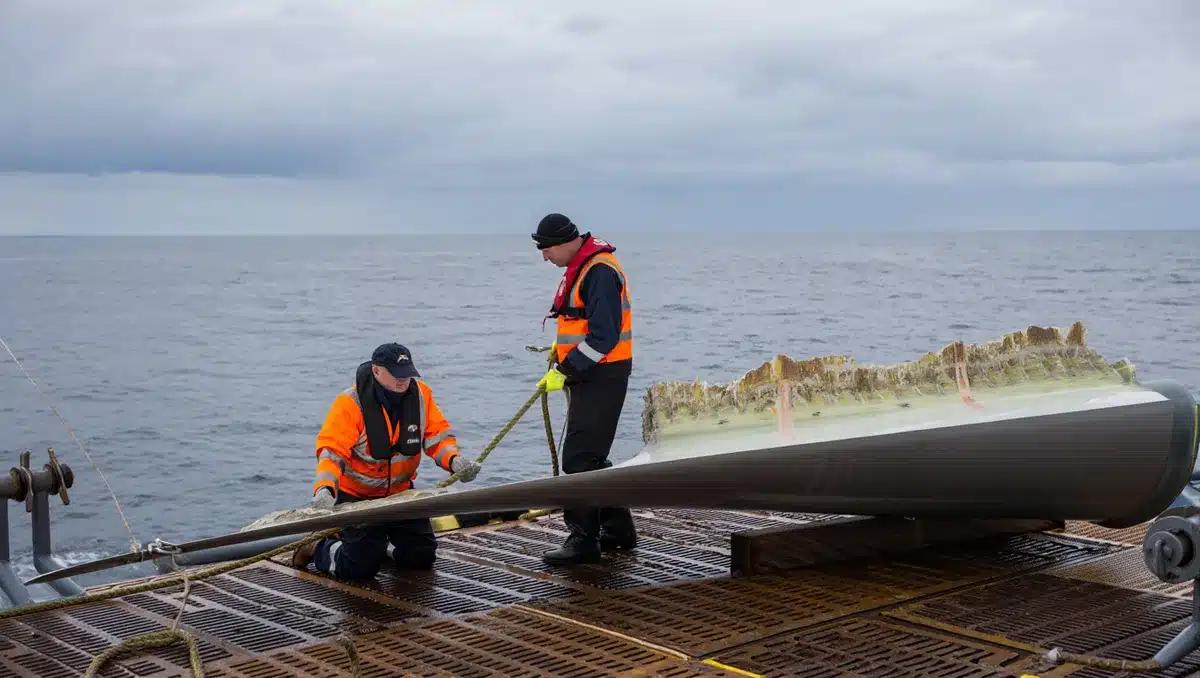
A Vestas turbine blade broke off and detached from one of the world’s largest offshore wind turbines at EnBW’s 960MW He Dreiht project in the German North Sea on July 22, 2026, prompting authorities to halt certain construction activities and recover the floating debris.
German Federal Police located a 20-meter-long section of the blade drifting in the water near the wind farm and recovered it using a patrol vessel. Due to its size and position just below the water surface, the blade posed a significant hazard to shipping traffic and was difficult for vessels to detect. The blade sections were transported to the seaside town of Cuxhaven, where they were lifted ashore by crane.
EnBW, a German utility company, confirmed that certain activities have been temporarily paused at the He Dreiht site as a precaution. The company is not permitted to work on the impacted wind turbine or on blades from the same production site, according to EnBW deputy CEO and CFO Thomas Kusterer. However, he noted that basic commissioning of the wind park is progressing well and remains ongoing.
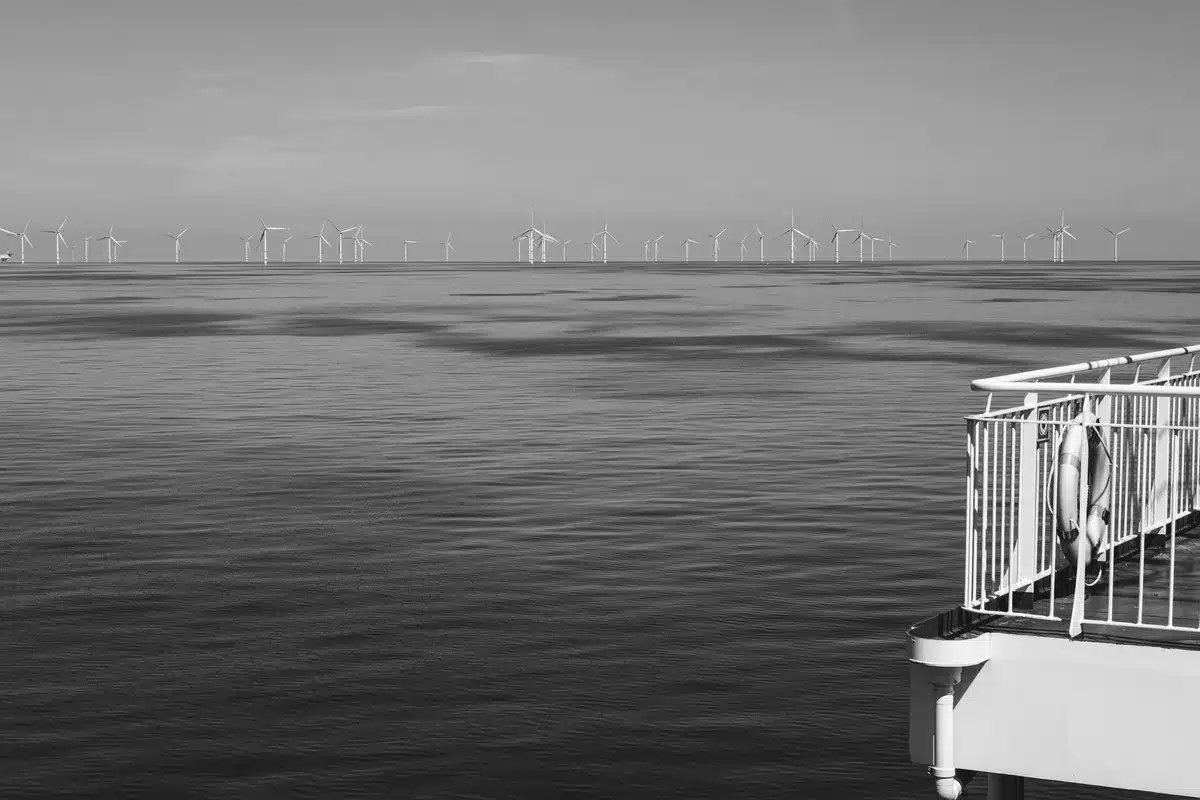
The He Dreiht wind farm is home to Vestas’ flagship V236-15.0MW offshore turbine — one of the world’s most powerful wind machines. The 960MW project is the world’s first subsidy-free offshore wind farm and comprises 64 of these turbines. The site successfully commissioned one of the V236 units last year and was nearing completion, with the 64th turbine about to be installed at the time of the blade failure.
The root cause of the failure remains under investigation. Kusterer stated that EnBW is still assessing the impact of the incident but believes it is a single issue with one blade and not indicative of a broader technical problem with the turbine design or manufacturing process.
Blade failures at large offshore wind farms have occurred before. In July 2024, a GE Vernova Haliade-X turbine blade broke at the Vineyard Wind offshore project off Massachusetts, causing a 107-meter blade to snap and dump thousands of pieces of fiberglass into the ocean. GE Vernova’s investigation identified a manufacturing deviation — insufficient bonding — at its blade manufacturing facility in Gaspe, Canada that should have been caught during quality assurance. The company reinspected all approximately 150 blades it had produced for offshore wind at that time.
The Vestas incident underscores the challenges facing the rapidly expanding offshore wind industry as turbines grow larger and more powerful. Large turbine blades, which can exceed 100 meters in length, are subject to extreme stress from wind, waves, and salt spray in offshore environments. Manufacturers and operators continue to refine inspection and maintenance protocols to prevent such failures.
Sources
- Recharge News — EnBW’s statement on partial work suspension, 960MW project details, and Vestas V236-15.0MW turbine specifications.
- Windtech International — German Federal Police recovery details, blade dimensions (20 meters long, 2 meters wide), and transport to Cuxhaven.
- Cape Cod Times — GE Vernova manufacturing deviation findings from Vineyard Wind blade failure investigation and reinspection protocol.
- Vineyard Gazette — Details on Vineyard Wind July 13, 2024 blade failure and broader context on offshore wind challenges.