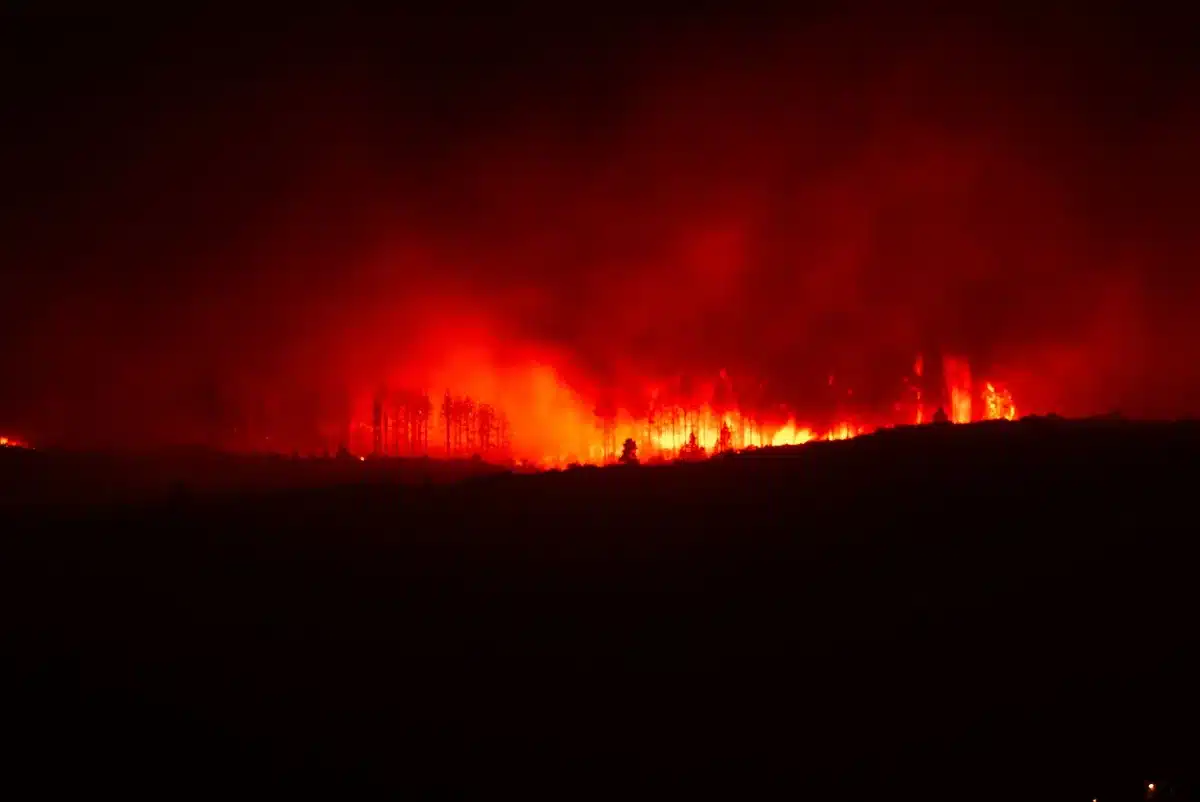
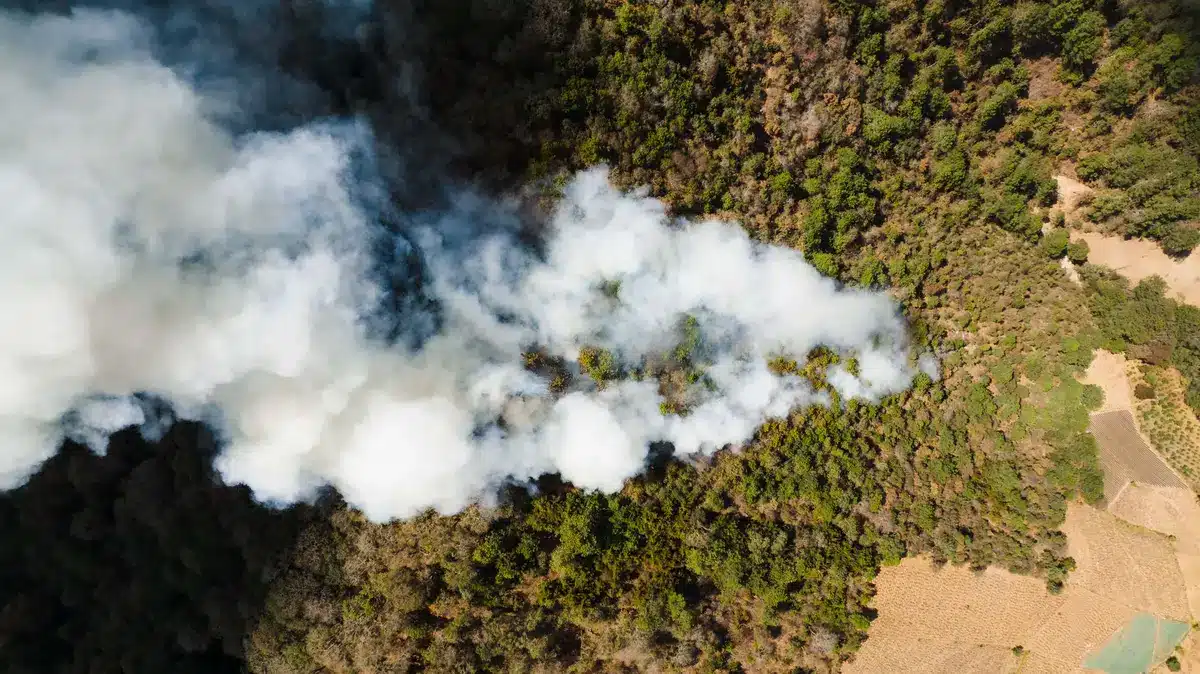
British Columbia declared a provincewide state of emergency on August 8 as a fast-moving wildfire forced more than 22,000 people to evacuate from their homes across the Okanagan region. The Bald Range wildfire, which ignited Friday evening near Summerland, grew to approximately 9,500 hectares (23,500 acres) by Saturday morning, advancing so rapidly that the entire community of Summerland—home to about 12,000 residents—was ordered to leave overnight.
The fire’s explosive growth underscored the extreme conditions gripping the province. The Bald Range fire was first detected Friday at 5:30 p.m. PT and expanded to 50 square kilometres within three hours, according to the CBC, nearly doubling in size overnight as hot, dry conditions persisted. The blaze was burning “out of control,” with fire crews describing behavior unlike anything they had encountered before.
Summerland, located in British Columbia’s wine country near Okanagan Lake, was not alone. Another 8,000 people in and around the nearby community of Peachland also received evacuation orders. The province is grappling with a broader crisis: more than 100 wildfires are burning across British Columbia as of August 8, with roughly 70 of those fires started within the past week. In total, close to 22,000 people are under evacuation orders, while approximately 9,700 others have been told to prepare to leave at a moment’s notice.
The rapid escalation of this fire season reflects a troubling pattern. In 2017, British Columbia experienced the largest evacuation event in its recorded history, when 65,000 people were displaced across the fire season, according to historical records. The current evacuation numbers, while significant, remain below that precedent—but the concentration of evacuees in a single region and the fire’s speed of growth illustrate the intensity of current conditions.
Experts point to climate change as a primary driver of increasingly destructive fire seasons. According to the Climate Institute of Canada, accelerating climate change—largely from the burning of fossil fuels—makes wildfires bigger, hotter, and more destructive. A World Weather Attribution analysis released in early August 2026 found that fire intensity in British Columbia this year is comparable to the severe seasons of 2014 and 2023. The BC Wildfire Service had warned in June 2026 that the province would face “the highest and most sustained” wildfire risk of the season, citing drought levels, reduced snowpack, and prolonged heat as key factors.
The evacuation has disrupted communities during peak agricultural season. About 40 migrant farm workers were evacuated from cherry farms and brought to temporary shelters in West Kelowna, while 238 residents from long-term care facilities were also displaced. Evacuees are being housed at emergency reception centers in West Kelowna and Penticton, where volunteers have prepared hundreds of food boxes and meals.
Premier David Eby urged residents under evacuation orders to leave immediately, warning that the fires continue to move “incredibly quickly.” Officials said they would reassess the situation as conditions evolve, though evacuation orders and alerts are expected to remain in place for at least several days.
Sources
- CBC News — live updates on the Bald Range wildfire, evacuation orders, and provincial state of emergency declaration
- Reuters — confirmation of the Bald Range wildfire size and evacuation numbers
- Al Jazeera — report on the fast-moving wildfire and evacuation orders
- AP News — coverage of the state of emergency and evacuation scale
- Climate Institute of Canada — fact sheet on climate change and wildfires in Canada
- World Weather Attribution — analysis of climate change’s role in 2026 Canadian wildfire season
- Wikipedia — historical data on 2017 British Columbia wildfires and evacuation precedent