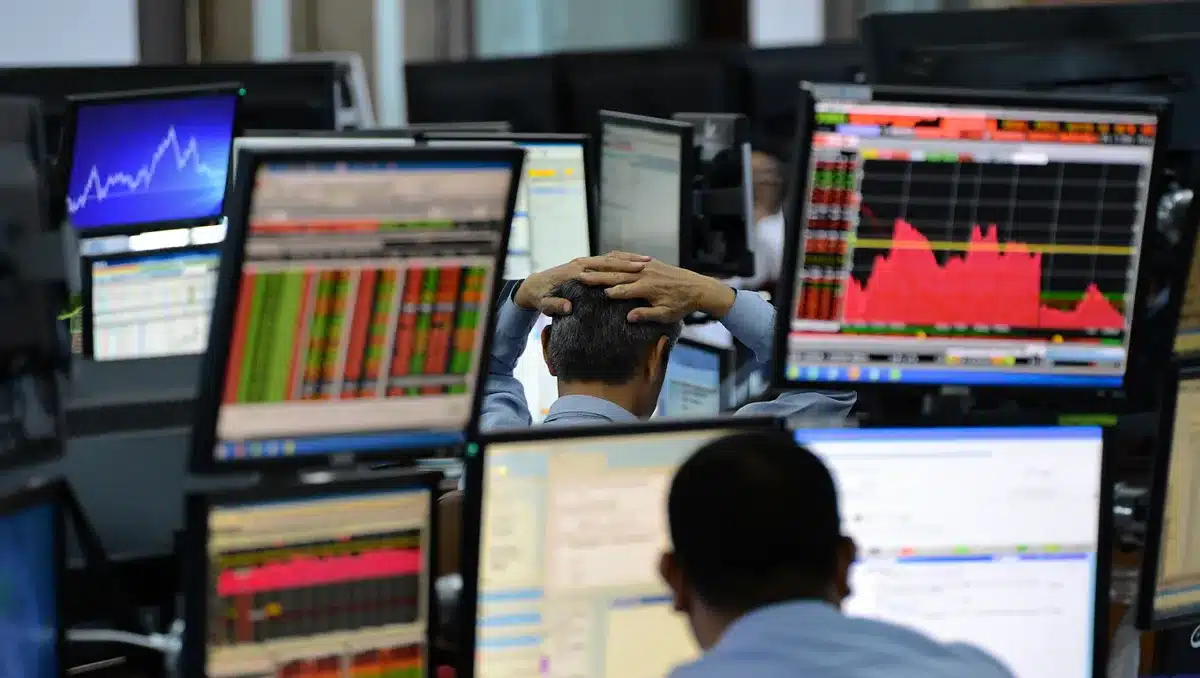
Roblox stock plunged 27% on July 31, 2026, marking the gaming platform’s worst single-day decline on record, after the company revealed that a deliberate algorithm shift to prioritize player retention over short-term spending would pressure bookings for quarters to come. The selloff erased more than $10 billion from Roblox’s market value, which stood at about $34.9 billion before the collapse, and left the stock trading near 52-week lows.
The core culprit: in June 2026, Roblox reconfigured its recommendation engine to evaluate player behavior over a 28-day window—up from 7 days—and began favoring games with stronger long-term retention over what management called “cash-grabby” titles optimized for immediate spending. The shift steered users toward lower-monetizing evergreen content, directly suppressing the bookings metric that investors watch as the leading indicator of current consumer demand on the platform.

Roblox reported second-quarter bookings of $1.57 billion, up just 8% year-over-year—a dramatic deceleration from 70% growth in the prior-year quarter and below Wall Street expectations. While revenue rose 36% to $1.47 billion, that figure reflects bookings purchased in prior quarters, not current consumer intent. CFO Naveen Chopra attributed the Q2 shortfall directly to a “greater-than-expected engagement shift away from high-monetizing viral games toward lower-monetizing evergreen content.”
The monetization hit concentrated precisely where it hurt most: the under-13 cohort in the United States and Canada, which drives the platform’s highest spending per user. Average bookings per daily active user in the US and Canada stood at $38.63 in Q2 2026, compared with $4.90 in Asia-Pacific—a gap that explains why strong international user growth could not offset North American deterioration.
Analysts at Wedbush downgraded the stock to neutral, noting that “comparisons get tougher through August and September just as monetization is more challenged, particularly for U13 users, where we suspect parents are simply less willing to hand over highly discretionary dollars right now.” The firm cited added headwinds from competitive gaming launches, including Take-Two’s planned “Grand Theft Auto VI” release later in 2026.
Beyond the algorithm change, Roblox’s monetization pressure also stems from age-verification features introduced in November 2025. The company disclosed that only 51% of global daily active users had completed age checks by the Q1 2026 earnings call, and that the friction had contributed to declines in app-store ratings and organic sign-ups. The safety initiative and the algorithm shift arrived simultaneously, compounding near-term bookings weakness.

The outlook withdrawal proved the decisive blow. Roblox guided third-quarter bookings to decline 14% to 18% year-over-year—the first guided quarterly bookings contraction in the company’s public history—but declined to provide full-year 2026 guidance, citing “increasing variability and continued updates to our platform.” Without a forward anchor, analysts’ discounted cash flow models lost their footing, triggering downgrades from firms including Benchmark, which moved to Sell.
CFO Chopra did acknowledge that internal testing shows “relatively immediate improvement” in retention and engagement hours, alongside an immediate reduction in dollars per hour. The company’s strategic bet is that users acquired and retained through engagement-focused algorithms spend more over their lifetime than users driven by short-term monetization spikes. But management declined to project when—or if—that crossover would occur, leaving investors to weigh the platform’s long-term health against near-term bookings pain.
Other metrics offered some offsetting color. Free cash flow rose 66% to $294 million, operating cash flow climbed 60% to $318 million, and adjusted EBITDA surged to $152 million from $18 million in the prior year. Average monthly unique payers rose 15% to 27 million, signaling broader monetization of the user base even as per-user spending declined. Roblox also repurchased 8.2 million shares for approximately $380 million, with $2.6 billion remaining under its buyback authorization—a signal from management about where it believes fair value sits.
The stock’s collapse comes as Roblox faces additional headwinds. A securities class action covering investors who purchased shares between October 31, 2024 and April 30, 2026 carries an August 7, 2026 lead-plaintiff deadline, with litigation firms alleging that Roblox made misleading statements about organic growth while concealing the monetization impact of age verification. Separately, the European Commission is expected to formally designate Roblox as a Very Large Online Platform under the EU Digital Services Act, which would trigger mandatory annual audits, systemic risk assessments, and potential fines of up to 6% of global annual turnover for violations.
CEO David Baszucki’s team is pressing forward with platform reinvention efforts including “Roblox Reality” (photorealistic multiplayer), “Moments” (a social-sharing feature), and the newly launched “Build”—a mobile-first AI creation tool announced in July 2026 that lets users turn text prompts into playable games directly from a smartphone without programming experience. Build entered public alpha testing in New Zealand on July 28, with global rollout planned for subsequent months.
Sources
- Reuters — reported Roblox shares plunged nearly 30% on July 31, 2026, after the company forecast a sharp drop in bookings due to recommendation algorithm changes that prioritize long-term retention over short-term spending.
- TechTimes — provided detailed analysis of Q2 2026 earnings, the distinction between revenue and bookings, the algorithm shift’s impact on the under-13 monetization cohort, guidance withdrawal, and legal/regulatory headwinds including the securities class action and EU Digital Services Act designation.
- Yahoo Finance — reported Roblox hit 123 million daily users in Q2 2026 while bookings grew just 8%, and shares dropped nearly 30% after earnings.
- Investing.com — provided Q2 2026 earnings call transcript details, including CFO Chopra’s attribution of bookings shortfall to engagement shift away from high-monetizing games toward lower-monetizing evergreen content.
- Wedbush Securities — downgraded Roblox to neutral and cited challenges in U13 monetization and competitive pressures from upcoming gaming launches.