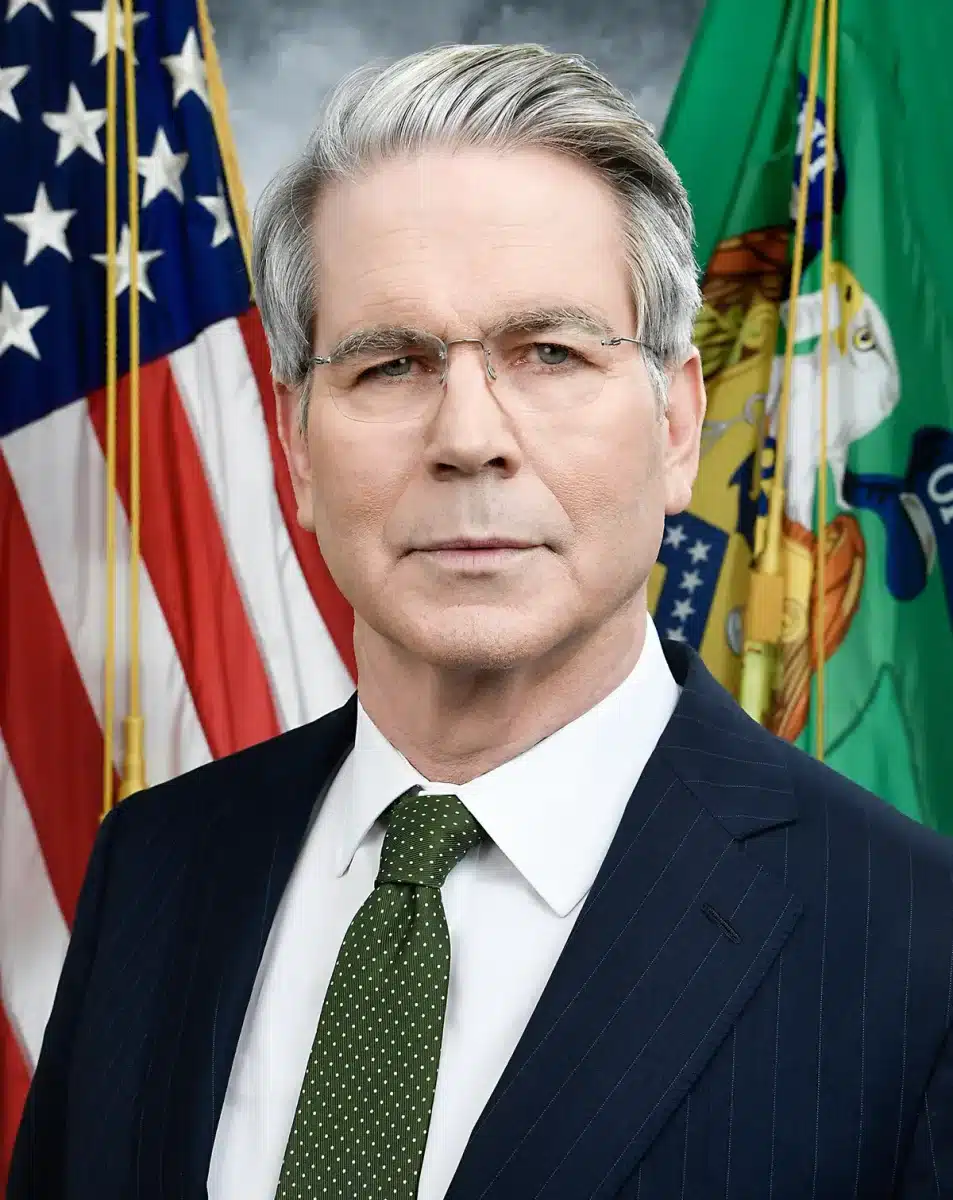
Treasury Secretary Scott Bessent declared the K-shaped economy “over” during a CNBC interview on August 4, claiming that lower-income workers are finally catching up to higher earners after years of diverging economic outcomes. “I can say here definitively, the K-shaped economy is over,” Bessent said on Squawk Box, adding he is “sick of hearing about” the concept that has defined unequal pandemic recovery.
Bessent pointed to a 2% real wage gain for the bottom 25% of workers and cited White House policies under the One Big Beautiful Bill Act—including no taxes on tips or overtime—as evidence that the wage gap is narrowing. He said the economy is now “C-shaped,” where outcomes at either end of the wealth spectrum are starting to converge, rather than diverging as the K-shape suggests.
The K-shaped economy emerged as a label during the pandemic recovery to describe how wealthy households and workers pulled further ahead while lower-income Americans fell behind. The shape reflects two diverging lines: one rising sharply for high earners, one flattening or declining for lower earners. Bessent’s claim represents an effort to reframe the economic narrative ahead of the 2026 midterms, where affordability remains a top voter concern.
However, recent data suggests the K-shaped economy remains largely intact. The Federal Reserve Bank of Atlanta’s wage growth tracker, which includes both full-time and part-time workers, found that in June 2026 the lowest quartile of earners saw 3.6% wage growth compared to 3.9% for the top 25%—a gap that has persisted throughout 2026, according to Fortune’s analysis. At no point in 2026, per the Atlanta Fed, has median wage growth for the bottom percentile exceeded that of the top percentile.
Moody’s chief economist Mark Zandi contradicted Bessent’s characterization last month, writing that “the K-shaped economy—with the well-to-do thriving and everyone else lagging—remains firmly intact.” Citing Federal Reserve data, Zandi noted that for the 12 months ending in the first quarter of 2026, outlays by earners of $200,000 a year or more grew an estimated 6.5%—nearly 4% in real terms—while outlays by those in the bottom 80% were unchanged after inflation.
RSM chief economist Joe Brusuelas made a similar point in June, finding that 75 cents of every dollar generated by the equity rally flows through the top income quintile. “If we are counting on the stock market to sustain the consumer economy, we are leaning on a channel that deepens the K-shape rather than offsets it,” Brusuelas wrote, according to Fortune. Elizabeth Pancotti, vice president of policy at the Groundwork Collaborative think tank, echoed the skepticism: “I don’t think we’ve seen any evidence to suggest that we’re closing the gap on those things,” she told Business Insider.
While Bessent’s argument rests partly on wage gains among full-time workers in lower income brackets, those gains are narrower when part-time and hourly workers are included in the analysis. Business Insider found that the lowest earners have seen the smallest gains since late 2024 when measured on that broader basis. Additionally, consumer spending patterns—a key driver of economic health—continue to show a K-shape, with the top 40% of earners spending the fastest and the lowest quintile spending the slowest, according to a Federal Reserve Bank of Atlanta study covering 2021 through 2025.
Bessent’s comments reflect the Trump administration’s push to highlight economic gains ahead of midterm elections. The Treasury Secretary credited tax policies and job growth as evidence of narrowing inequality, but independent economic data and expert analysis suggest the fundamental divergence between rich and poor persists despite some modest wage improvements at the lower end of the income spectrum.
Sources
- Fortune — Bessent’s K-shaped economy declaration, wage data for bottom 25% of workers, Atlanta Fed wage growth tracker data, and expert commentary from Moody’s and RSM on persistent inequality.
- CNBC — Transcript of Bessent’s August 4, 2026 Squawk Box interview where he declared the K-shaped economy over and described the economy as C-shaped.
- Business Insider — Analysis of wage growth data by income quartile, consumer sentiment trends, and expert commentary from Elizabeth Pancotti on the persistence of the K-shaped economy.
- Federal Reserve Bank of Atlanta — Wage growth tracker data by income quartile and consumer spending analysis showing K-shaped patterns through 2025.