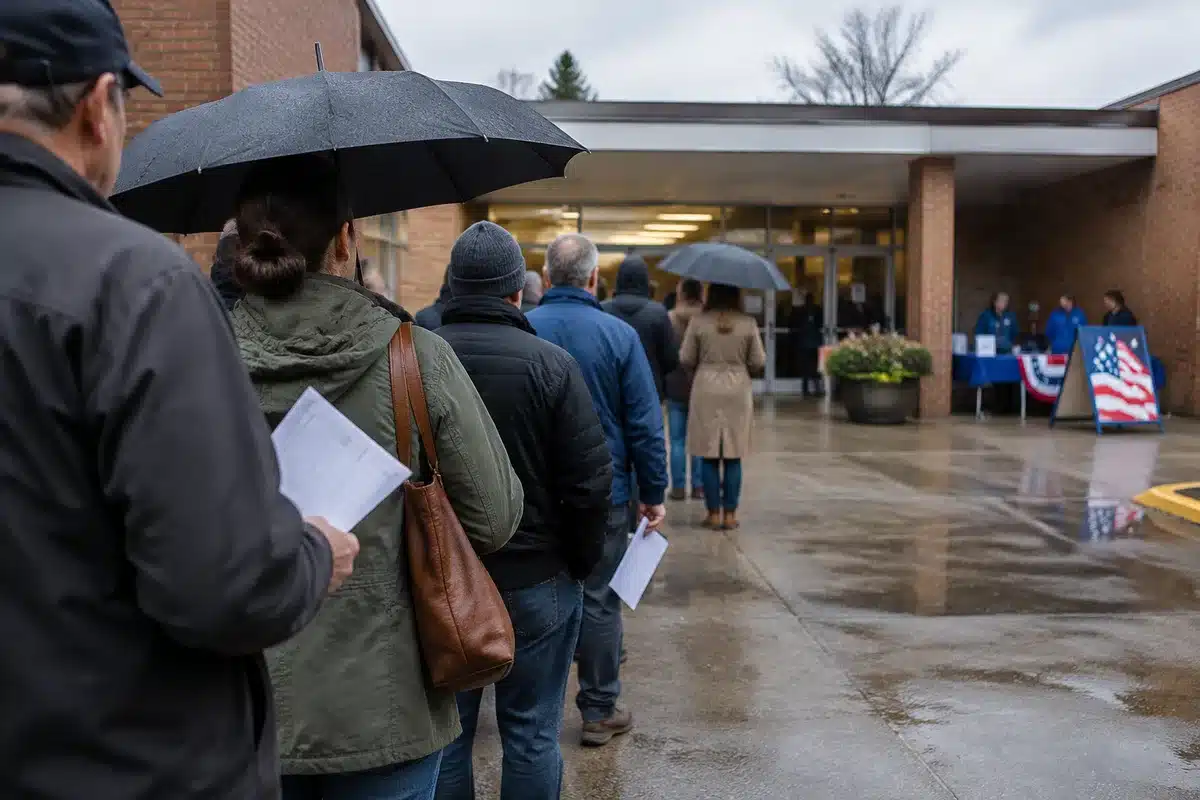
Progressive physician Abdul El-Sayed won Michigan’s closely watched Democratic Senate primary on August 4, defeating moderate Rep. Haley Stevens with 51.1% of the vote to Stevens’s 45.3%, according to NBC News. The victory marked a significant test of the Democratic Party’s ideological direction ahead of November’s general election, in which El-Sayed will face Republican Mike Rogers for the open seat being vacated by retiring Senator Gary Peters.
El-Sayed, a 41-year-old former Detroit health official, ran as a populist progressive championing Medicare for All, taxing billionaires, and ending unconditional U.S. military aid to Israel. Stevens, 43, a four-term congresswoman from suburban Detroit, positioned herself as the safer, more experienced choice, emphasizing manufacturing jobs and affordability while backing continued U.S. support for Israel.

The race became a proxy battle over the Democratic Party’s future. El-Sayed secured endorsements from Vermont Senator Bernie Sanders and New York Congresswoman Alexandria Ocasio-Cortez, signaling progressive momentum in the party. Stevens, meanwhile, won the backing of Michigan Governor Gretchen Whitmer and the state’s outgoing Senator Gary Peters, representing the Democratic establishment. The American Israel Public Affairs Committee and affiliated groups spent nearly $30 million to support Stevens, according to reporting from July, making it a record investment in a single Democratic primary.
Israel’s war in Gaza became the defining issue. El-Sayed, whose family is Egyptian-American, called Israeli actions in Gaza a genocide—a characterization Israel denies—and criticized U.S. military aid to Israel. Stevens, a staunch Israel supporter, said she backs unconditional U.S. aid to the country. The issue resonated deeply in Michigan, which is home to the second-largest Arab-American population in the United States.

El-Sayed’s victory reflects a broader shift among Democratic primary voters toward progressive candidates during the 2026 cycle. Recent polling before the vote showed El-Sayed leading by an average of 8 percentage points, though some earlier surveys had shown the race tighter. On primary day, El-Sayed told Politico he expected to defeat Rogers by 7 points in the general election, signaling confidence in his general-election prospects against the Republican nominee.
Stevens demonstrated party unity after the result, telling CNN she would support El-Sayed if he won the primary. The race highlighted what University of Virginia political analyst Larry Sabato described as a fundamental Democratic dilemma: the party has historically relied on votes from both Jewish and Arab communities to win elections, forcing difficult choices on Middle East policy.
Sources
- NBC News — Final primary results showing El-Sayed 51.1%, Stevens 45.3%
- CBS News — Coverage of the race, candidate positions, and endorsements including AIPAC spending
- BBC News — Comprehensive analysis of the two candidates’ platforms, Israel-Gaza divide, and party implications
- Reuters — Report on Israel policy differences and voter views
- AP News — Description of the race as a test of Democratic Party direction