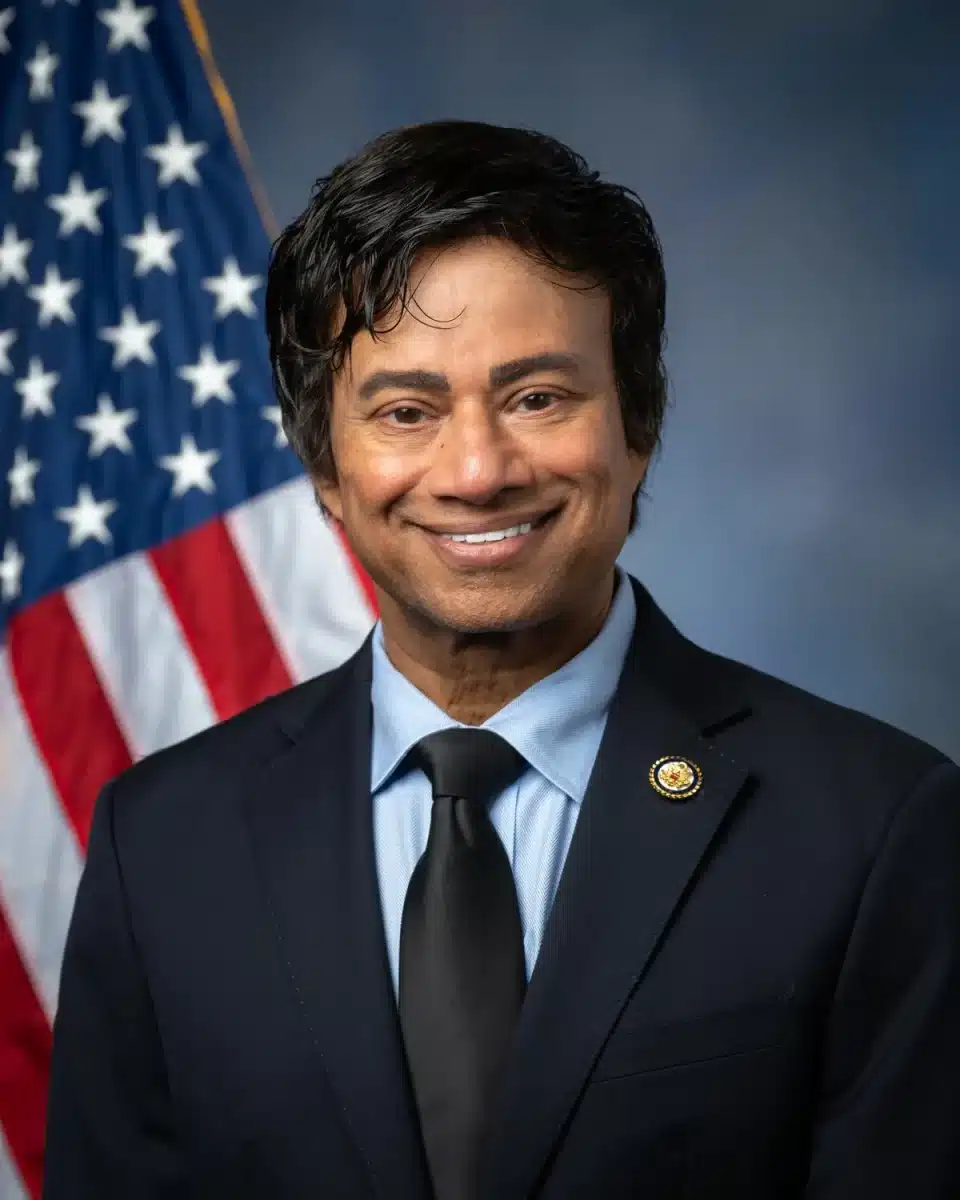
Shri Thanedar faces his strongest primary challenge yet in Michigan’s 13th Congressional District on August 4, 2026, as state Rep. Donavan McKinney mounts a competitive bid to unseat the two-term Democratic incumbent. McKinney, 34, a Black Detroit native in his second term in the Michigan House, is backed by progressive groups including Bernie Sanders, U.S. Rep. Rashida Tlaib, and Justice Democrats—an unusual show of support against a sitting Democrat from members of the same party.
The race has narrowed to a two-candidate contest after other challengers, including Detroit City Council Member Mary Waters, were disqualified from the ballot and are mounting write-in campaigns. Political insiders view the primary as Thanedar’s to lose, given his substantial fundraising advantage and name recognition, but the challenger’s progressive backing and the district’s demographic tensions have created genuine uncertainty.

Thanedar, 71, an Ann Arbor-area businessman with an estimated net worth of $40 million, entered the final weeks before the primary with $4.7 million available to spend on advertising and voter outreach. He loaned his campaign more than $2 million this year, including $1.3 million in July alone. McKinney reported about $264,000 in campaign funds as of June 30, a significant disadvantage in direct spending power.
The incumbent’s top priorities include lowered costs, reproductive rights, voting rights, standing up to President Donald Trump, clean water, and stronger infrastructure. McKinney campaigns on affordability, universal child care, Medicare for All, and removing corporate money from politics. Both candidates opposed the planned ICE detention center in Romulus and support abolishing ICE, though they differ on the breadth of their progressive agendas.
The Black Representation Issue
At the heart of McKinney’s challenge lies a demographic reality that has reshaped Detroit politics. When Thanedar won in 2022, he became the first non-Black representative from a majority-Black city in nearly 70 years, ending a continuous line of Black congressional representation dating to 1955. McKinney has made restoring that representation central to his campaign message.
“For the Blackest major city in all America to be without Black representation, that says something,” McKinney said, according to reporting from Bridge Detroit. “And so for a lot of people in our district, that is top of mind. They want to see it returned, and they want to see us fulfill the legacy and carry on the torch.”

Thanedar has defended his record, citing his work on voting rights, diversity and equity initiatives, and other issues affecting Black constituents. Wayne County Commissioner Jonathan Kinloch, who leads the Michigan Democratic Party’s 13th District committee, said Thanedar is “absolutely” serving Black Detroiters and noted that “all things progressive does not mean that it benefits Black folks.”
However, the Congressional Black Caucus members’ decision to endorse McKinney—an unusual move given that sitting members of the same party rarely back primary challengers—underscores the intensity of the representation debate. The endorsement signals that some Black leaders view the seat as a priority for restoring Black representation to the Detroit delegation.
In 2024, Thanedar defeated Mary Waters, a Detroit City Council member, by a wider margin: 54.9% to 33.8%. This year’s race, with McKinney as a sole well-organized challenger backed by prominent national progressives, has narrowed the political landscape. Political consultant Mario Morrow said ousting Thanedar would be “a huge upset,” but he acknowledged that the two-candidate format creates “more uncertainty” than past primaries fragmented among five or more candidates.
Former state House Speaker Joe Tate, a resident of the 13th District who has not endorsed, said the competitive dynamic is harder to predict. “Both candidates are out campaigning,” he noted, and the absence of vote-splitting among multiple challengers means McKinney’s support translates more directly into a challenge to the incumbent.
The winner of the August 4 primary will likely win the November general election in this heavily Democratic district. If both Thanedar and U.S. Rep. Rashida Tlaib, who represents the neighboring 12th District, win reelection, Michigan will have no Black representation in Congress—a consequence that has sharpened the stakes of the primary fight.
Sources
- Bridge Detroit — Thanedar’s record, McKinney’s background and campaign priorities, both candidates’ positions on ICE detention center
- Detroit News — Campaign funding figures, candidate ages and profiles, Black representation issue, expert analysis from Mario Morrow and Joe Tate, Congressional Black Caucus endorsement, 2024 primary results
- Ballotpedia — Thanedar’s 2024 primary victory margin, candidate eligibility and ballot status
- Congress.gov — Thanedar’s congressional tenure and service start date