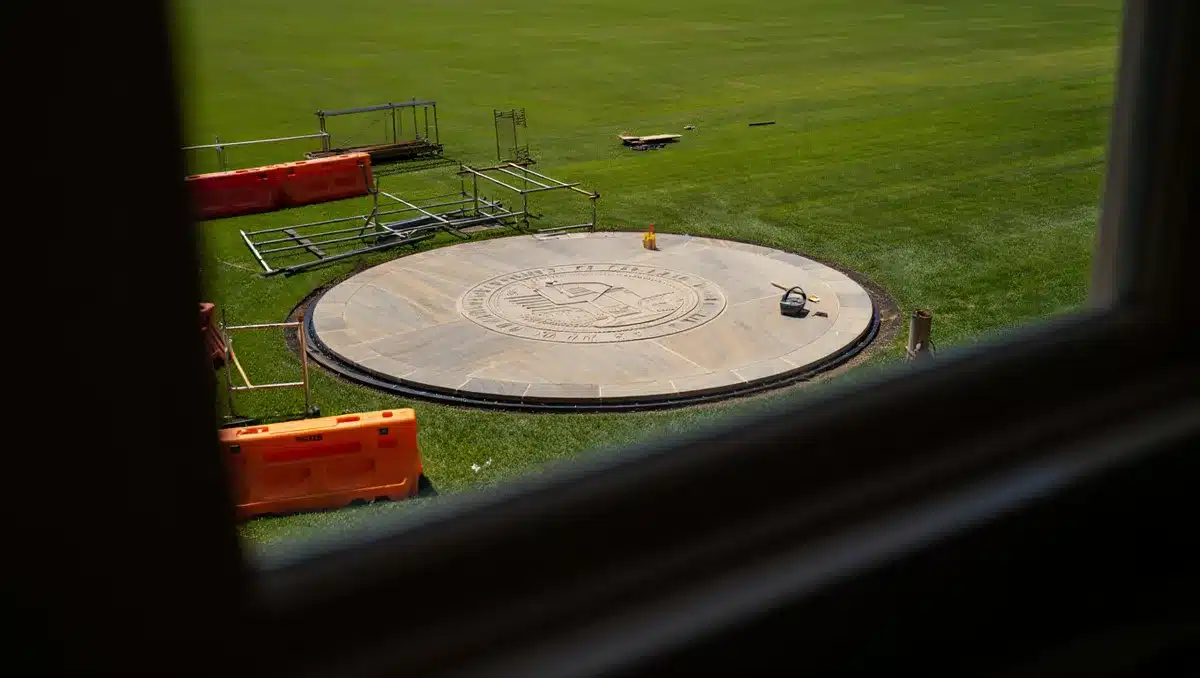
President Donald Trump is overseeing construction of a permanent granite helipad on the White House South Lawn to accommodate a fleet of more powerful Marine One helicopters, a project estimated to cost between $5 million and $6 million that has moved forward without seeking congressional or design review approval.
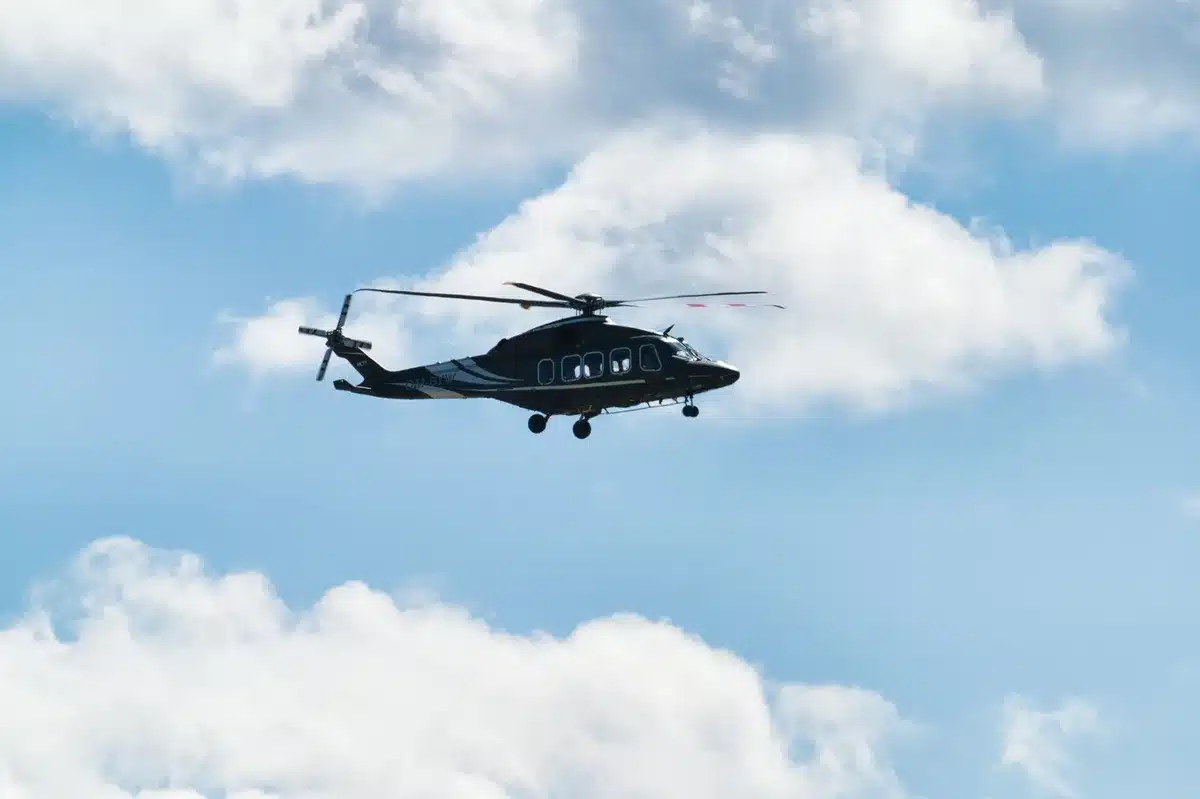
Trump announced the helipad project in early July 2026, explaining that the newer VH-92A Marine One helicopters—which entered service in 2024 under President Joe Biden—generate so much power during landing that they had damaged the White House lawn. “They didn’t tell us how powerful these helicopters were,” Trump said, adding that Sikorsky Aircraft, which manufactures the helicopters, agreed to fund the project as a result.
The helipad will feature the presidential seal carved in granite and is designed to replace the portable aluminum pads that had previously been placed on the South Lawn for helicopter landings. According to Trump, the granite construction solves what he described as a persistent problem with the more advanced aircraft.
The Washington Post reported that Trump accelerated construction ahead of an “upcoming state visit,” requiring crews to work around the clock and increasing costs by approximately $875,000. While the documents obtained by the Post did not name the state visit’s subject, officials requested the accelerated timeline days after Trump invited Chinese President Xi Jinping to visit on September 24, according to the publication. A White House official told TIME the helipad construction is expected to be finished sometime in September.
Authorization and Approval Process
The helipad project has proceeded without the typical review processes required for permanent additions to the White House. According to the New York Times, Trump has not asked Congress or any review panel, such as the Commission of Fine Arts, to approve the project. A White House spokesman stated that “operational upgrades to the White House grounds, such as the helipad installation, do not require commission reviews.”
This approach contrasts sharply with how such projects have been handled historically. Even Trump’s planned Mar-a-Lago helipad underwent a preservation-commission review, multiple public hearings, and votes by the Palm Beach town council. The New York Magazine noted that in previous decades, adding something as minor as a tennis court to the White House campus could take years of review.

The helipad project represents one of several major construction initiatives Trump has undertaken at the White House and across Washington. He has also demolished the East Wing to build a new ballroom, installed a patio in the Rose Garden, revamped the West Wing colonnade, and renovated the Lincoln Bathroom. These projects have drawn criticism from historic preservation groups and Democratic lawmakers, though Trump has defended them as necessary upgrades and legacy-building efforts.
Democratic Senator Kirsten Gillibrand of New York called the helipad project a “joke,” arguing that Trump is prioritizing construction projects instead of important legislation. Democratic Senator Mark Warner of Virginia criticized the accelerated construction costs, saying Trump was “charging taxpayers an extra $875,000 just to speed up construction of his private White House helipad.”
Lockheed Martin, which owns Sikorsky, confirmed that the company is funding the project, though the exact timing of the donation remained unclear. The company stated in a statement that the donation was made to the National Park Service as part of “a long history of supporting projects in both the Washington, D.C., area and across the country.”
Sources
- USA Today — Trump’s announcement of the helipad project, cost estimates of $5-6 million, and Sikorsky funding confirmation
- Time — Details on the VH-92A helicopter specifications, state visit acceleration, and Democratic criticism from Gillibrand and Warner
- The Washington Post — Accelerated construction timeline, $875K cost increase, and state visit context
- New York Magazine — Lack of congressional or Commission of Fine Arts approval, comparison to Mar-a-Lago helipad review process, and broader White House renovation context
- Lockheed Martin statement via Time — Company funding confirmation and ethics compliance statement