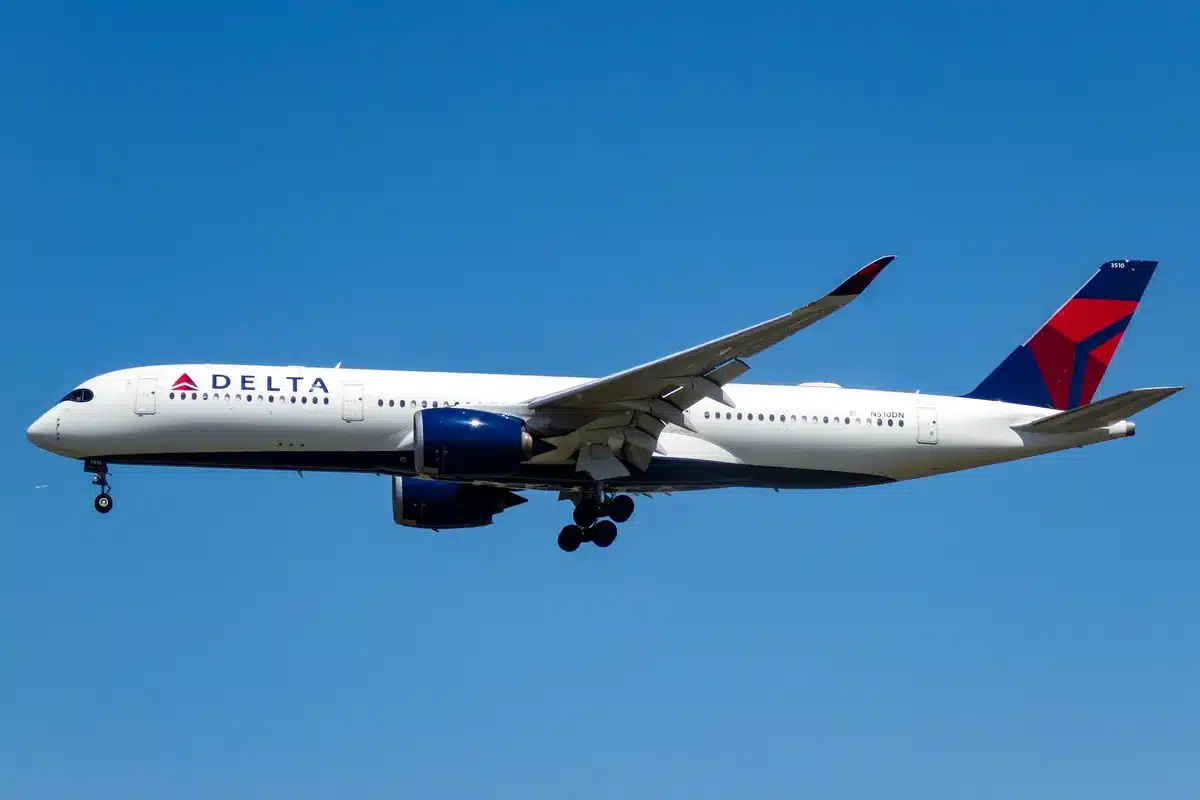
Delta Air Lines canceled 73 flights on July 31, 2026, the most among all U.S. carriers that day, as thunderstorms disrupted operations at its major hubs including Atlanta Hartsfield-Jackson International Airport. The cancellations marked the second consecutive day Delta led the nation in flight disruptions, following 54 cancellations on July 30. By comparison, JetBlue canceled 9 flights on July 31, while United Airlines, Southwest Airlines, and SkyWest each canceled 3, 2, and 1 flight respectively.
Severe thunderstorms bearing down on Atlanta and Boston Logan International Airport drove the disruptions, according to Delta’s travel alerts. The airline’s Atlanta hub, the world’s busiest airport by passenger volume, serves as the carrier’s primary connection point, meaning weather disruptions there cascade across its entire domestic network. Delta updated its advisories to warn passengers that travel to, from, or through Atlanta on August 1 and 2 may be impacted.
Delta offered flexible rebooking for passengers traveling to or through Atlanta. The carrier waived change fees for those rebooking by August 4, 2026, maintaining the same destination and cabin class. Passengers rebooking after August 4 may face fare differences. The airline encouraged customers to check flight status frequently and sign up for real-time notifications via mobile or email.
Passenger experiences during the disruptions varied widely. One traveler departing Tampa for Boston reported a delay exceeding eight and a half hours, questioning why flights remained delayed even after local weather cleared. Denis Lemieux, a Diamond Medallion member, faced cancellation on his first flight and a mechanical breakdown on his second leg, calling the situation “unacceptable.” However, Michael Carbenia, also a Diamond Medallion member, praised Delta for covering his hotel accommodation after a mechanical issue, crediting the airline’s customer service.
Operational Challenges Beyond Weather
Delta’s elevated cancellation rate in 2026 extends beyond weather-related disruptions. According to data from aviation-analytics firm Cirium, Delta’s domestic-flight cancellation rate has been higher than the industry average throughout the year. The carrier fell from first to sixth place in U.S. airline reliability rankings in January 2026, with a combined cancellation rate of 2.45 percent—a sharp decline from its historical standing.
Pilot availability has emerged as a significant operational constraint. According to reports from May 2026, cancellations due to pilot availability reached more than 10 times historic levels and accounted for 35 percent of mainline flight cancellations. Acceptance rates for open pilot trips plunged to 2 percent from approximately 37 percent year over year, slowing Delta’s ability to fill last-minute scheduling gaps. Industry observers attributed the staffing pressure to contractual changes in Delta’s pilot working agreement that took effect over the past year.
The U.S. Department of Transportation’s enhanced passenger protections require airlines to provide automatic cash refunds for significantly delayed or canceled flights. Travelers affected by Delta’s disruptions should familiarize themselves with these entitlements, as airline staff may not proactively offer cash alternatives to travel vouchers. The broader industry challenge underscores the fragility of hub-and-spoke networks during severe weather events, particularly when an airline’s primary connection point faces disruption.
Sources
- Nomad Lawyer — Delta’s 73 cancellations on July 31, comparison with other carriers, thunderstorm impacts on Atlanta and Boston hubs, passenger experiences, and rebooking policies
- Simple Flying — Delta’s January 2026 Air Travel Consumer Report showing 2.45% combined cancellation rate and drop to sixth place in reliability rankings
- The Independent — Pilot availability cancellations exceeding 10 times historic levels and accounting for 35% of mainline flight cancellations as of May 2026
- Wall Street Journal — Delta’s domestic-flight cancellation rate higher than industry average in 2026