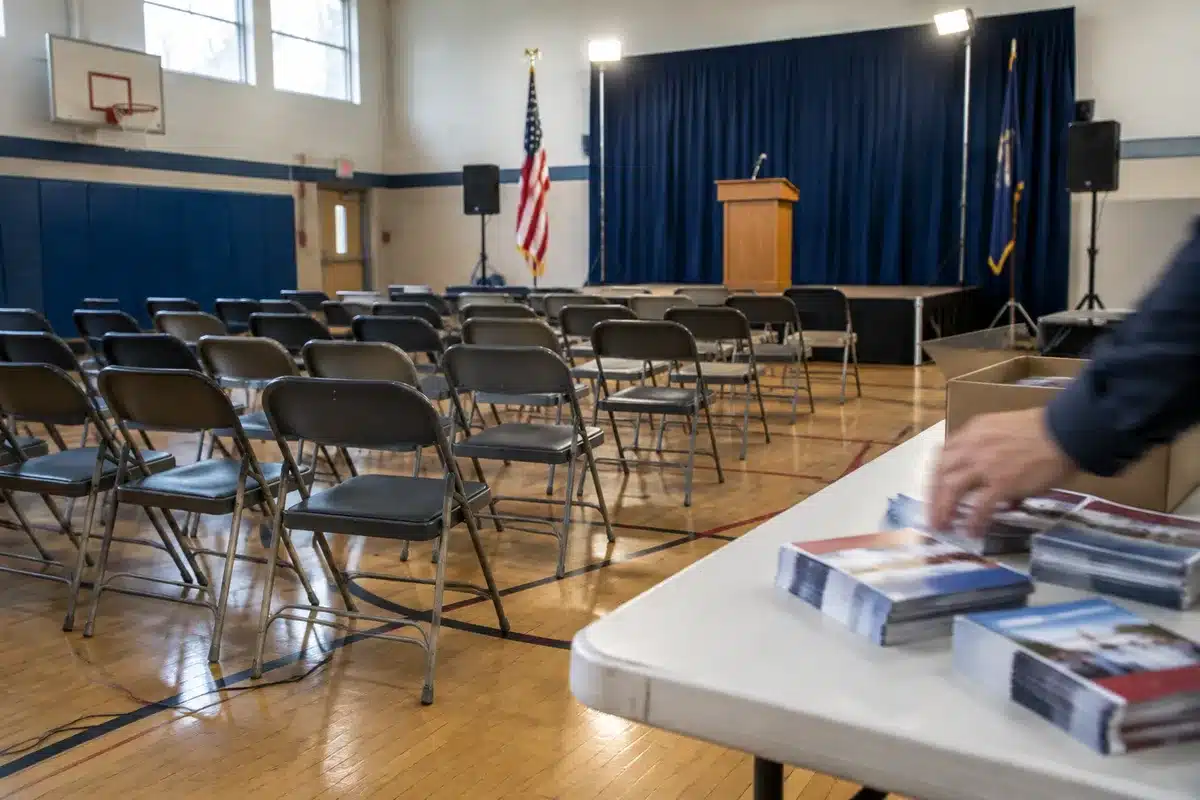
Senate Republicans are working through a jam-packed legislative agenda in their final week before departing for a five-week August recess, racing to address multiple competing priorities as the midterm elections loom. The Senate’s to-do list includes funding the government through October, authorizing spending for the Iran war, reauthorizing foreign intelligence surveillance powers, passing a farm bill, advancing a defense policy bill, and addressing President Trump’s demand to pass the SAVE America Act before the break.
The compressed timeline is creating significant strain within GOP leadership, with Trump publicly pressuring Senate Majority Leader John Thune to cancel the August recess entirely until the SAVE America Act—which would impose voter ID and documentary proof of citizenship for voter registration—passes the chamber. “I can’t believe how lucky the Democrats got with this Senate leadership,” Trump wrote on TRUTH Social, criticizing Thune’s assertion that the chamber lacks the votes for much of the Trump agenda.

Thune has pushed back against Trump’s demands, telling reporters that if the president wants votes, he needs to work the phones himself. According to PBS News, Thune has noted that Trump is partly responsible for some senators’ reluctance to support his agenda, given that Trump has attacked and opposed some sitting Republican senators. The tension between Trump and Senate leadership is unusual for a party that typically presents a united front.
The Senate is close to striking a bipartisan deal to avert a government shutdown and fund the government through December, according to sources familiar with negotiations. However, that agreement faces complications from competing demands on the calendar. The House passed a continuing resolution in July extending government funding through December 4, but Senate Republicans are working toward a longer-term deal.
Among the most contentious items on the agenda is the SAVE America Act, which Trump has made a litmus test for his cooperation on other legislative priorities. According to Lisa Desjardins of PBS News, the SAVE Act is the least likely of the six major items to pass before recess, despite being Trump’s stated prerequisite for supporting other Republican goals. The divide over whether to delay the August recess to force a vote on the measure has split Senate Republicans, with some, like Senator Mike Lee of Utah, calling for the break to be canceled.
Senate Republicans also face obstacles on other fronts. The $95 billion reconciliation 3.0 package that the House passed narrowly on July 22 faces steep odds in the Senate, with GOP leaders signaling the measure is unlikely to advance before the recess. The reconciliation bill includes $60 billion for defense spending and provisions related to voting restrictions, but Senate Republicans have expressed skepticism about its viability.
Senator Mitch McConnell, the former Senate Republican leader, remains absent from the chamber while recovering in rehab from a fall. McConnell’s prolonged absence complicates efforts to advance the farm bill, which requires his involvement in committee. The Capitol’s attending physician confirmed McConnell is working through rehabilitation related to his fall and childhood polio, with doctors visiting daily, but no return date has been announced.
The Senate is also moving forward with confirming Trump’s executive nominees. Jay Clayton, the U.S. attorney for Manhattan and Trump’s pick as director of national intelligence, advanced through a procedural vote on July 27 and is expected to win final confirmation. The position, created after 9/11 to coordinate intelligence across agencies, has been led by an acting director who has overseen significant personnel reductions.
The collision of these competing demands—Trump’s ultimatum, the compressed calendar, and divided GOP sentiment—has created what PBS News characterized as a “packed, complicated agenda” for Senate Republicans. With the House already on summer recess, the Senate’s remaining time to address these issues is rapidly dwindling, leaving GOP leaders to decide which priorities will advance before the break and which will be deferred until after the midterm elections.
Sources
- PBS News — Senate agenda details, Trump-Thune tensions, and Lisa Desjardins reporting on GOP priorities and vote counts
- The Hill — Trump’s demands to cancel August recess, Senate GOP division, and SAVE Act pressure
- NPR — House passage of continuing resolution extending government funding through December 4
- Axios — House GOP passage of reconciliation 3.0 budget framework on July 22
- Democracy Docket — Trump’s threats and demands regarding SAVE America Act passage