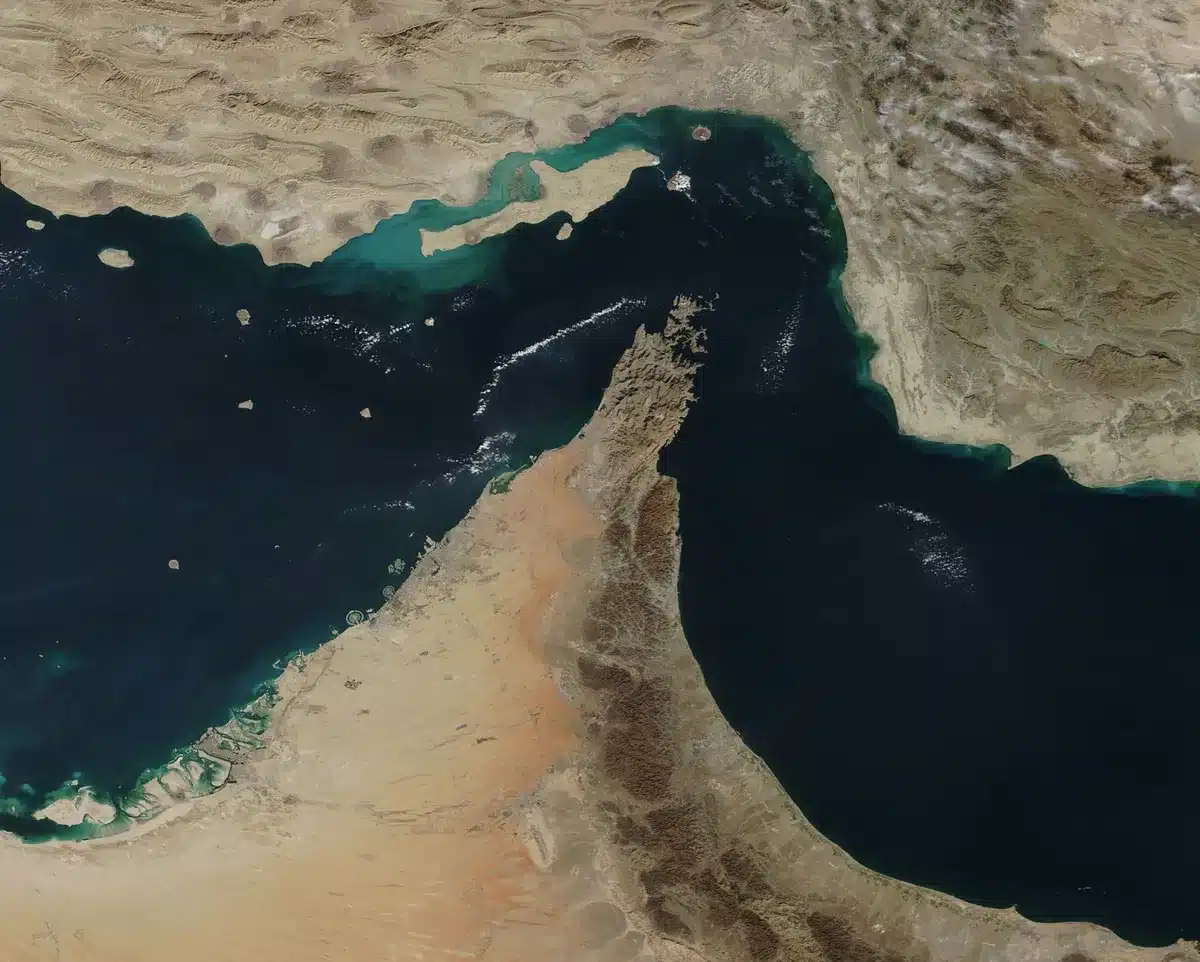
Iran’s Revolutionary Guard Corps said it struck and stopped three oil tankers in the Strait of Hormuz on July 28, claiming the vessels had violated its directives in one of the world’s most critical shipping lanes. The IRGC said the tankers were “targeted and stopped” after continuing on “an unsafe and illegal route” despite warnings, according to Iranian media reports. The latest action underscores the ongoing paralysis of the Strait of Hormuz, where shipping traffic has plummeted to multi-month lows amid escalating U.S.-Iran strikes.
The Strait of Hormuz has been effectively closed to most commercial traffic since early July, when renewed military clashes between the U.S. and Iran sparked a fresh wave of attacks on vessels. On July 13, shipping data showed tanker traffic through the waterway had fallen to its lowest level in two months, according to Reuters. The disruption has forced maritime insurance rates to surge, with Al Jazeera reporting on July 23 that insurance prices have soared as shipping companies avoid the route due to safety risks.
Iran has launched repeated attacks on tankers throughout July as part of its broader campaign to assert control over the strait. The IRGC reported striking two oil tankers on July 14, and on July 21, Iranian forces attacked another tanker, forcing its crew to abandon ship, according to the Associated Press and Euronews. Each incident has triggered retaliatory U.S. strikes, intensifying the military escalation.
The paralysis of the Strait of Hormuz has sent shockwaves through global energy markets. Oil prices have remained elevated as shipping disruptions tighten crude supplies—Brent futures were trading near $91 per barrel in late July as the conflict escalated, according to reporting on the market’s response to Iran tensions. The chokepoint carries roughly one-third of global seaborne crude oil trade, making any closure a threat to energy security worldwide.

The current standoff echoes a pattern that emerged when Strait of Hormuz traffic collapsed to just 3 vessels as U.S.-Iran strikes intensified in late July. Shipping analysts have warned that the functional closure of the waterway could persist if diplomatic efforts fail to ease tensions. The U.S. has maintained a naval blockade of Iranian ports while Iran has declared the strait closed to unauthorized vessels, creating a standoff that has left hundreds of ships waiting or rerouting to longer, costlier passages.
The recent tanker seizure also reflects Iran’s broader assertion of control over the strait. In April 2026, Iran’s navy seized two container ships—the MSC Francesca and the Epaminondas—claiming they had violated its directives. That action, too, triggered international condemnation and heightened concerns about freedom of navigation in one of the world’s most strategically vital waterways. The pattern suggests Iran is using military force and seizures as tools to enforce its claims of sovereignty over the strait.
Negotiations have stalled despite efforts at mediation. In late July, Trump administration officials paused strikes to allow diplomacy to proceed, but the underlying dispute over control of the Strait of Hormuz and Iran’s nuclear program remains unresolved. The continued attacks on tankers and the paralysis of shipping suggest that without a breakthrough in talks, the disruption to global energy supplies and maritime commerce will persist.
Sources
- Anadolu Agency — IRGC Navy said it ‘targeted and stopped’ 3 oil tankers over alleged violations in Strait of Hormuz on July 28, 2026
- Arab News — Iran’s Revolutionary Guards said they struck and halted three oil tankers in the Strait of Hormuz, reported July 29
- Reuters — Strait of Hormuz shipping traffic fell to lowest level in two months on July 13, 2026
- Al Jazeera — Maritime insurance rates soared amid shipping disruptions in the Strait of Hormuz and Bab al-Mandeb, reported July 23
- Associated Press — Iran attacked a tanker in the Strait of Hormuz on July 21, forcing crew to abandon ship
- Euronews — Tanker attacked in Strait of Hormuz as U.S. strikes Iran, reported July 21
- New York Times — Oil prices remained elevated amid slowdown in shipping through Strait of Hormuz, reported July 9
- CNBC — Brent crude surged past $91 as U.S.-Iran conflict escalated, reported July 20
- Time — Iranian state media named two vessels seized by the IRGC as the MSC Francesca and Liberia-flagged Epaminondas on April 22, 2026