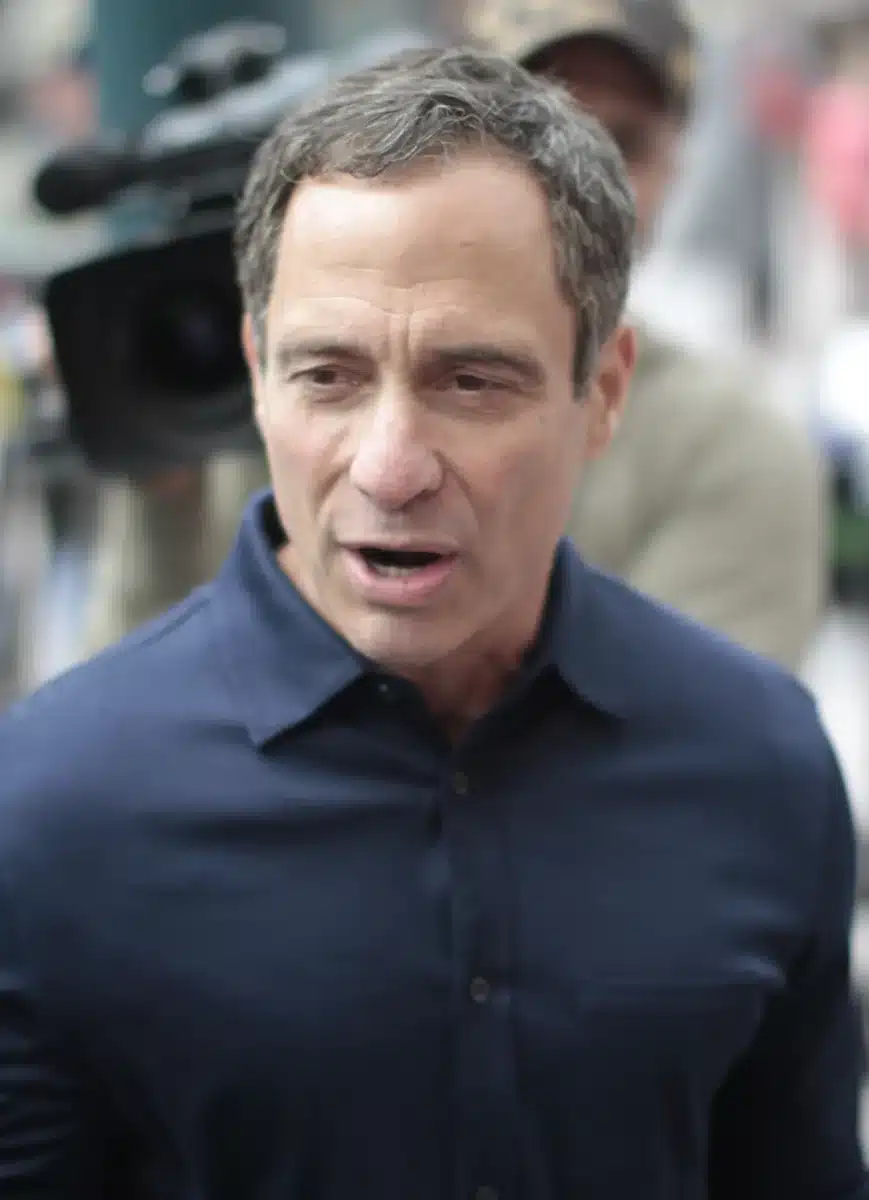
TMZ founder Harvey Levin defended Dr. Anthony Fauci as an “amazing public servant” just hours after the former health official invoked the Fifth Amendment more than 100 times during a contentious Senate hearing on July 29, marking a rare moment when the celebrity gossip outlet’s leader used his platform for a pointed political statement.
“I have not used TMZ’s YouTube channel to vent personal feelings, but I am going to today,” Levin said in a video posted by the outlet Wednesday. “Watching Anthony Fauci before a congressional committee take the Fifth Amendment is just one of the most heartbreaking things I have seen in government.”
Levin acknowledged he has “problems with the way CDC handled COVID,” noting the agency “did damage to children and adults.” Yet he drew a sharp distinction between critiquing pandemic policy and the Republican-led effort to hold Fauci accountable, which he characterized as a “witch hunt” reminiscent of 1950s McCarthyism.
“Anthony Fauci over decades has been an amazing public servant,” Levin said, citing Fauci’s work during the AIDS crisis in the 1980s. “In the ’80s, I had many friends who died of AIDS—a horrible, painful death—and I had friends who lived because of Anthony Fauci, because he was willing to look at experimental drugs in a different way than they had looked at them before, and that really resulted in lives saved.”
Fauci’s hearing was chaired by Sen. Rand Paul (R-Ky.), who has indicated he plans to seek a contempt-of-Congress vote against Fauci for refusing to answer questions about the Centers for Disease Control and Prevention’s pandemic response, vaccine policy, and the origins of COVID-19. Republicans have argued that Fauci’s policies caused widespread harm and that he misled the public.

Levin’s intervention marks an unusual moment for TMZ, which has traditionally focused on entertainment and celebrity news. The outlet has, however, significantly expanded its political coverage this year, deploying reporters to Capitol Hill and other Washington locations to confront lawmakers with the paparazzi tactics that made it famous in Hollywood. According to The Hill, Levin has stated that TMZ’s Washington presence “will sometimes be fun, sometimes intensely serious,” signaling a deliberate shift into political accountability journalism.
Levin, a lawyer, television producer, and journalist who founded TMZ in 2005, framed Fauci’s predicament as a symptom of a broader authoritarian climate. He argued that Republican senators are pursuing Fauci not to clarify policy but to imprison him. “There is no other point to this hearing,” Levin said. “They want to throw him in prison, there is no other point to this hearing.” He noted that Fauci cannot safely answer questions because anything he says could be weaponized against him in future prosecution, comparing the environment to Senator Joseph McCarthy’s 1950s anti-communist witch hunts.
Fauci’s refusal to testify came days after his personal diary entries were released, revealing private doubts about aspects of his own public statements during the pandemic. The diary release intensified Republican criticism and may have prompted the legal strategy of invoking Fifth Amendment protections against self-incrimination. Biden pardoned Fauci in January 2025, shielding him from federal prosecution, according to reporting from earlier this week.
Levin’s defense of Fauci stands in contrast to broader Republican messaging, which has cast the former NIAID director as responsible for pandemic harms. Sen. J.D. Vance attacked Fauci’s pandemic policies at the same hearing, while other GOP senators have called for criminal charges. Levin’s intervention suggests that the political and cultural debate over Fauci’s legacy and accountability remains sharply divided.
Sources
- The Hill — Levin’s full statement defending Fauci and characterizing the hearing as a witch hunt and McCarthyism comparison
- Mediaite — Levin’s extended remarks on Fauci’s AIDS-era work and his legal analysis of the Fifth Amendment invocation
- Daily Caller — Levin’s defense of Fauci as a dedicated public servant and his criticism of the hearing’s purpose