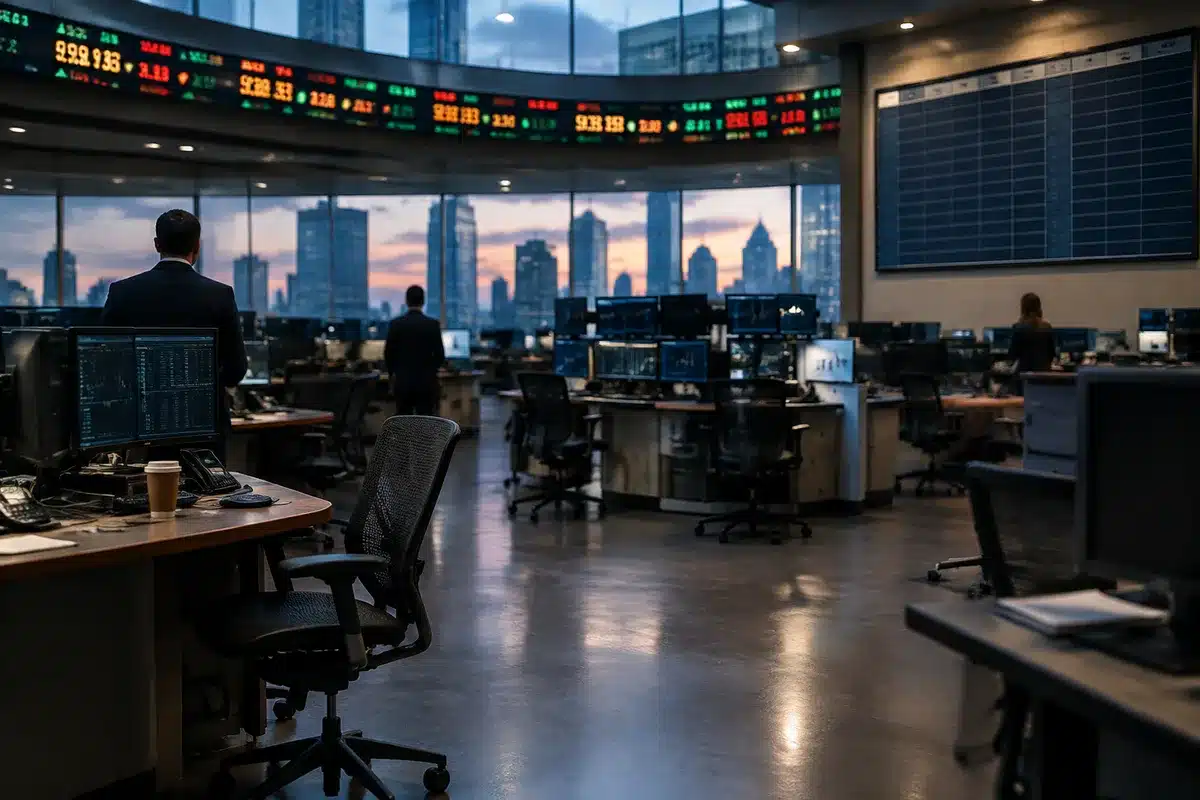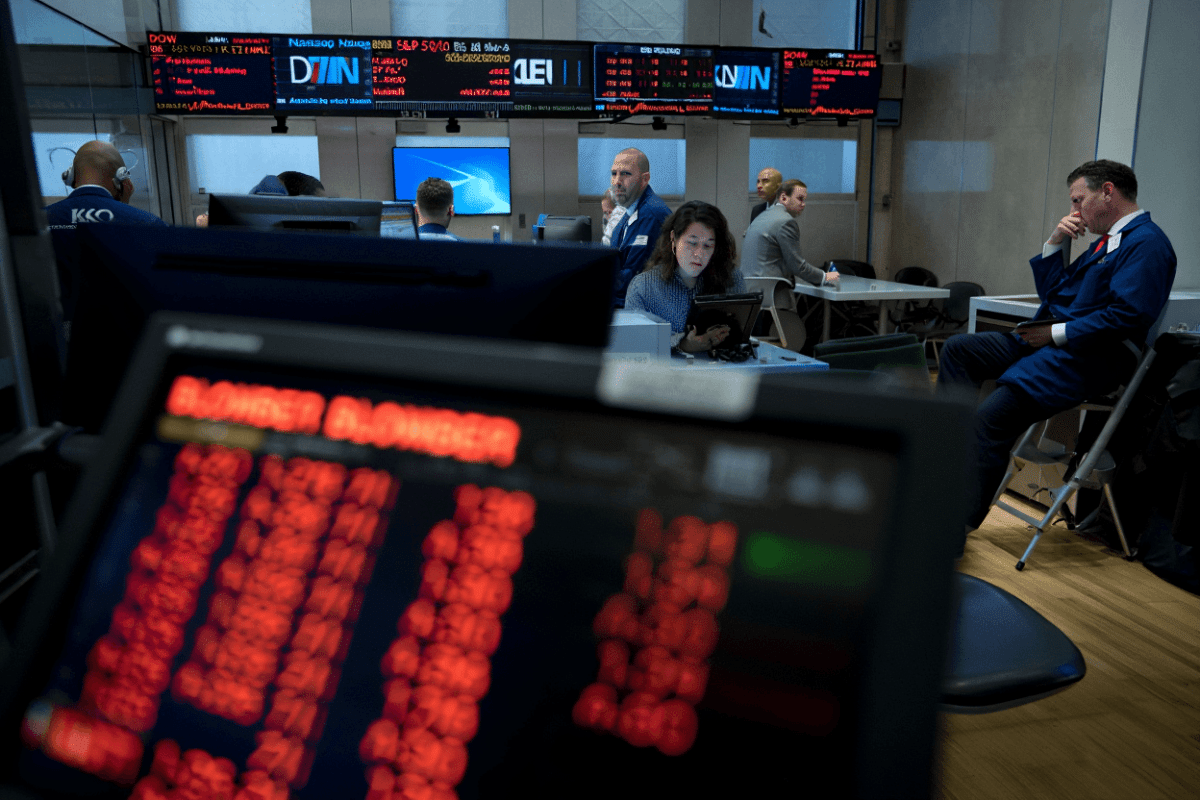
Stock market investors faced a sharp sell-off on July 29 after the Federal Reserve held interest rates steady, leaving the Dow down 1,153 points and sparking a surge in bond yields as traders grew concerned the central bank wasn’t moving quickly enough to combat stubborn inflation.
The Federal Reserve voted 9-3 to keep its benchmark lending rate unchanged at a range of 3.5% to 3.75%, where it has remained since December 2025. The decision marked the fifth consecutive meeting where the central bank chose not to adjust rates, according to CNN.
The decision proved contentious. Three regional Fed bank presidents—Beth Hammack of Cleveland, Neel Kashkari of Minneapolis, and Lorie Logan of Dallas—dissented in favor of a quarter-point rate hike, citing persistent inflation concerns. Fed Chair Kevin Warsh called the internal debate a “good family fight,” characterizing the disagreement as healthy deliberation rather than a pause in policy.
Wall Street’s reaction was swift and negative. The Dow tumbled 1,153 points, or 2.19%, marking its worst day since April 2025, according to CNN. The S&P 500 sank 1.52% to 7,316.15 points, while the tech-heavy Nasdaq dropped 1.74% to 24,442.94 points, putting it down about 9.8% from its record high in early June, according to Reuters.
The real pressure appeared in the bond market, where yields surged significantly. The 30-year Treasury yield jumped 12 basis points to 5.21%, its highest level since 2007, according to CNN. The 10-year yield climbed to 4.68%, up eight basis points on the day. By contrast, the two-year yield—which tracks expectations for near-term Fed policy—fell four basis points to 4.24%, signaling trader uncertainty about the Fed’s next move.
The bond market’s divergence sent a clear message: investors believe the Fed is not acting aggressively enough on inflation. Warsh reiterated the Fed’s commitment to controlling price pressures during his post-meeting press conference, but markets remained skeptical. According to CNN, “the reaction from markets signals traders are less certain about an immediate rate hike but are concerned about inflation and questioning the Fed’s outlook.”
The inflation picture remains mixed. June consumer prices fell 0.4% on a monthly basis—the first monthly decline in six years—and annual inflation eased to 3.5% from 4.2% in May, according to CNN. However, the ongoing conflict in the Middle East has pushed global energy prices higher, raising concerns that inflation could reignite. Warsh acknowledged the improvement but cautioned against complacency, telling the House Financial Services Committee that one favorable inflation reading did not mean “mission accomplished.”
The dissents and the market reaction underscore growing pressure for the Fed to consider raising rates before year’s end. Earlier in the month, some economists had expected at least one rate cut in 2026, but resurgent inflation tied to rising energy prices has prompted forecasters to instead expect higher rates by the end of the year, according to CBS News. The three dissenting votes marked the most significant internal disagreement in recent months and signal that a rate hike scenario is gaining traction within the central bank.
Sources
- CNN — Fed decision, stock market reaction, bond yields, Warsh’s inflation comments, dissenting votes, and market sentiment on inflation concerns
- Reuters — S&P 500 and Nasdaq closing levels and percentage declines
- CNBC — Fed rate decision, dissenting officials, inflation data, and market expectations
- CBS News — Inflation forecasts and rate expectations for 2026