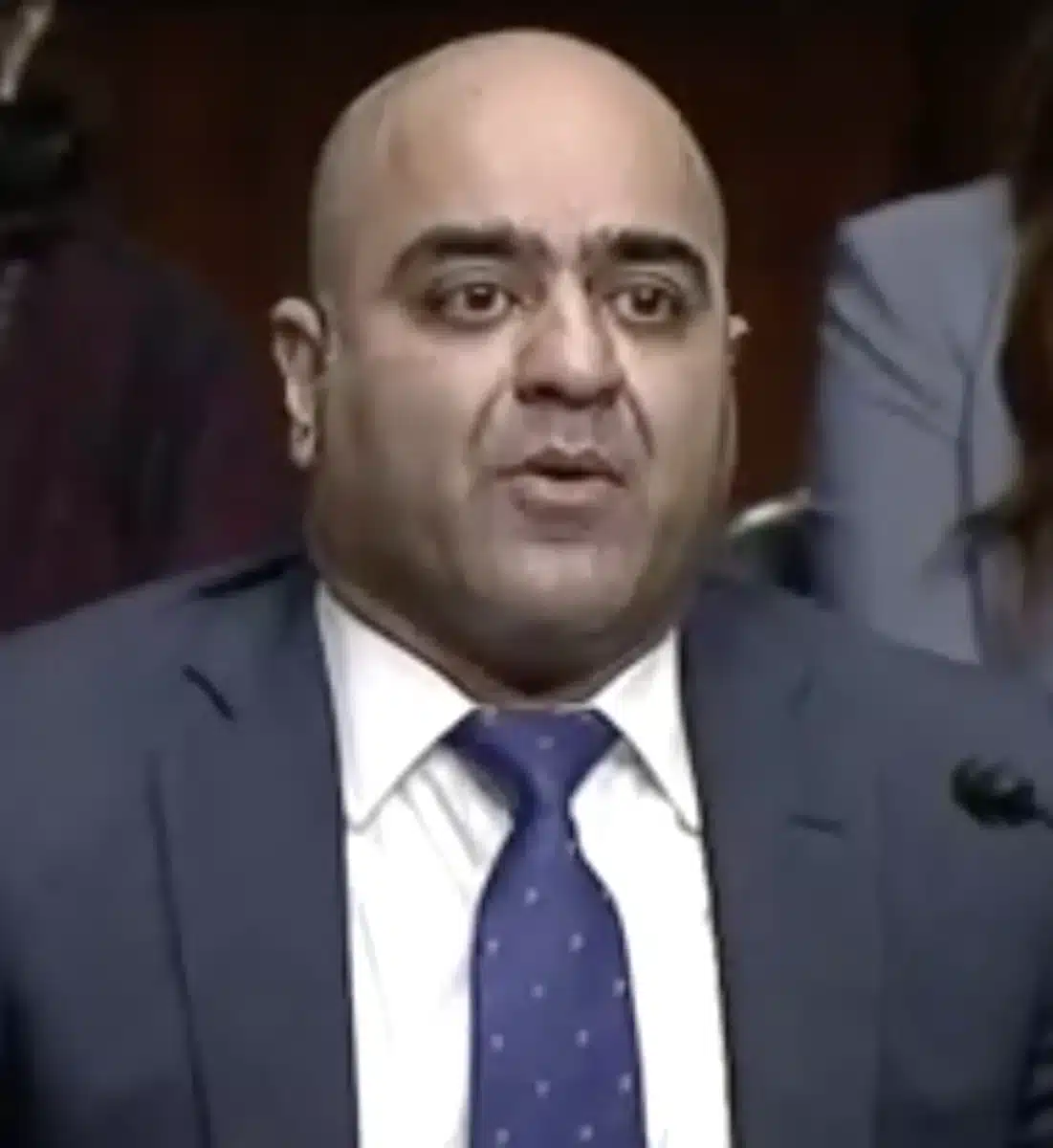
Federal Judge Zahid Quraishi dismissed the Department of Justice’s lawsuit against New Jersey on Wednesday, blocking the Trump administration’s attempt to obtain the state’s unredacted voter rolls and marking the 18th consecutive loss in the DOJ’s nationwide voter data litigation campaign.
Quraishi ruled that Title III of the Civil Rights Act of 1960 does not grant the federal government authority to compel states to hand over their computerized voter registration databases. The judge found that the law applies only to documents that “come into” election officials’ possession, not to a continually changing database created and maintained by the state itself.
The dismissal came with prejudice, meaning the DOJ cannot refile the same claim in district court, though the department can appeal. Assistant Attorney General Harmeet Dhillon responded by escalating her attacks on New Jersey Governor Mikie Sherrill, saying on social media that DOJ would continue pursuing the state’s data “through all legal means.”
| STOCK: federal courthouse judge bench
The timing of the ruling is significant. Just nine days earlier, the DOJ had tried to strengthen its case by citing New Jersey’s disclosure that a software glitch led to approximately 6,600 noncitizens being mistakenly registered to vote between June 2023 and June 2024, with roughly 400 of them casting ballots. The federal government argued this error proved it needed access to the voter rolls to verify no other noncitizens remained registered.
Quraishi rejected that argument in a footnote, writing that the noncitizen registration error had “no bearing” on whether the DOJ was legally entitled to the information. He emphasized that New Jersey’s noncitizen voter error did not change the fundamental legal analysis of what records federal law required states to produce.
The judge’s opinion stressed the constitutional balance between state and federal power in election administration. Quraishi wrote that the Framers “chose to embrace balance” in crafting the Elections Clause, distributing power between state and federal government while notably excluding the Executive Branch from a primary role. He found that the DOJ’s interpretation of its legal authority would directly conflict with federal election laws, creating what he called an “untenable” position.
The ruling also noted that allowing the DOJ’s interpretation would require states to freeze their voter rolls, violating the Help America Vote Act and National Voter Registration Act, which mandate continuous updates to keep voter lists accurate.
| STOCK: voter registration database screen
New Jersey Attorney General Jen Davenport said she was “grateful” for the ruling, noting that seventeen district courts and a federal appeals court have now unanimously rejected the DOJ’s claims. “Every court to consider the question have unanimously rejected this clear federal overreach,” she said, pledging that New Jersey would “continue to act in accordance with federal and state law and protect New Jerseyans’ privacy.”
Governor Sherrill has argued that providing the Trump administration with private voter data—including driver’s license numbers, Social Security numbers, addresses, and birth dates—would allow it to target specific voters. She formally rejected the DOJ’s demand for information about the noncitizens mistakenly registered to vote, saying the request had “no legal basis.”
The New Jersey loss extends the DOJ’s losing streak in its voter data crusade to 0-18 in district courts. The department has pursued similar litigation in at least 30 states and the District of Columbia, seeking sensitive voter registration information on a massive scale. Despite the repeated defeats, DOJ officials have signaled they intend to appeal many of these decisions.
Sources
- Democracy Docket — confirmed the dismissal with prejudice, the 0-18 record, Quraishi’s ruling on the Civil Rights Act, the noncitizen error timing, and Dhillon’s response
- New Jersey Monitor — confirmed Quraishi’s ruling, the dismissal with prejudice, the software glitch affecting 6,600 noncitizens with roughly 400 voting, the judge’s analysis of the Civil Rights Act, and Davenport’s statement
- Philadelphia Inquirer — provided context on the noncitizen registration error (6,600 individuals, June 2023 to June 2024), the DOJ’s demand for unredacted voter data, Sherrill’s position on protecting voter privacy, and the broader litigation pattern across 30 states