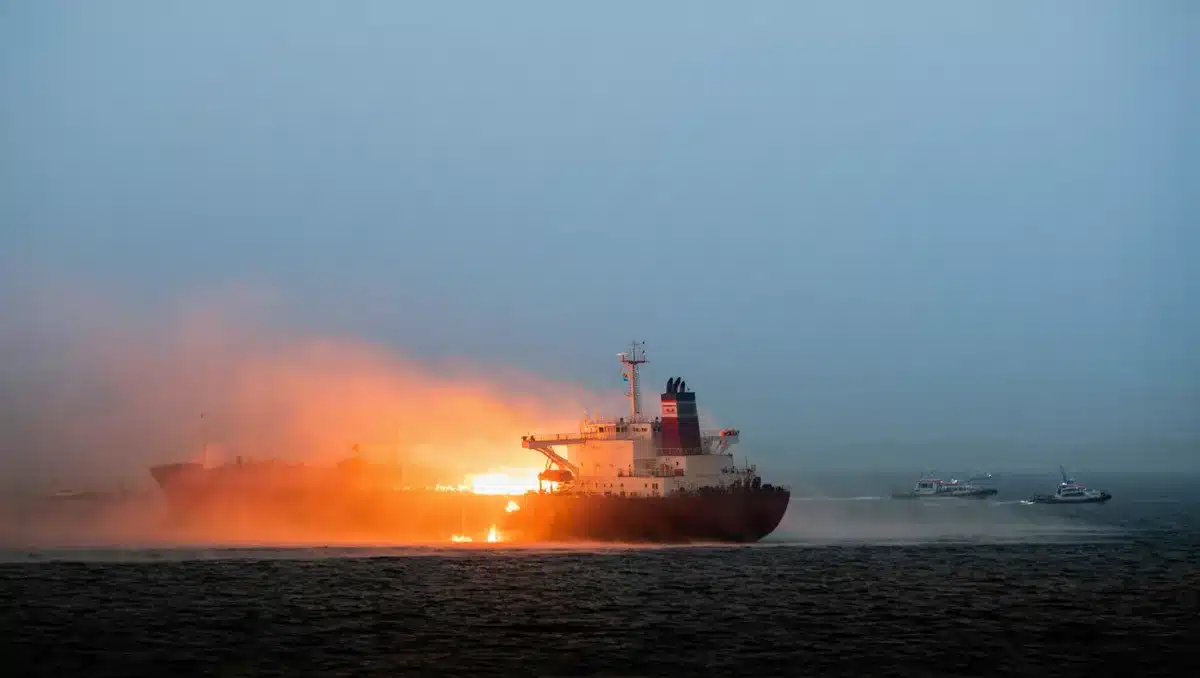
An oil tanker exploded in the Strait of Hormuz on Sunday after striking a naval mine, Iran’s semi-official Tasnim news agency reported, marking another escalation in a crisis that has choked off nearly 70% of traffic through one of the world’s most critical energy chokepoints.
The vessel deviated from Iran’s designated shipping route before hitting the mine, according to the Islamic Revolutionary Guard Corps-linked Tasnim. The incident follows repeated Iranian warnings that ships must follow approved corridors or face attack.
Iran’s military has grown increasingly aggressive in enforcing its control over the strait. The IRGC claimed it intercepted at least six vessels in the 24 hours before the explosion and warned that ships attempting to cross without Iranian coordination would “suffer the same fate” as the tanker that hit the mine.
The broader shipping crisis has devastated traffic through the waterway. According to the New York Post, tanker crossings have fallen by 70% since a U.S.-Iran cease-fire collapsed earlier in July 2026, with only a few dozen ships passing daily instead of the normal volume. The Strait of Hormuz once carried roughly 20% of the world’s oil supply, making disruptions there a major concern for global energy markets.
The explosion reflects a pattern of mine-laying that began in March 2026. Intelligence estimates suggest approximately 80 Iranian sea mines now sit in the strait, creating a persistent hazard even as diplomatic talks between Washington and Tehran have gained some momentum. A U.S. Navy blockade on Iranian ports remains in place, and mine-clearing operations have proven slow—estimates suggest 40 to 50 days of work by conventional minesweepers and underwater drones before shipping can resume safely.
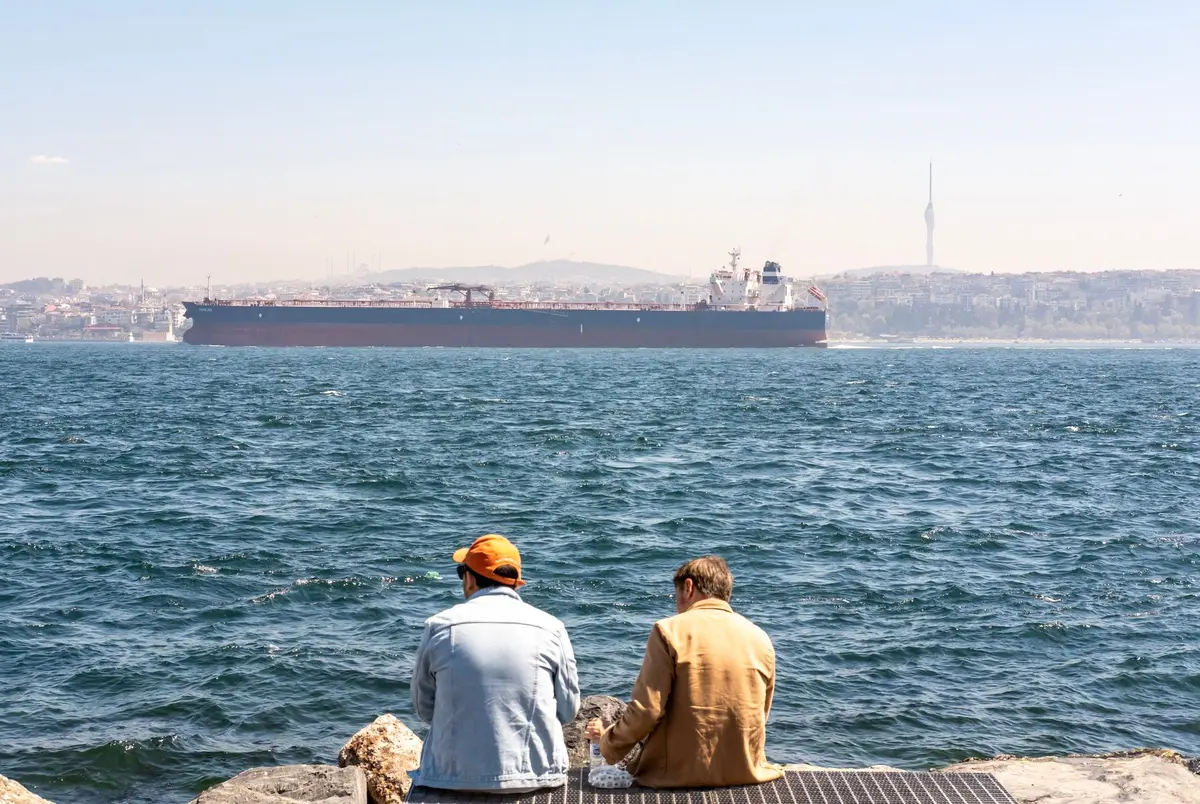
The incident comes as global oil markets remain volatile. Brent crude oil prices surged past $100 per barrel at the height of the 2026 conflict and have remained elevated as traders worry about prolonged supply disruptions. The New York Post reported that the vast majority of ships now crossing the strait either use Iran’s approved route or employ “shadow-fleet tactics” to sneak through, underscoring how severely the crisis has reshaped global shipping patterns.
President Trump has paused U.S. strikes on Iran as diplomacy is explored, but the administration has warned that full-scale war could resume if the waterway is not opened to free passage. The tanker explosion, occurring during this fragile diplomatic window, signals that the underlying tensions over control of the strait remain unresolved.
Sources
- New York Post — confirmed the tanker explosion, Iran’s interception of six vessels, the 70% drop in traffic, and context on shipping tactics
- WION News — reported the explosion, the tanker’s deviation from Iran’s route, and the IRGC’s Thursday warning about three tankers on an unauthorized route
- BBC — provided the figure that 20% of the world’s oil passes through the Strait of Hormuz
- U.S. News & World Report — reported that mine-clearing operations could take 40 to 50 days
- Wikipedia (2026 Strait of Hormuz crisis) — confirmed Brent crude surpassed $100 per barrel during the conflict