Michigan’s Democratic primary for U.S. Senate is heading into its final stretch with Abdul El-Sayed facing Rep. Haley Stevens in a race that has become a test of establishment power versus grassroots momentum. The primary is set for August 4, with early voting already underway.
On Friday, July 24, Michigan Gov. Gretchen Whitmer endorsed Stevens, a significant move in a race that has divided the state’s Democratic Party. Whitmer, who beat El-Sayed in the 2018 gubernatorial primary, said in a video statement that Stevens shares her strategy of getting things done for Michigan.

|STOCK: state capitol legislature building]
The endorsement came as recent polling showed a highly competitive race. A Detroit News and WDIV poll conducted in mid-July found Stevens and El-Sayed each at 34 percent among likely Democratic primary voters, while an earlier poll showed Stevens with a seven-point lead. One poll found that half of undecided voters said a Whitmer endorsement would make them more likely to support a candidate, according to NBC News.
The two candidates represent starkly different visions for the party. Stevens, a U.S. representative from Michigan’s 11th Congressional District since 2019, has positioned herself as a proven winner in tough races and has backing from Democratic establishment figures including retiring Sen. Gary Peters and former Sen. Debbie Stabenow. She has received support from major outside spending groups, with more than $50 million spent on her behalf, largely through television and streaming ads.
El-Sayed, a physician and epidemiologist who served as Detroit’s health director and later as Wayne County’s health director, is running as a progressive challenger to Democratic centrists. He has endorsements from Sen. Bernie Sanders and Rep. Alexandria Ocasio-Cortez, who both campaigned for him in Detroit on July 18. Sanders told the crowd that the race was not between El-Sayed and Stevens, but between El-Sayed and “the billionaire class.”
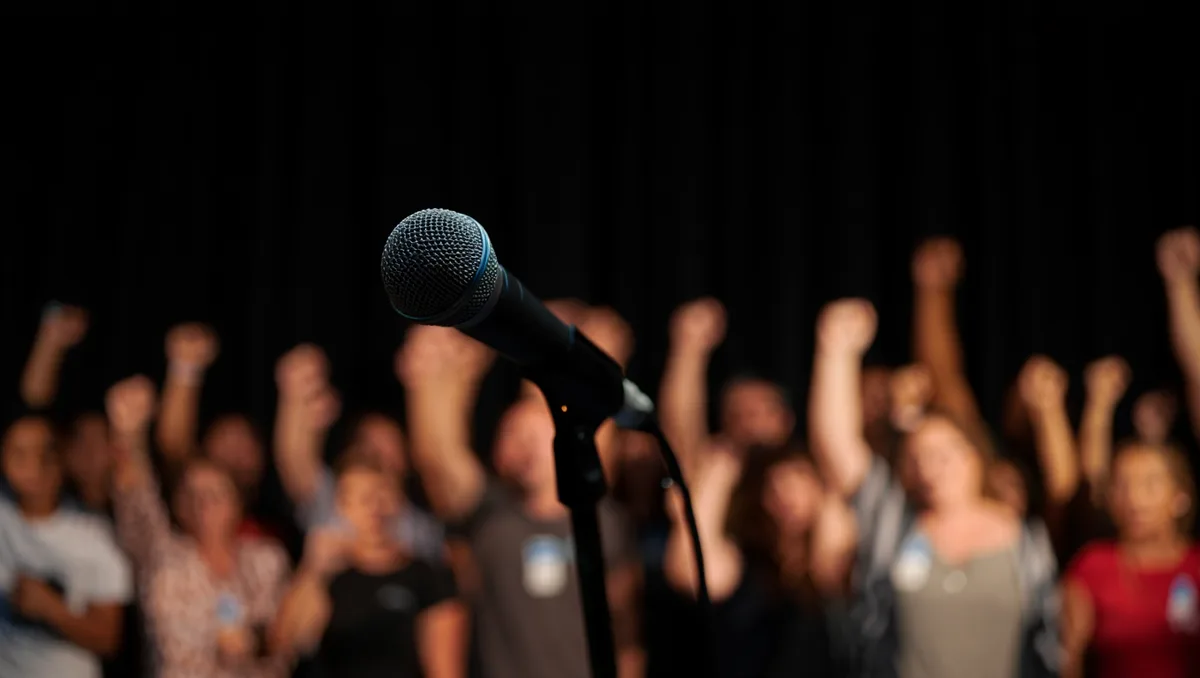
|STOCK: political rally crowd grassroots]
El-Sayed has built a stronger grassroots campaign, reporting $4.5 million in small-dollar fundraising last quarter compared to Stevens’ $2 million. He has over 10,000 campaign volunteers and has dominated lawn signs across the state. Union and related PACs have contributed $850,000 to his campaign. According to WDET reporting, this primary has become one of the most expensive Democratic Senate primaries ever, potentially the second most expensive, with a chance to surpass California’s 2024 Democratic primary.
The race has also highlighted divisions within the Democratic Party over foreign policy and party leadership. El-Sayed has criticized Stevens’ support for Israel and her ties to Democratic leadership, particularly Senate Minority Leader Chuck Schumer. Stevens has received significant backing from AIPAC’s United Democracy Project, a political committee that has spent millions to support her campaign. El-Sayed’s campaign has framed the race as one between populist politics and the Democratic establishment.
Whitmer’s endorsement could shift the final week of the race. A May poll found her job approval rating at 52 percent among Michigan voters. However, hundreds of thousands of Michiganders have already cast ballots ahead of Friday, which could limit the impact of her last-minute endorsement. The primary winner will face Republican former Rep. Mike Rogers in the general election on November 3.
Sources
- WDET — detailed reporting on the race dynamics, candidate positions, spending, and voter demographics
- NBC News — Whitmer’s endorsement announcement and polling analysis
- Ballotpedia — primary date and candidate information
- The Hill — Sen. Tina Smith’s endorsement of El-Sayed