Roger Rogoff, a former Washington state judge and career federal prosecutor, was unanimously appointed U.S. attorney for the Western District of Washington by a panel of federal judges, then fired by the Trump administration approximately 54 minutes later via email. On July 21, Rogoff filed a lawsuit challenging the firing as unconstitutional, marking the first such legal challenge by a judge-appointed attorney in this administration.
Rogoff was sworn in after the judges selected him to fill a vacancy that had remained open for months. The firing came swiftly, and in his lawsuit, filed in U.S. District Court in Seattle, Rogoff argues that Trump lacked the authority to remove him because he was appointed under a federal statute allowing district courts to name a U.S. attorney when the Senate has not confirmed a nominee within a specified period.
The lawsuit names Trump, acting Attorney General Todd Blanche, and the Justice Department as defendants. Rogoff’s attorneys contend that his removal violated the Appointments Clause of the Constitution, which defines how officers of the United States may be appointed and removed.
“The President’s actions violate the law, and they ignore the protections of the Constitution of the United States,” Rogoff said in a statement, according to reporting from NBC News and other outlets.
The Justice Department has defended the removal, arguing that Trump maintains the right to appoint U.S. attorneys and that the district court failed to consult with the administration before making its selection. Acting Attorney General Blanche stated on social media that “District court judges can appoint a temporary U.S. Attorney, and POTUS can fire them.”
A Broader Pattern of Removals
Rogoff is the first judge-appointed U.S. attorney to sue over being fired, but he is not the first to be removed by the Trump administration. In February 2026, James Hundley, a veteran litigator with more than 30 years of criminal and civil experience, was appointed by federal judges to lead the Eastern District of Virginia. He was fired hours after being sworn in, according to NBC News reporting. That same month, Donald Kinsella, chosen by judges for the Northern District of New York, was fired by the Justice Department shortly after his appointment.
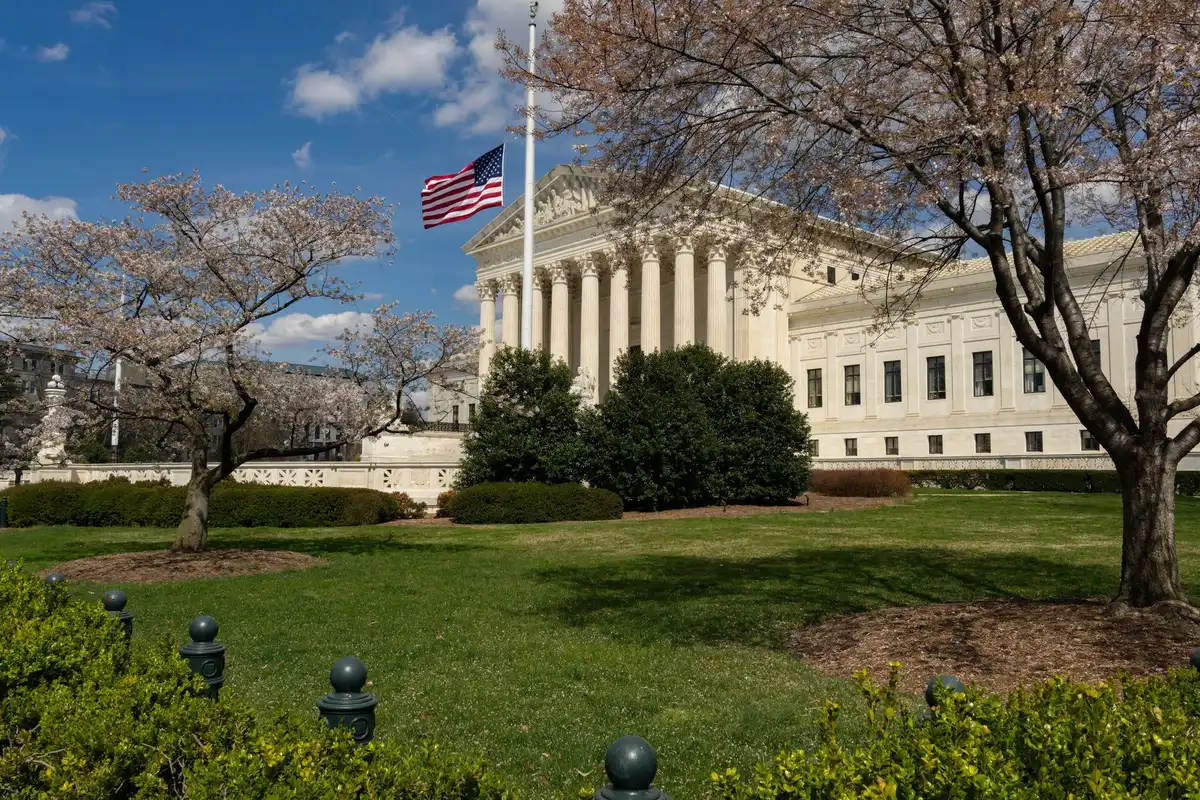
The removals reflect a broader legal struggle over presidential power. In June 2026, the Supreme Court issued a significant ruling in Trump v. Slaughter, a 6-3 decision delivered by Chief Justice John Roberts, allowing Trump to fire Federal Trade Commission Commissioner Rebecca Kelly Slaughter without cause. The ruling overturned a 91-year-old precedent that had protected independent agency heads from at-will removal, holding that officers exercising executive power must remain accountable to and removable by the president.
While that decision applied to independent agencies, legal experts and Rogoff’s attorneys argue the principle does not extend to court-appointed interim U.S. attorneys, whose appointment power rests with the judiciary under federal statute. Rogoff’s lawsuit claims that by firing him, Trump has attempted to negate Congress’s constitutionally enumerated power to structure the appointment process.
The Justice Department has argued that consultation between courts and the administration is a courtesy, not a requirement, and that the president’s removal authority remains intact. The outcome of Rogoff’s lawsuit could clarify whether courts retain any protection for their judicial appointees or whether presidential removal power, as expanded by the Supreme Court’s recent rulings, extends to all federal officers regardless of their appointment method.
Sources
- NBC News — Reporting on Rogoff’s lawsuit, his background as a former judge and prosecutor, the Justice Department’s defense of the firing, and the pattern of other judge-appointed U.S. attorneys being fired in February 2026.
- PBS NewsHour — Coverage of Rogoff’s statement and the constitutional claims in his lawsuit.
- Washington Post — Reporting on the firing and Rogoff’s constitutional arguments.
- ECIKS.org — Coverage of the Supreme Court’s June 29, 2026 ruling in Trump v. Slaughter overturning the 91-year-old Humphrey’s Executor precedent and allowing at-will removal of independent agency heads.