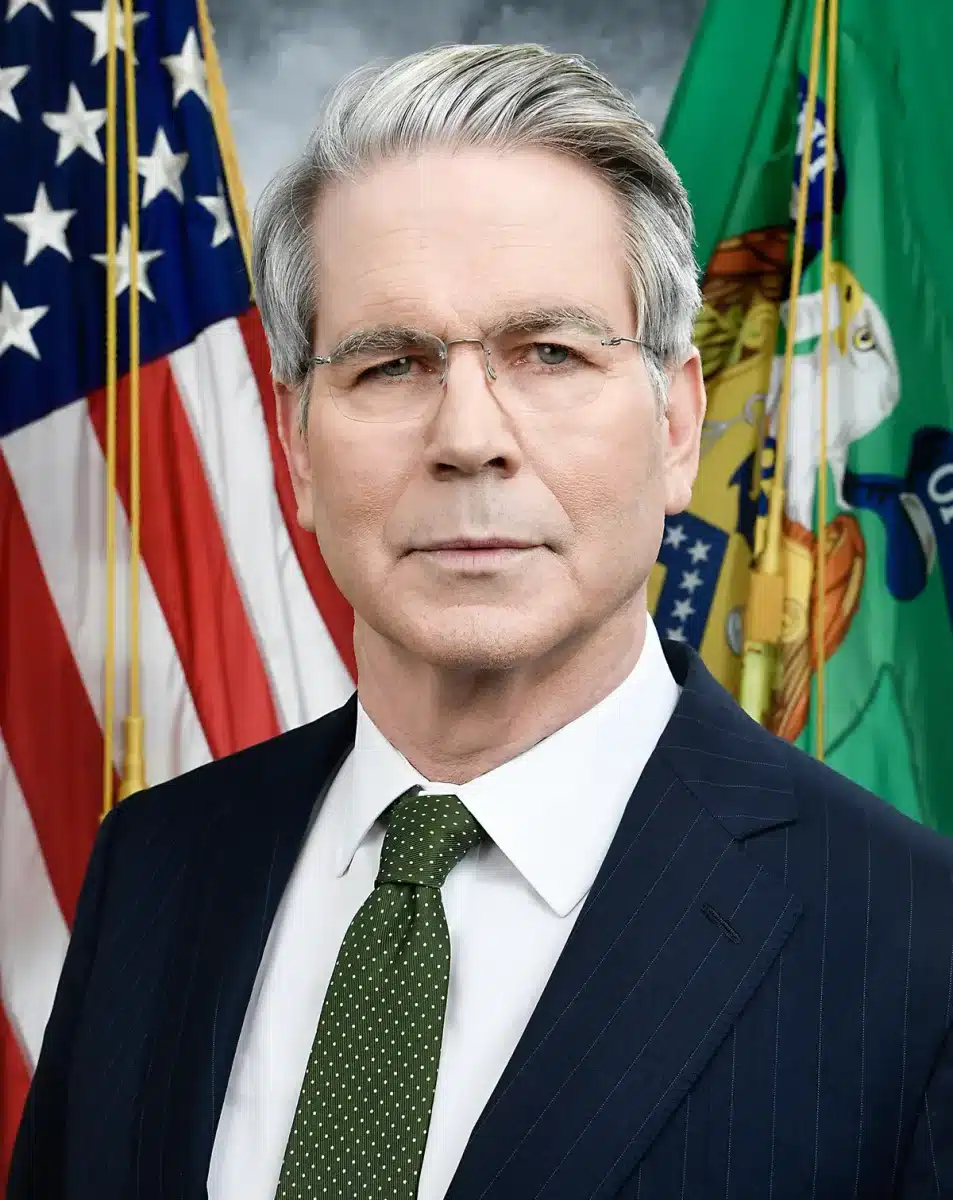
Treasury Secretary Scott Bessent confirmed that all U.S. gold reserves at Fort Knox are present and accounted for, reigniting debate over whether the government should revalue its bullion holdings as mounting federal debt strains the nation’s finances.
Bessent made the assertion in an interview with Fox News on July 15, 2026, stating that the depository holds the world’s largest official gold stockpile, with bullion currently valued at more than $1 trillion at market prices.

The confirmation comes after months of public skepticism from President Trump and Elon Musk, who pushed for a comprehensive physical audit of Fort Knox beginning in early 2025. Trump stated he wanted to “make sure the gold is still there,” raising questions about whether the nation’s reserves had been depleted or mismanaged.
A key point of contention in the gold debate centers on the massive gap between what the government says the reserves are worth and their actual market value. The U.S. Treasury carries its gold holdings on the books at a statutory price of $42.22 per ounce—a rate fixed in 1973—despite current market prices trading above $4,700 per ounce, according to retrieved market data from July 2026.
At the outdated book value, the entire 261.5 million ounces of U.S. gold reserves is valued at approximately $11 billion on official Treasury statements. At market prices, those same reserves are worth over $1 trillion—a gap of roughly $990 billion that supporters of revaluation argue could strengthen the federal balance sheet without selling a single ounce.
The Audit Debate and Historical Context
Bessent’s confirmation points to an audit report dated September 30, 2024, as documentary evidence that the gold is accounted for. However, the last comprehensive physical audit of Fort Knox took place in 1953, shortly after President Dwight D. Eisenhower took office. A partial inspection occurred in 1974, but no full independent audit has been conducted since then—a gap of more than 70 years that fueled renewed skepticism from Trump and Musk.
The Treasury Department maintains that the gold is counted internally every year and that all reserves remain secure. Bessent himself has stated he has no plans to visit Fort Knox personally or to revalue the reserves in a sovereign wealth fund or other arrangement.
Fiscal Pressures and Revaluation Proposals
The renewed discussion of Fort Knox’s gold comes as the U.S. faces rising borrowing costs and a national debt that continues to climb. Critics argue that roughly $1 trillion in gold reserves, while substantial, is only enough to cover about one year’s interest payments on the outstanding national debt—raising broader questions about the long-term sustainability of U.S. public finances.
Supporters of a higher official valuation contend that revaluing the reserves could provide a significant boost to the Treasury’s balance sheet. If the government re-pegged its gold holdings at even a fraction of current market prices, the asset would shift from roughly $11 billion to hundreds of billions of dollars overnight, potentially strengthening the nation’s fiscal position without selling any bullion.
However, economists remain divided on whether revaluing gold would meaningfully improve the country’s fiscal position or simply represent an accounting adjustment. The debate underscores growing concern about the long-term sustainability of U.S. public finances, even as Bessent’s confirmation provides reassurance that the physical gold itself is accounted for.
The gold price itself has become a focal point in broader economic discussions, with gold breaking above $4,100 as weak jobs reports shift rate outlook, highlighting how precious metals markets remain sensitive to macroeconomic conditions and Federal Reserve policy.
Sources
- Mining.com — Bessent’s confirmation that Fort Knox gold reserves are fully accounted for, market valuation over $1 trillion, Treasury book value at $42.22/oz since 1973, and context on federal debt concerns.
- Fox News — Bessent’s direct statement in interview that all U.S. gold is present and accounted for, reference to audit report dated September 30, 2024.
- Crypto Briefing — Confirmation that all 261.5 million ounces of U.S. gold are at Fort Knox, book value versus market price discrepancy.
- KuCoin News — Bessent’s confirmation pointing to September 30, 2024 audit report as documentary evidence.
- Advantage Gold and Historical Sources — Last full audit of Fort Knox occurred in 1953, with partial audit in 1974; no comprehensive independent audit since then.
- Forbes and Bullion Vault — Context on Treasury book value at $42.22/oz set in 1973, current market implications for revaluation debate.
- Trump and Musk coverage (multiple outlets) — Context on Trump and Elon Musk’s push for comprehensive Fort Knox audit beginning in early 2025.