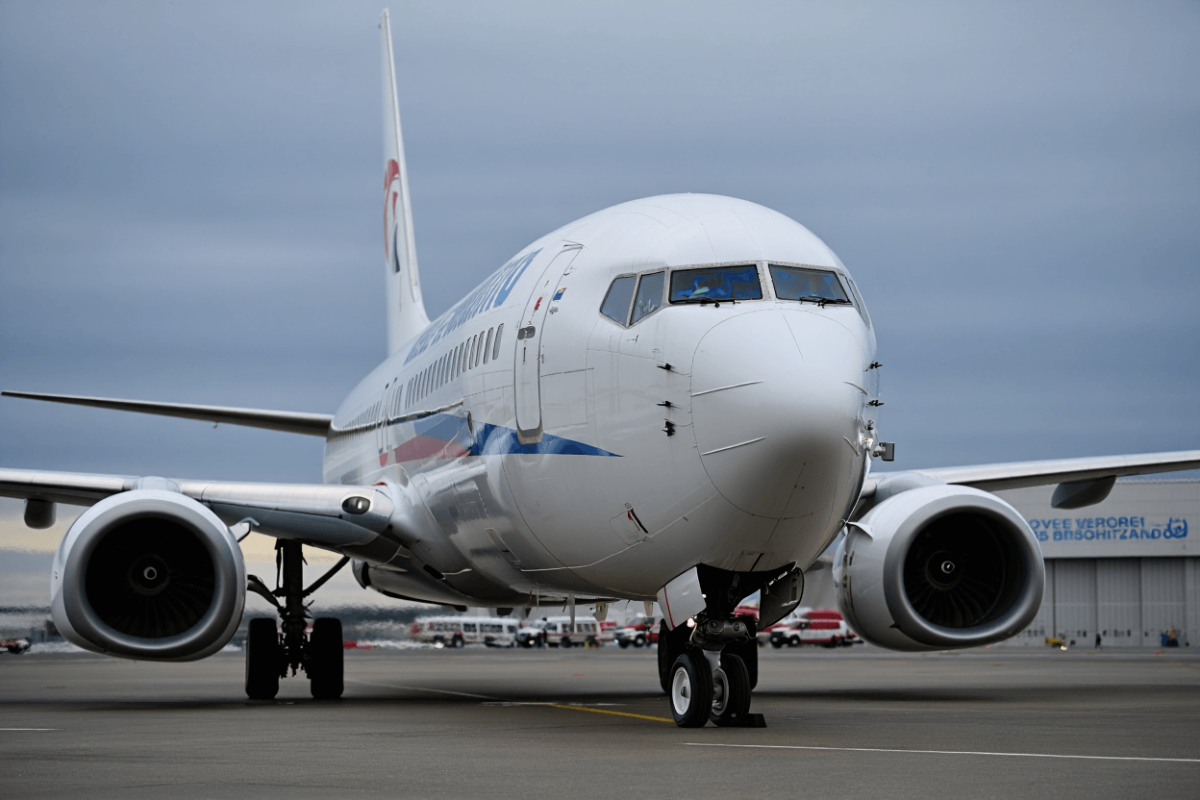
Southwest Airlines flight WN4761, a Boeing 737-800 en route from Orlando to Manchester, New Hampshire, diverted to Charleston International Airport on July 20 after the flight crew reported a suspected fuel leak while cruising at 37,000 feet over South Carolina.
The flight departed Orlando International Airport at 8:54 a.m. EDT and proceeded normally for approximately one hour before the crew noticed indications of a potential fuel leak, according to AIRLIVE. Acting under standard safety protocols, the pilots immediately declared an airborne emergency and transmitted a “squawk 7700” transponder code to alert air traffic control.
The aircraft, an 11-year-old Boeing 737-800 with registration N8662F, was cleared for an expedited descent and diverted to Charleston. The pilots executed a safe landing on Runway 15, with emergency response vehicles standing by. No injuries were reported among the 137 passengers and crew members aboard.
Southwest Airlines quickly arranged for a replacement aircraft, a newer Boeing 737 MAX 8, to transport the stranded passengers. Following a four-hour delay on the ground in Charleston, travelers re-boarded and continued their journey to Manchester, arriving approximately five hours behind schedule, according to AIRLIVE.
The affected Boeing 737-800 remained in Charleston for a thorough maintenance inspection to determine the root cause of the suspected fuel leak. Fuel leak detections are typically identified through flight crew manual checks combined with automated ECAM alerts, according to industry safety procedures outlined by Airbus.
This incident echoes a similar event that occurred in October 2022, when a Southwest Airlines Boeing 737 diverted to Jacksonville International Airport after pilots discovered a fuel leak in one of the engines. That aircraft also landed safely, demonstrating Southwest’s consistent response to fuel-related emergencies. In both cases, crews acted swiftly under standard protocols to ensure passenger safety.
Sources
- AIRLIVE — reported the full details of the diversion, aircraft registration, passenger count, and timeline of events
- Simple Flying — documented the October 2022 comparable Southwest fuel leak diversion to Jacksonville
- Airbus Safety First — explained fuel leak detection methods and crew procedures