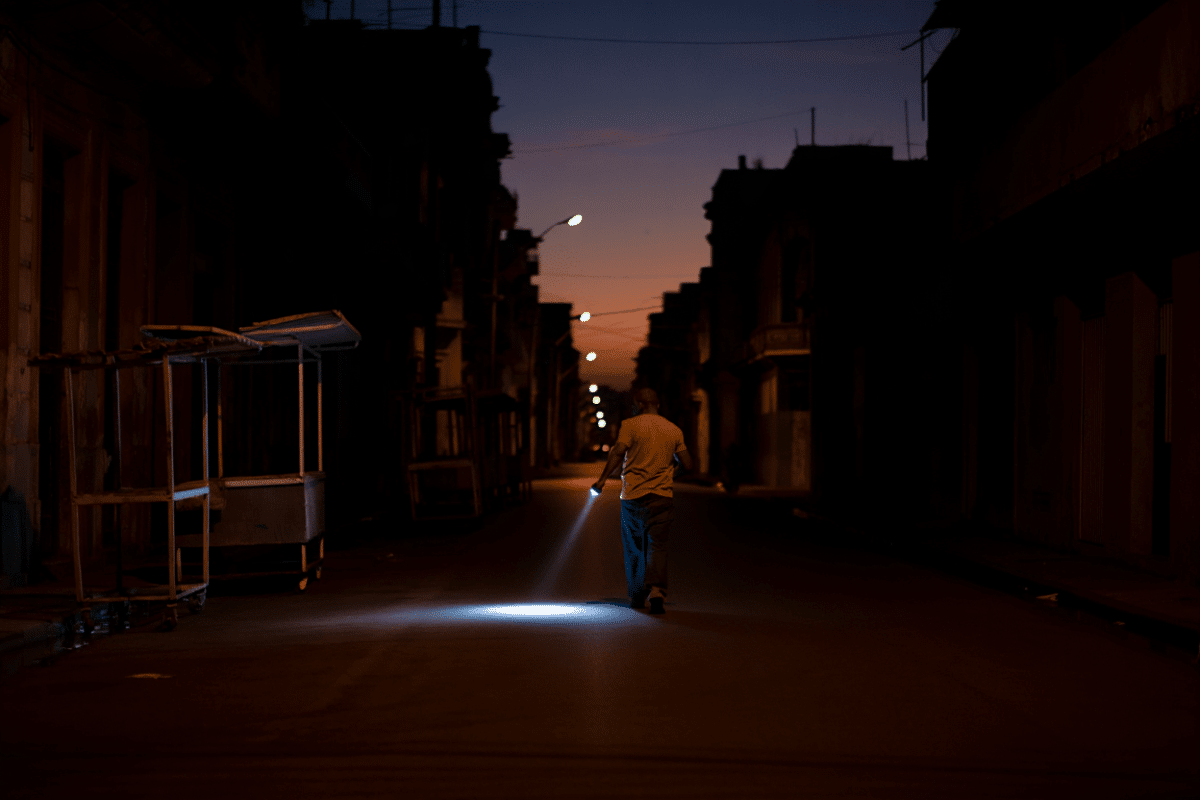
Cuba’s national electrical grid collapsed on Friday, July 10, marking the second nationwide blackout in less than a week as the island grapples with a severe energy crisis driven by fuel shortages and aging infrastructure.
The Union Electrica de Cuba, the state-owned utility, announced the outage began at 4:30 PM local time. This brings the total number of island-wide blackouts to four since the start of 2026, with two others occurring in March.
The crisis intensified after the Trump administration imposed an oil blockade on Cuba in January 2026, effectively cutting off the island’s primary fuel supply. In January, Trump authorized a military operation against Venezuelan President Nicolas Maduro, Cuba’s key ally and oil supplier. After Maduro’s removal, Trump declared that Venezuela would no longer send oil to Cuba and threatened steep tariffs against any country supplying the island with fuel.
According to the International Energy Agency, Cuba only produces 40 percent of the oil it uses, making it heavily dependent on foreign imports. The country’s electricity infrastructure compounds the problem—much of the system dates to the Cold War period between 1960 and 1980. A single Russian oil tanker delivered 730,000 barrels in late March, but those reserves ran out by the end of May, leaving the island with critically depleted fuel supplies to power aging thermoelectric plants.
The repeated blackouts have fueled rising social tensions. Reuters reported scattered pot-banging protests in Havana following Monday’s nationwide blackout, though these remain far smaller than the mass demonstrations of July 2021, when thousands took to the streets in the largest anti-government protest in decades.
Humanitarian Toll and Competing Blame
The power failures are having severe consequences for Cuba’s civilian population. In June, United Nations High Commissioner for Human Rights Volker Turk warned that the fuel restrictions imposed since early 2026 are directly harming Cubans, particularly the most vulnerable. Turk pointed to statistics showing infant mortality nearly doubled in recent months, stating that children are dying because doctors lack access to essential medical supplies and medicines.
Havana blames the U.S. blockade for its failing infrastructure, while Washington attributes the blackouts to mismanagement of Cuba’s state-run economy. During a UN General Assembly debate in July, U.S. Ambassador Mike Waltz told Cuba to “change your ways and turn the lights back on for your people.” However, the vast majority of countries speaking in the debate called on Washington to end the blockade and reverse sanctions they say have crippled the island’s economy.
Cuba’s Foreign Minister Bruno Rodríguez Parrilla criticized the U.S. measures as a “systematic violation of the human rights of an entire people in an act of collective punishment.” After Friday’s blackout, he posted on social media: “It has been another very difficult week under the impact of the energy blockade: two nationwide grid collapses, almost no fuel to power the generating plants, and several units out of service.”
Prior to the fuel blockade, Cuba had begun shifting its energy infrastructure toward renewable sources with help from Chinese solar technology. Renewable energy currently accounts for about 18 percent of Cuba’s overall energy consumption, with the government aiming to produce nearly a quarter of its energy from renewable sources by 2030.
Sources
- Reuters — confirmed July 10 blackout as second in a week and fourth of 2026; provided details on Trump’s oil blockade, Venezuela connection, and quotes from residents and government officials
- Al Jazeera — reported blackout at 4:30 PM local time; provided context on aging infrastructure, Cuba’s 40% domestic fuel production, Russian tanker delivery details, and UN human rights warning from Volker Turk
- Jamaica Gleaner — confirmed Cuba produces 40% of fuel needs and that 730,000 barrels from Russian tanker ran out by end of May