The U.S. Food and Drug Administration has approved the AMDS Hybrid Prosthesis, the world’s first aortic arch remodeling device designed specifically for acute DeBakey Type I aortic dissection, marking a significant advance in surgical treatment for this life-threatening condition. The approval, granted on June 29, 2026, covers patients with acute aortic dissection complicated by malperfusion—a condition affecting an estimated 60% of DeBakey Type I cases—and eliminates the need for hospitals to obtain institutional review board approval before implanting the device.
The AMDS approval is based on data from the PERSEVERE clinical trial, a prospective, multicenter study of 93 U.S. patients that demonstrated striking safety and efficacy improvements over standard surgical repair. At 30 days, the trial showed a 72% reduction in all-cause mortality and a 54% reduction in primary major adverse events, including stroke, renal failure requiring dialysis, and myocardial infarction. Most notably, the device achieved zero occurrence of distal anastomotic new entry (DANE) tears—a complication that occurs in an estimated 45% of patients undergoing standard hemiarch repair.
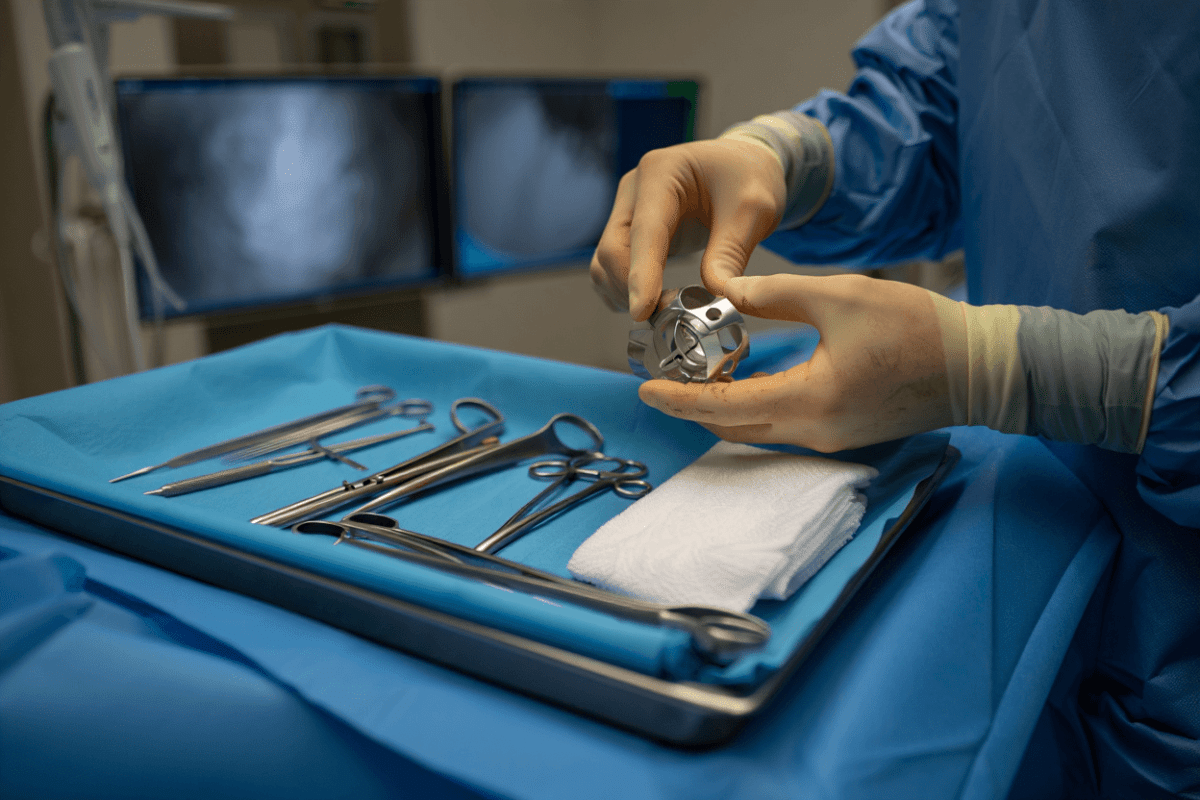
The AMDS is a hybrid prosthesis composed of a proximal polytetrafluoroethylene cuff and a distal non-covered nitinol stent, deployed in the aortic arch during ascending aorta replacement. By rapidly expanding the true lumen and stabilizing the aortic wall, the device prevents the formation of new tears in the distal aorta. Deployment adds minimal time to the standard procedure while preserving the native arch, which allows for minimally invasive re-interventions if needed in the future.
Clinical Impact and Long-Term Durability
Two-year follow-up data from PERSEVERE, presented at the 62nd Annual Meeting of the Society of Thoracic Surgeons in February 2026, demonstrated that the device’s benefits persist over time. The data showed minimal additional mortality limited to unrelated causes, no additional unanticipated aortic reoperation, continued absence of DANE tears, and stable total aortic diameter with continued mean true lumen diameter expansion across aortic zones 1 to 6. These findings suggest that the device not only prevents acute complications but also promotes favorable long-term aortic remodeling.
Malperfusion—inadequate blood flow to vital organs—resolved in 83% of patients with visceral malperfusion and in 74% of those with renal malperfusion within 30 days of AMDS implantation, according to late-breaking data presented at the European Association for Cardiothoracic Surgery annual meeting in October 2025. This organ-level improvement is clinically significant, as malperfusion is a major driver of mortality and end-organ damage in acute aortic dissection.
The Clinical Challenge and Market Opportunity
Acute DeBakey Type I aortic dissection is a medical emergency. Approximately 6,000 patients per year present with this condition in the United States, and without treatment, mortality reaches approximately 1% per hour, climbing to 50% within the first 48 hours. The current standard of care—ascending aorta replacement or hemiarch repair—removes the primary entry tear but leaves the diseased distal aorta incompletely addressed, exposing patients to ongoing risk of malperfusion, end-organ ischemia, and aneurysmal growth.
The AMDS addresses this gap by providing a targeted intervention that stabilizes the entire aortic arch during open surgery. The device’s FDA approval removes a significant barrier to adoption: under its previous Humanitarian Device Exemption designation, hospitals were required to obtain institutional review board approval for each use, creating administrative friction. Full premarket approval eliminates this requirement, enabling broader and faster deployment across U.S. institutions. Artivion, the device manufacturer, estimates the U.S. market opportunity at approximately $150 million annually.
Sources
- PR Newswire — FDA approval announcement, clinical trial results, device design, and market opportunity
- Vascular News — Malperfusion resolution outcomes from PERSEVERE trial
- Endovascular Today — FDA approval details and clinical efficacy summary
- Journal of Thoracic and Cardiovascular Surgery — PERSEVERE study publication and 30-day outcomes