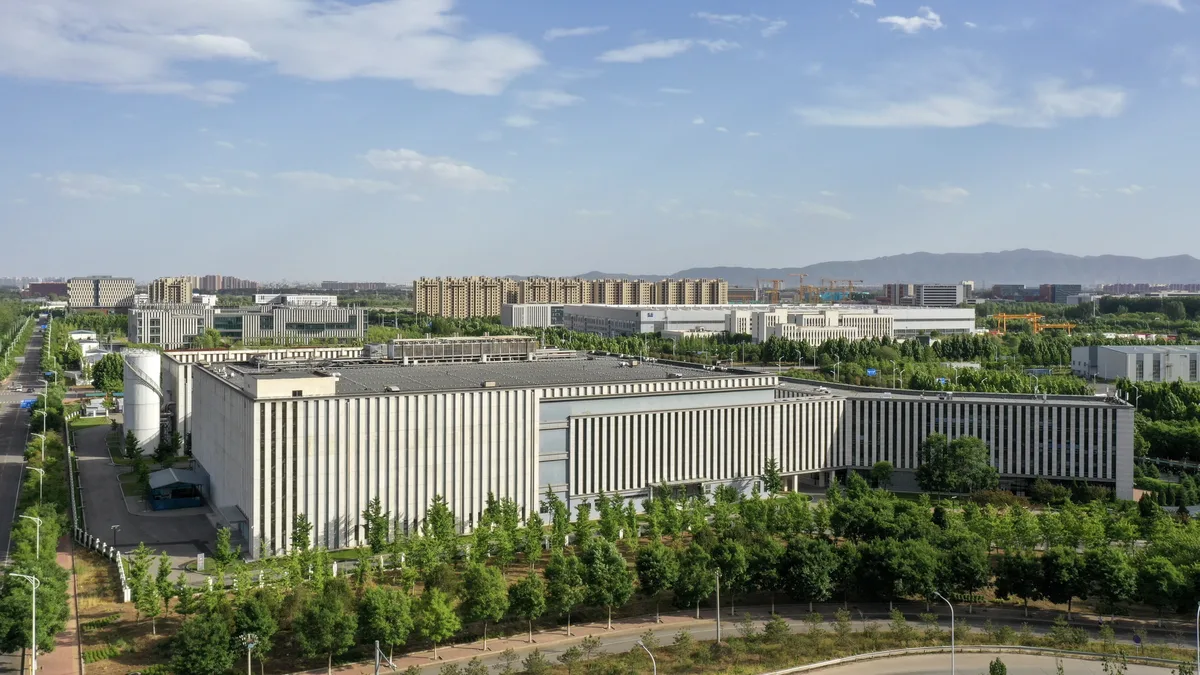
Toyota is investing $3.6 billion to move Tacoma production from Mexico back to Texas, marking a significant reversal of a 2020 decision that had shifted assembly to Baja California and Guanajuato. The Japanese automaker announced the expansion on July 6, 2026, pledging to build a second assembly line at its San Antonio plant that will double the facility’s size by 2030.
The expansion will create 2,000 new jobs and add 2.5 million square feet to Toyota Texas. Toyota expects to transition Tacoma production from its Mexican facilities over approximately four years, with full-scale domestic production beginning in 2030. The San Antonio plant currently assembles the Tundra and Sequoia; the Tacoma will join them on a newly constructed assembly line.
The move brings Toyota’s total investment in San Antonio to $8.3 billion since the plant broke ground in 2003. According to Toyota Motor North America President and CEO Ted Ogawa, the expansion reflects “our confidence in the region’s workforce, innovation and long-term growth potential” and demonstrates “our commitment to American manufacturing.”
Tariff pressure appears to be a key driver of the shift. Currently, all Tacoma pickups produced in Mexico face a 25 percent tariff under the Trump administration’s auto tariff structure. According to Yahoo Finance reporting, Toyota expects its total tariff costs to rise as high as $17.2 billion by March 2027, and the company absorbed a $1.2 billion annual operating loss in 2025 due to tariff exposure. By producing the Tacoma in Texas, Toyota can avoid these tariffs on vehicles destined for the U.S. market.
This represents a dramatic reversal from January 2020, when Toyota announced it would move Tacoma production from San Antonio to Mexico as part of a broader restructuring. At that time, Toyota was consolidating truck and SUV production to optimize efficiency and leverage investments in its Mexican manufacturing footprint. The Tacoma had been exclusively produced in Mexico since late 2021. Now, with tariffs reshaping manufacturing economics, the automaker is bringing the midsize pickup back to the United States.
The timing aligns with broader uncertainty around North American trade. On July 1, 2026, the USMCA trade agreement entered its review period, and the Trump administration has signaled it does not plan to renew the agreement in its current form. Vehicles produced in the United States can avoid the 25 percent tariff entirely, making domestic production economically advantageous for high-volume models like the Tacoma, which sold 274,638 units in 2025 and ranks as Toyota’s third best-selling model.
Toyota will continue to produce some Tacoma models at its Guanajuato facility in Mexico, meaning the company is not entirely exiting the country. However, the shift of most production represents a significant commitment to U.S. manufacturing at a moment when tariffs are reshaping supply chain decisions across the automotive industry. Governor Greg Abbott said the investment qualifies Toyota for a $20 million state grant and called it a “Texas-sized investment” that reflects the state’s pro-business environment.
Sources
- Toyota USA Newsroom — Official announcement of $3.6 billion San Antonio expansion, 2,000 jobs, 2.5 million square feet addition, four-year transition timeline, and total investment reaching $8.3 billion.
- Yahoo Finance / Road & Track — Tariff context: 25% tariff on all Tacoma pickups currently, Toyota’s $8.6 billion expected tariff bill, $1.2 billion 2025 operating loss, $17.2 billion projected tariff costs by March 2027, 274,638 Tacoma units sold in 2025, and $20 million state grant eligibility.
- Car and Driver — Confirmation that Tacoma has been exclusively built in Mexico since 2021 and details on the 2020 production move.
- CNBC — Corroboration of $3.6 billion investment, Mexico-to-Texas transition, and job creation figures.