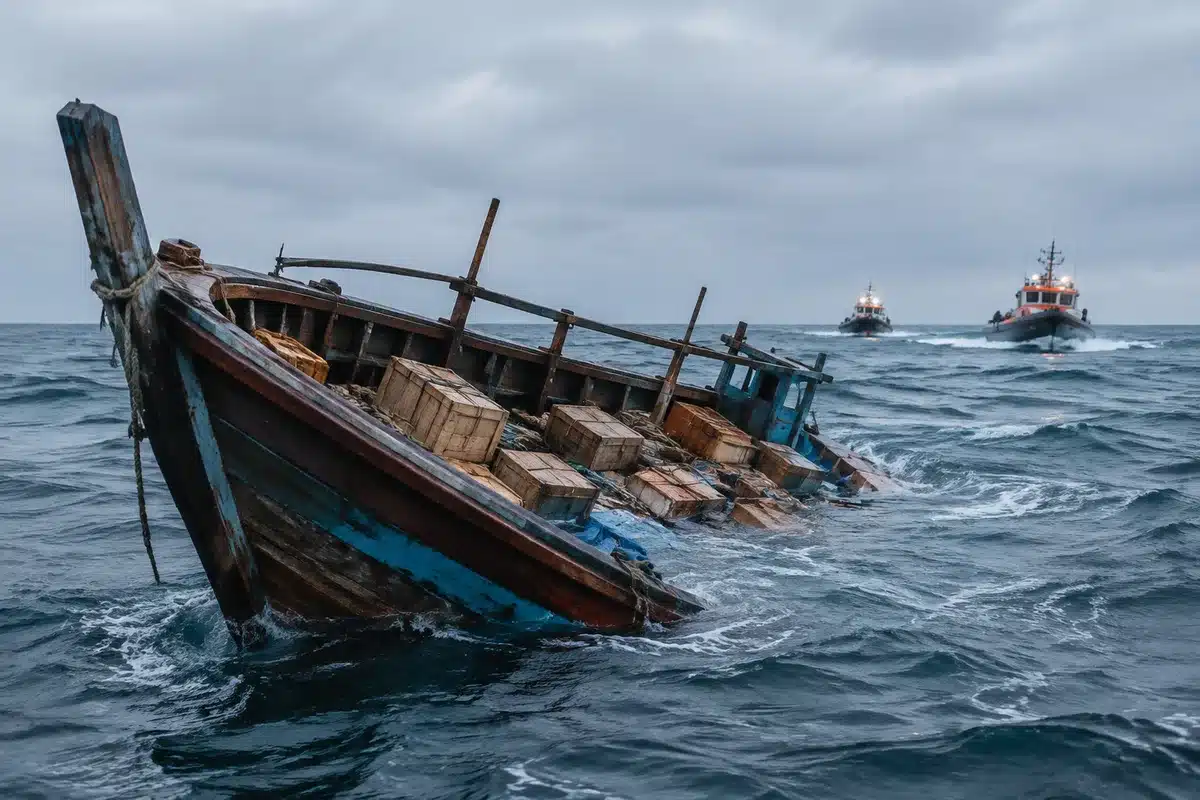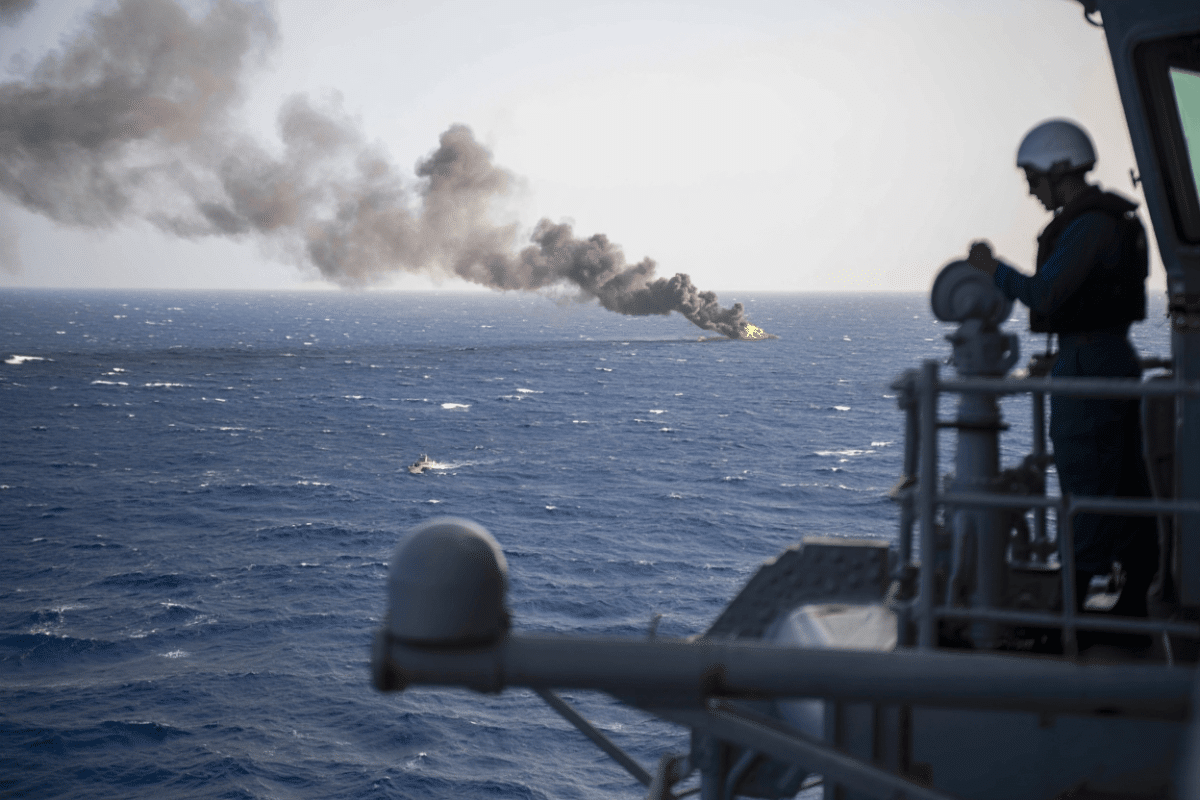
The United States struck more than 80 Iranian military targets early Wednesday, escalating tensions after Iran attacked commercial ships in the Strait of Hormuz, prompting President Trump to declare the ceasefire with Iran “over” even as both nations signaled negotiations could continue.
The strikes targeted Iranian air defense systems, radars, and over 60 small boats used by Iran’s Islamic Revolutionary Guard Corps, according to U.S. Central Command. The operation came hours after the U.S. revoked a license that had authorized Iran to sell oil openly on the world market as part of the interim agreement between the two nations.
Iran retaliated swiftly, with the Islamic Revolutionary Guard Corps launching missiles and drones at 85 U.S. military sites across Bahrain and Kuwait, both key U.S. military hubs in the Persian Gulf region. Sirens sounded in Kuwait and Bahrain as air defenses engaged the incoming fire.
Trump responded to the escalation by telling reporters that the memorandum of understanding underpinning the ceasefire was “over.” However, he added that U.S. representatives could continue negotiations, though he cast doubt on their prospects, saying “they’re wasting their time.” The price of Brent crude, the international oil standard, spiked over 5% following Trump’s comments, reflecting market concerns about renewed conflict.
The Ceasefire’s Fragile Foundation
The U.S. and Iran had agreed to a two-week ceasefire on April 7-8, 2026, mediated by Pakistan, which was later extended through a 60-day interim framework signed in mid-June. The agreement included provisions allowing commercial vessels to transit the Strait of Hormuz without charge for 60 days, a critical detail given that roughly one-fifth of the world’s traded oil and natural gas passes through the waterway.
The interim deal also allowed Iran to sell oil openly for the first time in years, with the U.S. lifting sanctions on Iranian crude sales. That license was revoked Wednesday in response to the attacks on shipping. Iran’s top negotiator, Mohammad Bagher Ghalibaf, accused the U.S. of violating the memorandum of understanding, while the U.S. said it was Iran that breached the agreement by attacking ships.
The attacks on shipping occurred as Iran held a multi-day funeral for Supreme Leader Ayatollah Ali Khamenei, who was killed on February 28 in the war’s opening strikes. The funeral was supposed to be a period of reduced tensions, though mourners repeatedly called for retaliation against Trump and Israeli Prime Minister Benjamin Netanyahu.
Implications for Broader Negotiations
Negotiations to reach a final deal had been scheduled to begin after Khamenei’s burial, focusing on permanently reopening the Strait of Hormuz and rolling back Iran’s disputed nuclear program. The new attacks throw those plans into question, though neither country has signaled an intention to abandon the negotiating table entirely.
Qatar, which has served as a key mediator alongside Pakistan, called the attack on a Qatari-flagged tanker “unacceptable” and held Iran “fully legally responsible.” The U.S. and Gulf Arab states have made clear they will not accept Iran charging fees for passage through the strait, a practice Iran has vowed to implement after the 60-day free-passage period ends.
The escalation marks the largest test of the ceasefire since it was agreed to in April. A similar cycle of Iranian attacks on shipping and U.S. retaliatory strikes occurred in late June, which also drew Iranian counterattacks on Bahrain and Kuwait. Wednesday’s strikes came as Trump was attending a NATO summit in Turkey.
Sources
- CNN — Live coverage of the strikes, Iran’s retaliation on Bahrain and Kuwait targeting 85 U.S. military sites, and Trump’s statement that the ceasefire is “over”
- AP News — Details on the U.S. revocation of the Iranian oil sales license, the ships attacked in the Strait of Hormuz, and the interim agreement framework
- Reuters — Information on the April 7-8, 2026 ceasefire agreement and its terms
- BBC — Details on the 14-point memorandum of understanding and the 60-day free-passage provision for the Strait of Hormuz