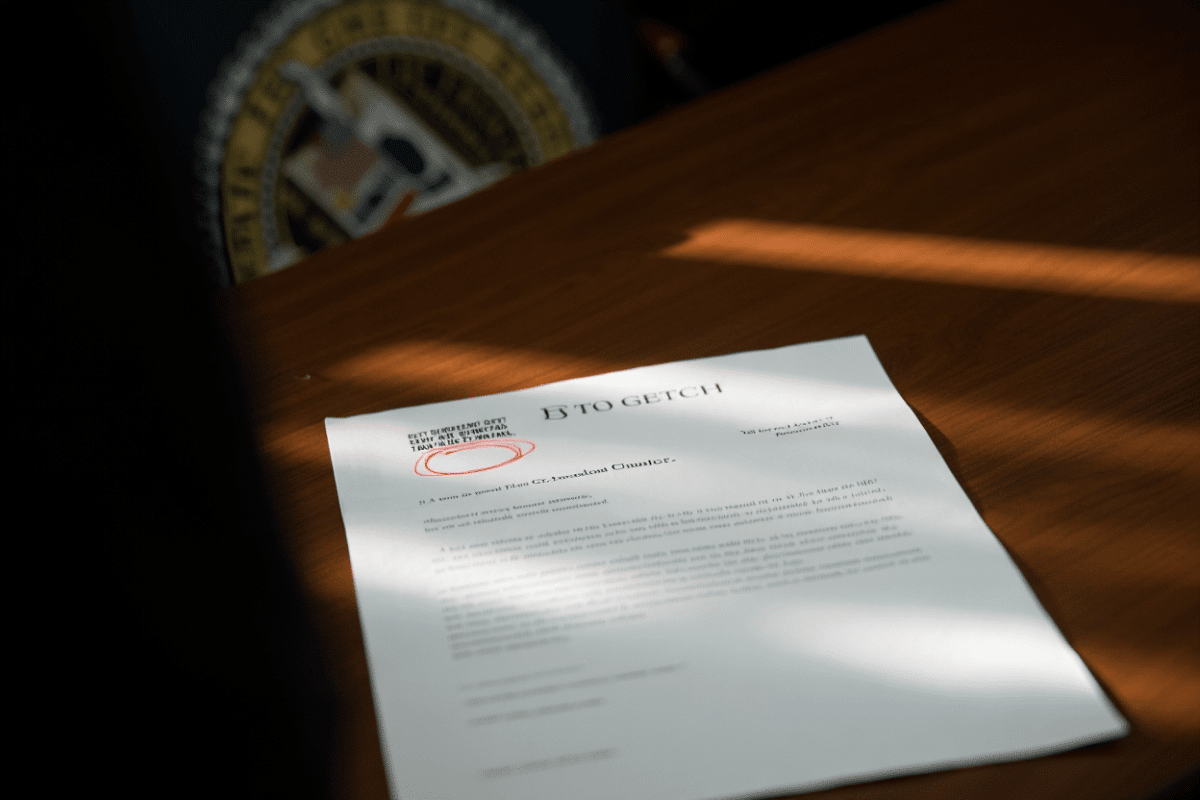
The U.S. Department of Justice sent letters to election officials in all 50 states and Washington, D.C., on July 7, warning they could face criminal charges if noncitizens remain on voter rolls or cast ballots in federal elections. The letters, signed by Assistant Attorney General for Civil Rights Harmeet Dhillon, mark an escalation in the Trump administration’s pressure campaign against state election officials.
The letters demand that states respond within five days explaining how they will comply with federal voter eligibility laws. They warn that election officials, including state chief election officers, “could be criminally prosecuted for aiding and abetting” violations of federal laws barring noncitizens from voting, according to a July 7 letter obtained by Votebeat. The correspondence threatens that “knowingly retaining noncitizens” on voter rolls, sending them ballots, or counting those ballots would constitute criminal conduct under federal election law.
At least 14 states confirmed receiving the letters, including Arizona, Georgia, Michigan, Kentucky, Tennessee, Nevada, and Utah. Election officials across the political spectrum rejected the warnings. Arizona Secretary of State Adrian Fontes, a Democrat, said his office would “continue following Arizona law — not directions that come from political rhetoric or intimidation.” Utah’s Republican Lieutenant Governor Deidre Henderson called the letters “truly bizarre behavior” from a federal agency “that is supposed to be protecting civil rights.”
The letters come after the Trump administration’s voter roll crusade has repeatedly failed in court. The Justice Department has lost 11 district court cases and its first appeal in efforts to force states to turn over unredacted voter data, according to Democracy Docket. No court has ordered a state to hand over unredacted statewide voter rolls. The criminal threat letters represent a shift in strategy after these legal losses.
Experts Question the Threat’s Credibility
Election law experts and nonpartisan analysts say the letters appear designed to intimidate rather than prosecute. David Becker, executive director of the Center for Election Innovation and Research, told Votebeat that if the Justice Department genuinely believed officials had committed crimes, it would bring criminal indictments, not send warning letters. “If you really thought they committed a crime, you wouldn’t be sending them a letter,” Becker said. “You’d be bringing criminal indictments.” He characterized the letters as “a last-ditch attempt” to pressure election officials after the department’s legal strategy collapsed.
Rick Hasen, an election law professor at UCLA, said the letters fit a broader pattern. “This is in line with the Trump administration’s efforts to push the myth of mass noncitizen voting and to threaten and intimidate state and local election officials,” Hasen said. Research and audits consistently show that noncitizen voting is exceedingly rare. A review by the Center for Election Innovation and Research found noncitizen voting to be rare, even as the Trump administration has made it a centerpiece of its election agenda.
The accompanying memo from the Justice Department frames routine voter list maintenance as a potential criminal matter. It takes aim at the National Voter Registration Act’s 90-day quiet period, which generally bars systematic voter purges close to federal elections—a protection designed to prevent eligible voters from being wrongfully removed. The memo claims that the 90-day cutoff “does not apply to the removal of non-citizens who were never eligible to register in the first place,” a position that contradicts guidance from the Eleventh Circuit Court of Appeals, according to Democracy Docket.
Every state already maintains procedures to prevent noncitizen voting. Georgia conducted citizenship audits of its voter rolls, and Michigan has been “open and transparent about our work to ensure only eligible citizens can register and vote,” according to a spokesperson for Michigan’s Secretary of State. The Justice Department, the Michigan office noted, was already aware of these processes.
Sources
- Votebeat — reporting on the July 7 letters signed by Harmeet Dhillon, the five-day response deadline, the states that received letters, and expert commentary from David Becker on the credibility of the criminal threat.
- Democracy Docket — confirmation that the DOJ sent letters to all 50 states and D.C., the full text of the threats, election officials’ responses, the DOJ’s 11 district court losses and first appeal loss, and analysis of the memo’s targeting of the 90-day quiet period.
- The New York Times — reporting on the Justice Department’s effort to tighten election rules and the claim regarding widespread noncitizen voting as a problem without supporting evidence.
- Center for Election Innovation and Research — research finding noncitizen voting to be rare.
- UCLA Election Law — Rick Hasen’s analysis characterizing the letters as part of the administration’s effort to push the myth of mass noncitizen voting.