The Supreme Court has reshaped the 2026 midterm landscape with a series of decisions that election law experts say will substantially boost Republican prospects, limiting voting rights protections, loosening campaign finance restrictions, and clearing the way for partisan redistricting that favors the GOP.
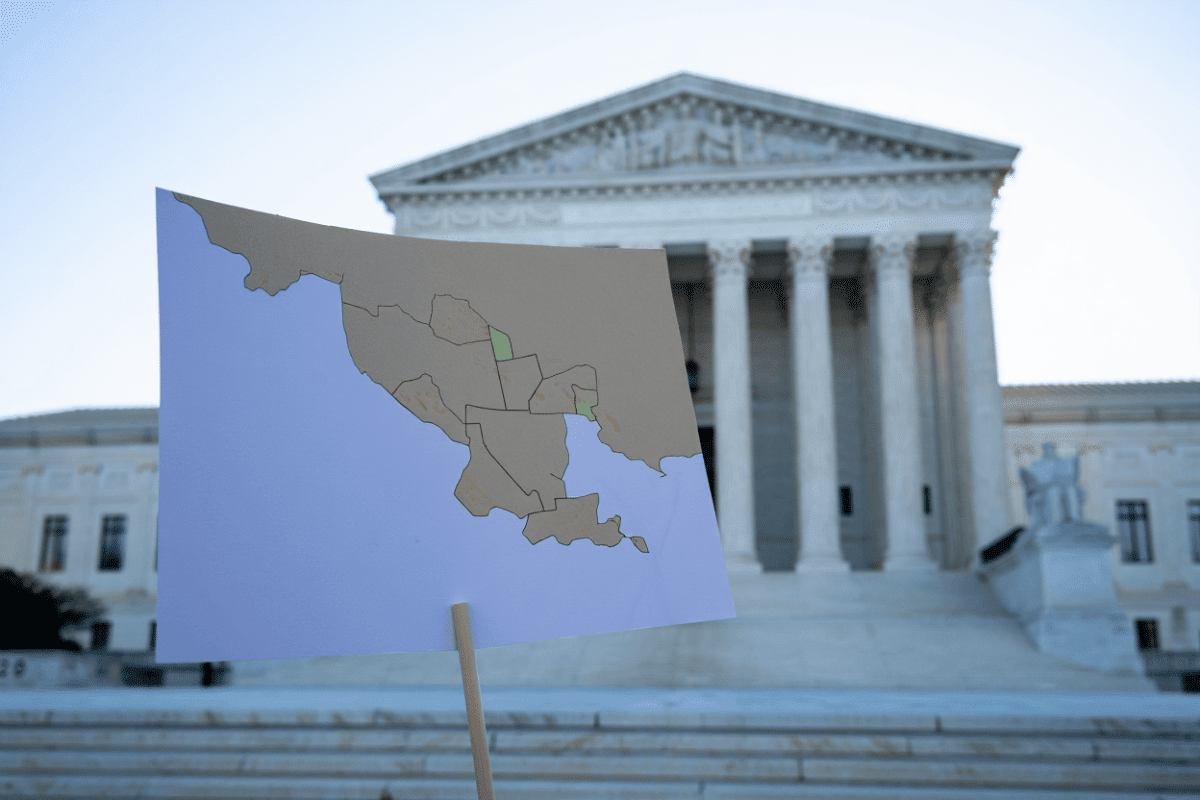
In the most consequential ruling, the Court issued a 6-3 decision on April 29 in Louisiana v. Callais that significantly weakened Section 2 of the Voting Rights Act, the last major pillar of the landmark 1965 civil rights law. The decision made it nearly impossible to challenge racially discriminatory redistricting maps by requiring plaintiffs to prove explicit, race-based discriminatory intent from lawmakers rather than simply demonstrating a discriminatory impact, according to the Associated Press.
The timing of the late-April ruling upended ongoing election cycles and primary processes. It triggered immediate efforts by several southern states—including Louisiana, Florida, South Carolina, and Tennessee—to hastily redraw congressional maps, frequently moving boundaries to favor Republican candidates prior to the November election. Republicans have drawn 16 districts with more favorable lines since last year, compared to six for Democrats, according to The Washington Post.
The Court’s intervention came as it upheld other election rules that also benefited Republicans. On June 29, the justices upheld a Mississippi state law allowing mail-in ballots to be counted if they are postmarked on or before Election Day and received by election officials within five days of the polls closing, a ruling that applied to similar laws in thirteen other states and the District of Columbia. While that decision staved off a scramble to rewrite election protocols before November, it represented a rare setback for Republicans, since mail-in voting has become more popular with Democrats in recent years.
The redistricting and voting rights decisions have already shifted the electoral playing field measurably. Cook Political Report, the nonpartisan election analyst, recalibrated its House projections after the Supreme Court’s landmark Voting Rights Act ruling. Earlier this year, Cook had rated 217 House seats out of 435 as leaning Democratic and projected Democrats needed to win only one of the tossups in November to capture the House. After the Court’s decision, Cook now lists 206 House seats as leaning toward Democrats, meaning Democrats need to win at least 12 of 18 tossups to gain control, according to The Washington Post.
Legal experts said the justices’ intervention amid an election cycle and the pace at which the Court is moving to implement changes that largely benefit one party is all but unprecedented in recent years. UCLA election law expert Richard L. Hasen noted that Chief Justice John G. Roberts Jr., known for his slow, methodical approach, lately appears to be a justice “in a rush.” “The court has been moving toward weakening voting rights, freeing up campaign money and letting partisan actors run loose,” Hasen said, “but the speed with which things are happening is much faster.”
Campaign Finance Ruling Gives GOP Immediate Cash Advantage
The Court’s likely most consequential decision for the midterms came on June 30 when it overturned a quarter-century-old precedent limiting how much each political party can coordinate with the campaigns of individual candidates. By a 6-3 vote, the justices ruled that such limits violate the First Amendment’s guarantee of freedom of speech, according to the Council on Foreign Relations.
Republicans expect to benefit substantially from the ruling. The Republican National Committee currently has $125 million in the bank, while the Democratic National Committee has more debt than cash, according to the CFR. This cash advantage could prove decisive in a competitive midterm environment, though money’s impact depends on how wisely it is spent.
The decisions represent a dramatic continuation of more than a decade of Supreme Court work rewriting election law under Roberts in ways that one analysis found have pushed it to the right of any other court over the past 70 years. The 2010 Citizens United decision loosened campaign finance restrictions on corporations and unions. The 2013 Shelby County ruling knocked down a section of the Voting Rights Act that required states with a history of racial discrimination to get federal pre-clearance to change voting laws. And the 2019 Rucho decision found federal courts could not hear partisan gerrymandering claims.
Democrats have issued bitter recriminations over the rulings. Senator Ruben Gallego of Arizona called it “the most partisan Supreme Court in the history of the nation.” Chief Justice Roberts publicly addressed such criticisms at an appearance in early May, denying politics was a factor in the Court’s rulings, saying “I think at a very basic level, people think we’re making policy decisions… I think they view us as truly political actors, which I don’t think is an accurate understanding of what we do.”
Republicans face an uphill battle in November’s contests because the president’s party historically loses seats in the midterms, and Trump’s low approval rating, the high price of gas, and the unpopular conflict in Iran have been a drag on GOP candidates. But the Supreme Court’s moves have erected a higher hurdle for Democrats to clear. Today, Republicans control 219 seats to Democrats’ 212 in the House, while Republicans enjoy a more solid advantage in the Senate, with 53 seats to 47.
Sources
- The Washington Post — reported on Supreme Court’s dramatic moves reshaping elections and giving GOP a midterm boost, including redistricting impacts and campaign finance ruling
- Council on Foreign Relations — analyzed mail-in voting and campaign spending decisions, Republican cash advantage, and impact on 2026 midterms
- Associated Press — reported on Supreme Court weakening the Voting Rights Act and aiding GOP efforts to control the House
- SCOTUSblog — covered the mail-in ballot ruling and redistricting implications