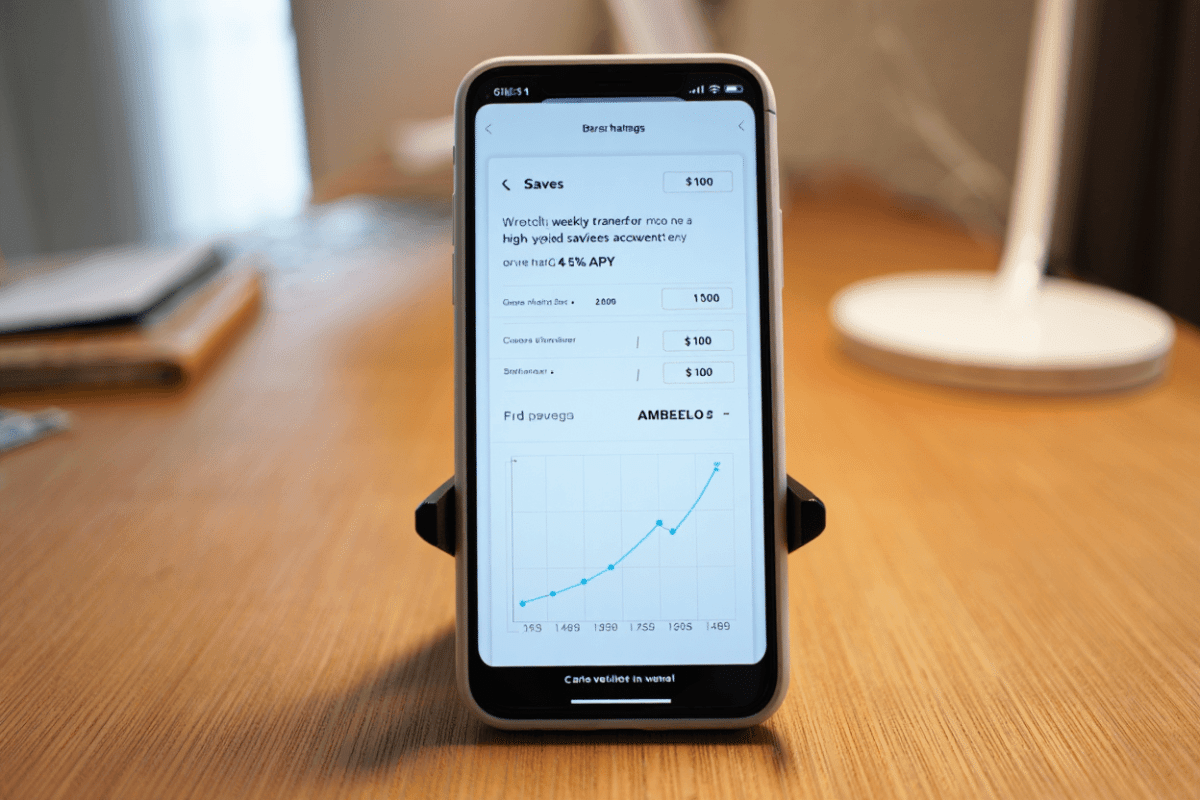
Saving money in 2026 starts with automating transfers to high-yield savings accounts, which currently offer annual percentage yields between 4% and 5%—far above the national average and enough to generate meaningful returns on even modest deposits without requiring constant manual effort.
According to a U.S. Bank survey conducted with Morning Consult, more than 80% of adults indicated they want to save more money, yet many struggle with the discipline required to set funds aside consistently. Automation solves this problem by removing the need for willpower: once transfers are scheduled, they occur without any ongoing action.
Bankrate identifies five key ways to automate savings. The simplest is a direct deposit split, where a portion of your paycheck—whether a fixed dollar amount or a percentage—gets routed automatically to savings before you see it in your checking account. For example, you could designate 10% of a $3,000 paycheck to transfer directly to savings. This “pay yourself first” approach ensures savings happen before discretionary spending tempts you to spend the money.
Recurring savings transfers work similarly: you schedule automatic transfers at predetermined intervals—weekly, biweekly, or monthly—to coincide with payday or another regular date. Bankrate notes that many banks allow you to customize the amount and timing to fit your budget and goals.
For those who prefer a more organic approach, round-up savings programs automatically round up debit or credit card purchases to the nearest dollar and transfer the difference to savings. At Ally Bank, for instance, your change gets rounded up and transferred into a savings account once you’ve accumulated at least $5.
Goal-based transfers let you create separate savings buckets for different priorities—an emergency fund, a down payment on a house, or a vacation—and automate contributions to each one. U.S. Bank’s Savings Goal Getter is one example, allowing customers to set multiple goals and contribute to each on a regular basis. Many modern financial tools now let you label funds by purpose within a single account without needing multiple physical accounts.
The psychological benefit of automation is significant. According to Origin Financial, automation is one of the most reliable ways to build wealth because it removes decision fatigue. When savings happen automatically, you never face the temptation to skip a month or spend the money instead. This consistency creates compound growth: Bankrate emphasizes that regularly contributing month after month allows you to realize the true power of saving, including compound interest, which can put your savings on the fast track.
U.S. Bank’s Derik Farrar, Head of Everyday Banking and Borrowing, advises starting small and letting automation handle the heavy lifting. “Building even modest savings can reduce stress and help you stay on track with other goals,” he said. “Like any habit, consistency is key. Start small, commit to staying on track and let automation do the heavy lifting.” Farrar recommends matching your automation strategy to your specific goals: some people prioritize emergency funds, while others focus on retirement or large purchases.
The current high-yield savings environment makes automation especially attractive. As of July 2026, the best high-yield savings accounts offer rates up to 5% APY, according to Fortune, compared to the national average of roughly 0.4% at traditional banks. Even a modest automated transfer of $100 per paycheck into a 4.5% high-yield account will generate meaningful interest over time without requiring you to remember to make the deposit.
Sources
- Bankrate — Five ways to automate savings, including direct deposit split, recurring transfers, round-up savings, and goal-based transfers; benefits of compound interest from consistent deposits.
- U.S. Bank — Survey showing 80% of adults want to save more; four automation strategies (Pay Yourself First, Stack Up Savings, Spend & Save, Auto Transfers); guidance from Derik Farrar on starting small and using savings buckets.
- Origin Financial — Automation as a reliable wealth-building method that removes decision fatigue; step-by-step guidance on automating savings in 2026.
- Investopedia — Current high-yield savings account rates for July 2026, with OMB Bank at 4.26% APY.
- Fortune — High-yield savings rates up to 5% APY as of July 2, 2026; comparison to national average.
- WSJ — High-yield savings rates up to 4.50% APY for July 2026; automatic transfer features offered by banks like Citi.