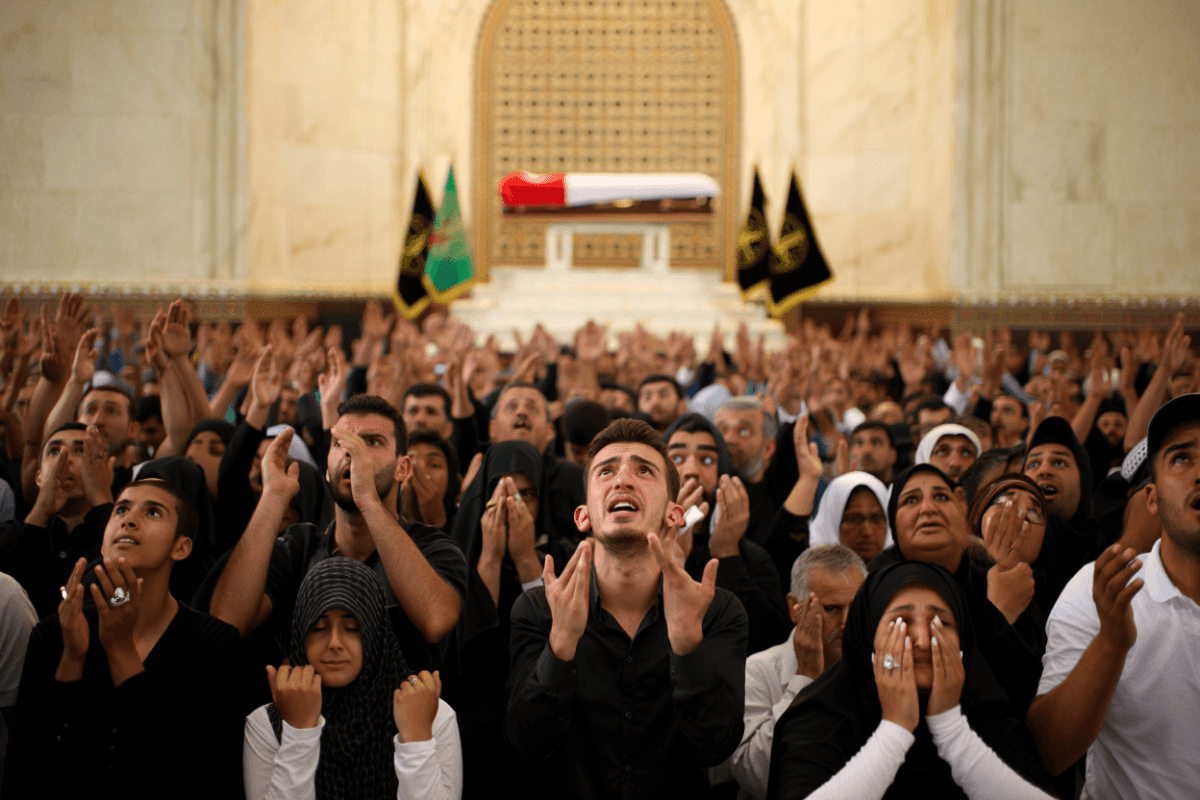
Iran began funeral ceremonies today for Supreme Leader Ayatollah Ali Khamenei, who was killed in U.S.-Israeli airstrikes on February 28, as peace talks between Tehran and Washington paused for the week-long commemoration of the 86-year-old leader’s death and his 37-year rule.
Khamenei’s body arrived at Tehran’s Imam Khomeini Grand Mosalla prayer complex on Friday, where it was laid in state alongside the remains of family members killed in the same strike. The coffin was unveiled to crowds of sobbing supporters, with international delegations from Iraq, Armenia, Pakistan, Russia, and China expected to pay respects. Pakistani Prime Minister Shehbaz Sharif confirmed he would attend the funeral, which Iranian authorities say will draw 15 to 20 million mourners across six days of ceremonies—a scale that would make it the largest state funeral in the country’s history, according to Reuters.
The funeral processions will unfold across multiple countries. After three days of events in Tehran culminating in a main funeral procession on July 6, Khamenei’s body will be transported to Qom on July 7, then to the Shiite holy cities of Najaf and Karbala in Iraq on July 8, before his burial on July 9 in Mashhad, near the tomb of Imam Reza, one of Shiism’s most sacred shrines. Iran has closed Tehran’s airspace during the funeral period and mobilized military and police to control crowds and maintain security.
The funeral comes at a pivotal moment in the israel iran war. Mediators from Qatar and Pakistan announced Thursday that U.S.-Iran peace negotiations would pause during the funeral but resume “at the earliest possible time” afterward. The two sides signed a memorandum of understanding on June 17 committing to complete a final peace deal within 60 days, though analysts say the most contentious issues—including Iran’s nuclear program and control of the Strait of Hormuz—have barely been addressed in the two rounds of talks held so far. President Trump claimed Wednesday that “the denuclearization of Iran is moving along well,” but experts told CBS News that nuclear discussions “do not appear” to have been tackled in depth.
Iran’s chief negotiator, Mohammad Bagher Ghalibaf, called on Iranians to use the funeral as a show of national strength and to “avenge” Khamenei’s death through massive attendance. “The nation’s call for vengeance must ring in the ears of the whole world,” he said, according to CBS News. The funeral also carries symbolic weight in Shiite tradition: Khamenei was not only head of state but, in Iran’s theocratic system, the representative on earth for Shiism’s 12th Imam. His death in an enemy attack invokes the powerful Shiite tradition of martyrdom, which is central to Iranian revolutionary ideology.
The scale of Khamenei’s funeral invites comparison to the 1989 funeral of Ayatollah Ruhollah Khomeini, the founder of the Islamic Republic, which drew an estimated 10 million mourners and is regarded as one of the world’s largest gatherings, according to Al Jazeera and AP News. Khomeini’s funeral was marked by chaotic scenes, with mourners tearing his shroud and his body being airlifted out for later burial. Iran’s authorities appear to have learned from that precedent: they have prepared hotels with 50 percent discounts, converted schools, mosques, and sports halls into housing for mourners, and diverted bus and rail networks to manage the expected crowds, Reuters reported.
Khamenei’s successor, his son Mojtaba Khamenei, has not been seen in public since reportedly being wounded in the same February 28 strike that killed his father. It remains unclear whether he will attend the funeral. The timing of the funeral also reflects the fragile state of the ceasefire: burials are meant to be conducted within a day of death under Islamic law, but the funeral was delayed for four months due to the active war. The interim ceasefire, which took effect in April, enabled the funeral to proceed now.
Sources
- CBS News — details on peace talks pause, Ghalibaf’s statement, analyst commentary on nuclear negotiations
- Reuters — Khamenei’s body arrival at prayer complex, funeral schedule across Iran and Iraq, 15-20 million expected attendance, crowd preparations, Khomeini precedent
- Al Jazeera — 1989 Khomeini funeral drew estimated 10 million mourners
- AP News — 1989 Khomeini funeral as one of world’s largest gatherings
- NPR — Khamenei killed in U.S.-Israeli attack on February 28, 40-day national mourning declared