Oracle stock fell for a seventh straight session on Tuesday, closing at $146.55 and down 0.82%, as a fresh SEC filing raised new concerns about the company’s massive AI infrastructure buildout and its ability to manage mounting debt. The streak marks a continuation of the steepest weekly decline Oracle has posted since August 2001, when the dot-com bust was in full swing—the stock fell 19% in the week ending June 27, according to CNBC.
The immediate trigger was Oracle’s fiscal 2026 annual report, filed with the Securities and Exchange Commission on June 23. Buried in the risk factors section is language the company did not carry a year ago, warning that if Oracle cannot secure data center capacity at affordable rates or fails to plan its infrastructure buildout properly, its profitability could decline. The company also added a separate warning that its AI products might not perform as expected, which could hurt both reputation and revenue.
Oracle’s capital expenditure figures underscore the scale of that risk. The company spent $55.66 billion on capital expenditures in fiscal 2026, surpassing its own $50 billion target by $5.7 billion. That spending spree produced negative free cash flow of $23.69 billion for the year, even as operating cash flow rose 54% to $32 billion. The gap between operating cash and free cash reveals the hidden cost of the AI buildout: Oracle is burning through cash faster than operations can replenish it.
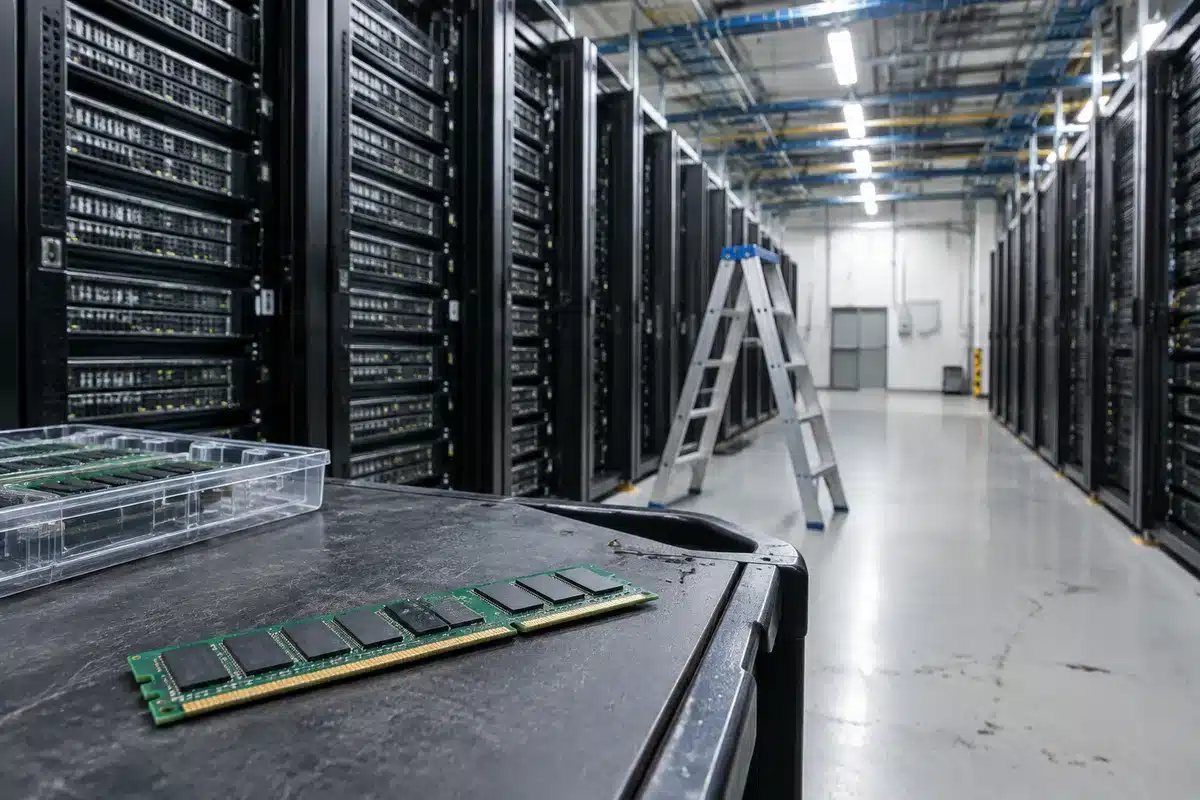
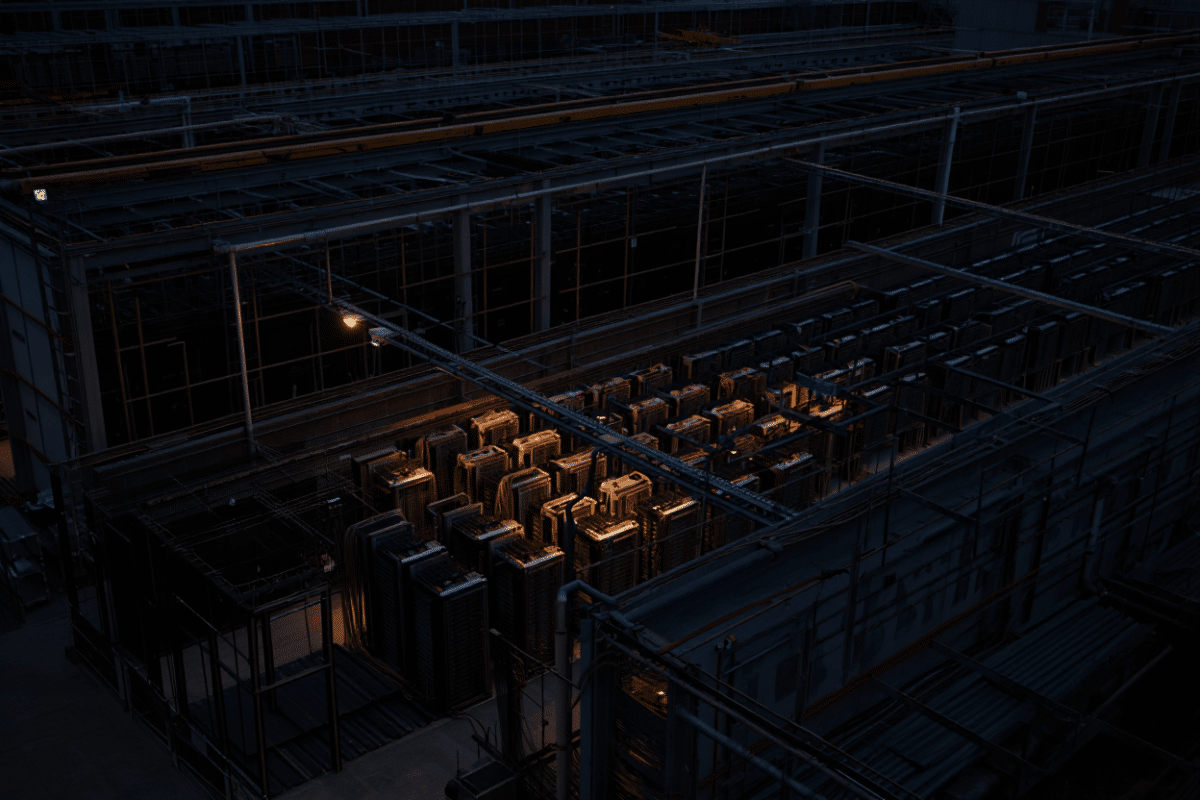
The company has committed nearly $250 billion to long-term data center leases running 15 to 20 years, according to Fortune reporting. Those lease payments do not shrink if AI demand slows. Crucially, Oracle doesn’t begin paying rent to data center landlords until facilities are built out and fully functional, which provides some structural breathing room during construction. But once the lights flip on, the 15-to-20-year clock starts ticking whether a tenant is ready to occupy the server racks or not. Oracle also plans to raise $40 billion to $50 billion in debt and equity during 2027 to keep funding the buildout.
At the center of this strategy sits a single customer: OpenAI. Oracle signed a roughly $300 billion multiyear deal to supply data center capacity to the AI leader, according to Fortune. That contract anchors the growth story Oracle has told analysts for the past year. It also means a large share of Oracle’s future cloud revenue depends on one counterparty’s demand holding up. If OpenAI’s compute needs shift or its financing tightens, Oracle absorbs that exposure directly through the leases and debt already on its books.
The concentration risk is not lost on credit agencies. Both Moody’s and S&P flagged the OpenAI contract as a material concern when reviewing Oracle’s credit rating, citing counterparty concentration risk and increased leverage. The seven-day losing streak looks less like a market rejecting Oracle’s AI thesis and more like investors pricing execution risk—whether the company can convert its massive backlog and customer commitments into revenue before the debt burden becomes unmanageable.
Sources
- TheStreet / AOL — Oracle’s seventh consecutive session decline, SEC filing risk language, $250 billion data center lease commitments, and OpenAI contract concentration risk.
- CNBC — Oracle’s worst week since 2001 dot-com bust, 19% weekly decline ending June 27, 2026.
- Reuters — Oracle capital expenditure of $55.66 billion in FY2026, surpassing $50 billion guidance, and plans to raise $40 billion in debt and equity in 2027.
- ERP Today / Oracle Investor Relations — Negative free cash flow of $23.69 billion in FY2026 despite $32 billion in operating cash flow.
- Fortune — Oracle’s $300 billion multiyear deal with OpenAI and $250 billion long-term data center lease commitments.