Russian pro-war military bloggers have claimed that troops in Ukraine are surviving just 20 to 35 minutes on the frontline, with drones now the primary cause of extreme casualty rates in the Russia-Ukraine drone combat conflict.
The claim, circulated on Russian “Z-channels” on Telegram and amplified by the Ukrainian ASTRA channel, appeared in posts saying “the average life expectancy of a Russian assault soldier on the front line is 20–35 minutes,” according to TVP World on June 29, 2026. The same posts noted that the time from training ground to deployment had shrunk to “10 days to 3 weeks.”
Historian Peter Frankopan cited these figures in Foreign Policy, linking the attrition rates directly to drone strikes. He described drones as “the primary killing machines in this war,” reshaping the future of combat. Frankopan noted Western intelligence estimates of Russian casualties running at more than 30,000 per month, with total losses potentially exceeding one million killed or wounded since the full-scale invasion began in 2022.
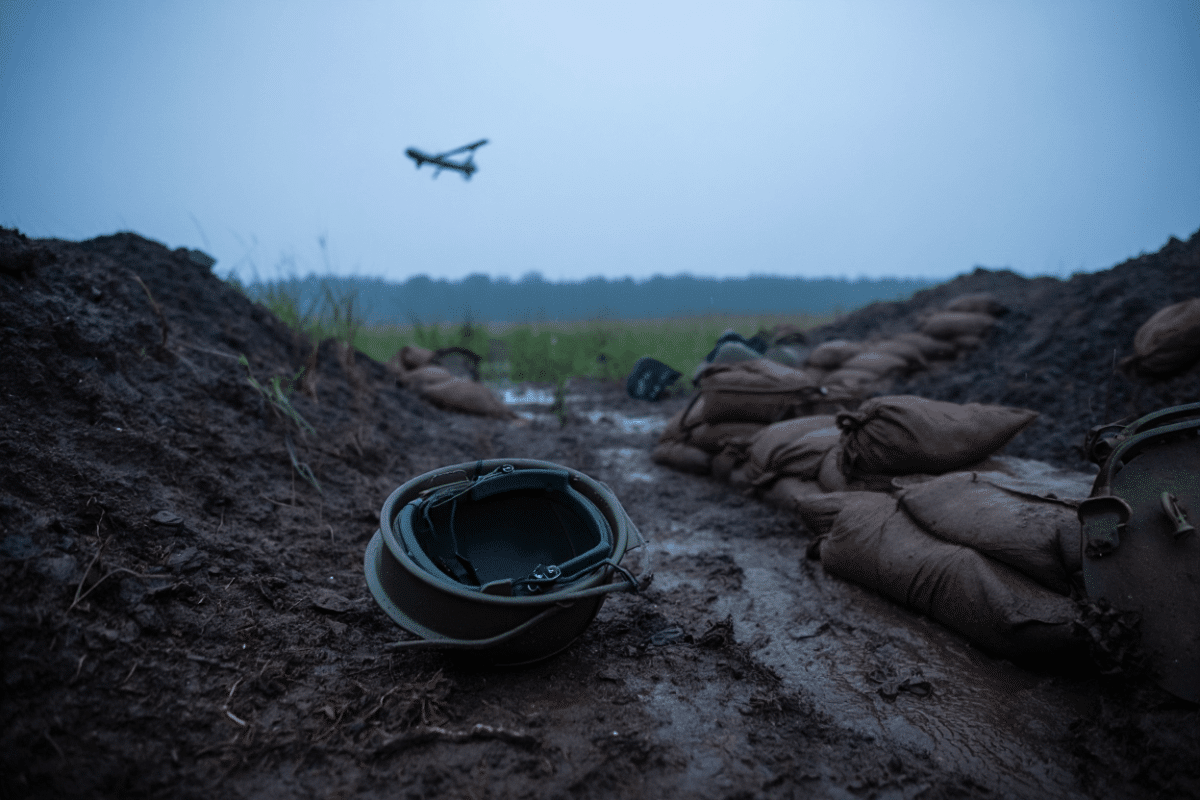
Drones now account for more than 80 percent of Russian losses, according to CBS News reporting on June 29, 2026. The devices have transformed frontline dynamics, with Ukrainian forces using FPV (first-person view) drones and mid-range strike systems to target both assault troops and rear-area supply lines. A January 2026 report noted that Ukrainian drones hit 107,000 targets in December, with Ukraine’s military stating that four out of five Russian targets destroyed or damaged in 2025 were taken out by a drone.
Russian military bloggers also described a war in which combat survival rates have collapsed so severely that many soldiers are “wounded or killed in the rear” before ever reaching the front line. One Z-channel, “Notes of a Veteran,” warned that “in autumn there will either be peace or mobilization,” advising conscription-age men to prepare an “emergency backpack.” Another channel claimed mass mobilization notices were being distributed across Russia.
The Institute for the Study of War assessed that further Russian mobilization would not significantly alter battlefield dynamics unless Moscow finds ways to counter Ukrainian drone strikes deep in its rear areas. The institute warned that many newly mobilized troops “may simply never reach the front line.” This reflects a broader challenge: Russia’s ability to replace losses has been strained by the speed and scale of drone-driven casualties, forcing the Kremlin to rely on financial incentives—including large sign-up bonuses and debt relief—to attract new recruits.
Sources
- TVP World — Russian military bloggers’ claims of 20-35 minute survival times, training timelines, and Western intelligence casualty estimates
- CBS News — Drones accounting for more than 80 percent of Russian losses
- Kyiv Post — Ukrainian drone casualty figures for 2025 and 2026
- Institute for the Study of War — Assessment of mobilization effects and rear-area vulnerability