The Supreme Court on Monday delivered a split decision on presidential power, blocking President Trump’s attempt to fire Federal Reserve Governor Lisa Cook in a 5-4 vote while simultaneously expanding his authority to remove officials at other independent agencies. The ruling marks a significant moment in the court’s ongoing struggle to define the boundaries of executive control over the federal government.
Trump became the first president in the Federal Reserve’s 112-year history to attempt to fire a governor when he terminated Cook in August 2025 over allegations that she illegally designated properties in Michigan and Georgia as primary residences to obtain better mortgage financing terms. Cook has denied the allegations and has not been criminally charged. She contended that Trump’s real frustration stemmed from the Fed’s refusal to lower interest rates more aggressively.
Chief Justice John Roberts, writing for the majority in the Cook case, ruled that Trump failed to provide her adequate process to contest the allegations before removal. “To be clear, the ultimate question of whether the President can remove Cook for cause will depend in part on the underlying facts,” Roberts wrote. “In this opinion, we have not addressed the facts, as they have yet to be found or analyzed under the relevant legal standards.” The case now returns to lower courts for further proceedings, with Cook remaining in her position.
The decision protects the Federal Reserve’s statutory independence, a structure Congress established in the Federal Reserve Act of 1913, which limits presidential removal of governors to cases of “cause.” The law does not explicitly define what constitutes cause, leaving that question for courts to resolve. The court concluded that the Fed’s unique structure and historical role in monetary policy warranted different treatment from other independent agencies, effectively carving out a Fed exception to its broader expansion of presidential power.
In a parallel ruling issued the same day, however, the court handed Trump a major victory by overturning the 1935 precedent of Humphrey’s Executor v. United States. The justices allowed Trump to fire Federal Trade Commission Commissioner Rebecca Kelly Slaughter without cause, granting him broader authority to remove officials at agencies that were designed to operate independently of the White House. The court’s logic in the FTC case applies to other independent agencies with similar removal restrictions, including the Consumer Product Safety Commission, the Surface Transportation Board, and the Equal Employment Opportunity Commission.
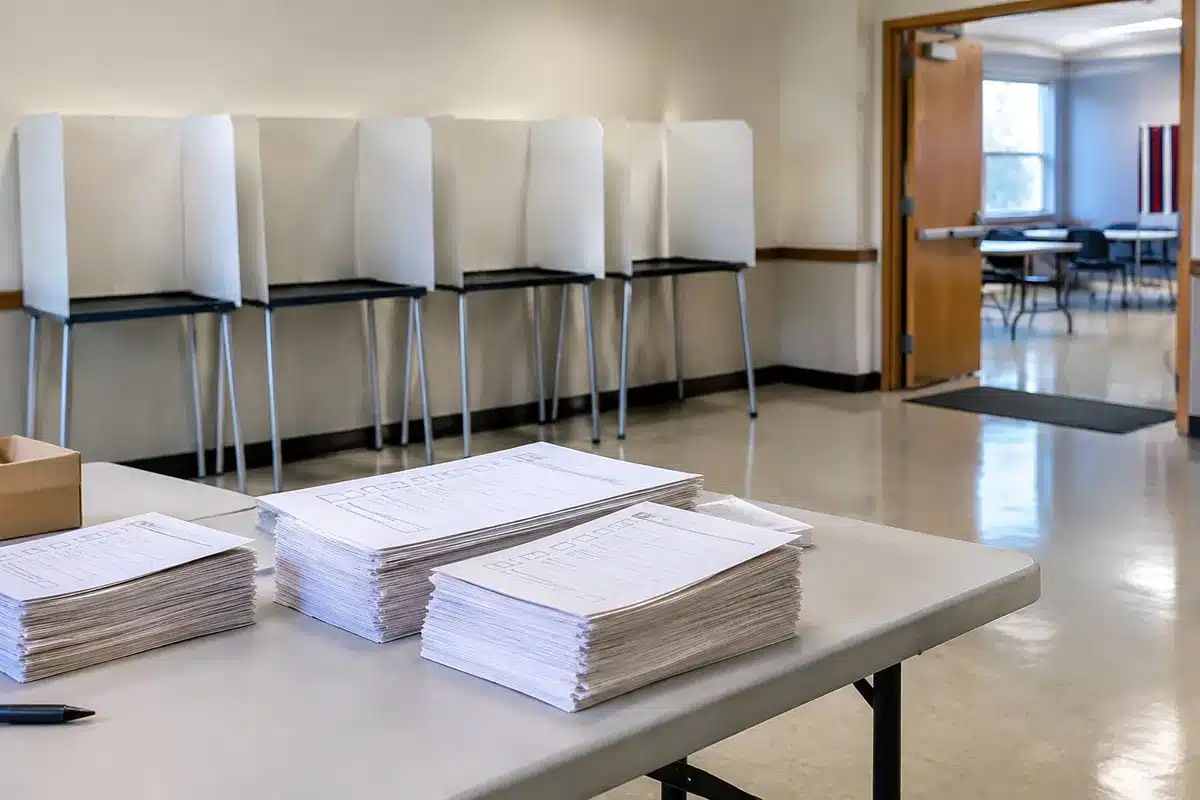
Separately on Monday, the Supreme Court upheld state laws allowing mail-in ballots postmarked by Election Day to be counted if received up to five days later. In a 5-4 decision, the court rejected a Republican-led challenge to Mississippi’s grace period, with Chief Justice Roberts and Justice Amy Coney Barrett joining the three liberal justices in the majority. Conservative Justices Samuel Alito, Clarence Thomas, Neil Gorsuch, and Brett Kavanaugh dissented. The ruling affirmed that roughly 30 states and the District of Columbia may continue counting late-arriving ballots, a practice that benefits voters who rely on mail voting ahead of November’s congressional elections.
Trump had issued an executive order in March to restrict mail-in ballots nationwide, but a federal judge in Boston blocked its implementation on June 25. Trump has vowed to end mail-in voting before the midterms, claiming without evidence that the practice invites fraud. Democratic voters have historically relied more heavily on mail-in ballots than Republican voters, making the dispute a central election-year battleground.
The rulings reflect the conservative-majority court’s inconsistent approach to Trump’s assertions of executive power. While the justices expanded his ability to control most independent agencies, they declined to dismantle the Fed’s removal protections and upheld voting access provisions that Trump opposed. The decisions underscore the court’s view that the Federal Reserve occupies a special constitutional position that warrants protection from direct presidential control, even as the court has systematically weakened safeguards at other agencies over the past several years.
Sources
- The Hill — Supreme Court’s 5-4 decision blocking Trump’s firing of Lisa Cook, Chief Justice Roberts’s reasoning on process, Trump’s August 2025 firing announcement, and Cook’s denial of wrongdoing.
- NBC News — The simultaneous rulings on Lisa Cook and the FTC, the overturning of Humphrey’s Executor precedent, and the court’s application of its logic to other independent agencies.
- Maryland Daily Record — Supreme Court’s 5-4 upholding of Mississippi’s mail-in ballot grace period, the 5-day counting window, and approximately 30 states with similar policies.
- The New York Times — Details on Mississippi’s mail-in ballot law and the postmark-based counting process.