The Supreme Court of the United States dealt President Donald Trump two significant losses on June 29, rejecting his bid to fire Federal Reserve Governor Lisa Cook and upholding state laws allowing mail-in ballots postmarked by Election Day to be counted up to five days later.
In a 5-4 decision, the court blocked Trump from immediately removing Cook while litigation over her firing continues in lower courts. Under the Federal Reserve Act, Trump can remove Fed governors only “for cause”—a statutory protection Congress created to insulate the central bank from political pressure. Trump had alleged Cook made misrepresentations on mortgage applications, but Cook argued she was denied due process and that her firing violated the Fed’s historical independence.
Cook said in a statement that the ruling “affirmed the principle that the central bank must be independent from political interference and guided by evidence when making its policy decisions.” She added: “This was never about mortgage documents signed years before I became a Federal Reserve governor. It was an attempt to remove me on a manufactured pretext because I refused to bow to political pressure and continued to set interest rates based only on what would best serve the American people.”
The Federal Reserve’s independence rests on a design Congress implemented to prevent monetary policy from becoming a political tool. Fed governors serve 14-year terms and can be removed only for cause—a standard far higher than the “at will” removal Trump sought. This structure has been upheld since the Banking Act of 1935, which established the Fed’s modern leadership framework.
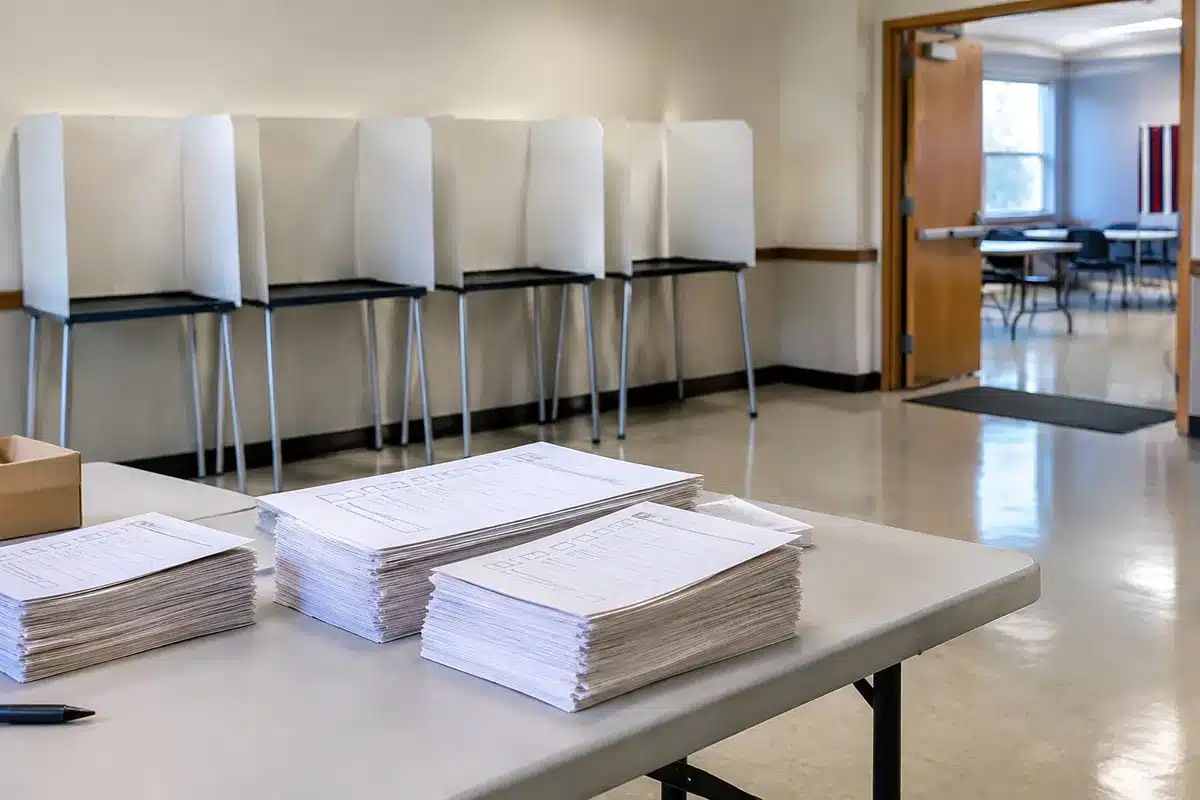
In the second ruling, also 5-4, the court upheld a Mississippi law allowing election officials to count mail-in ballots that are postmarked by Election Day but received up to five business days later. The decision is a defeat for Trump’s persistent campaign to curtail mail-in voting. Trump had signed an executive order last year requiring all votes be received by Election Day during federal elections, but lower courts quickly blocked it.
Eighteen states and territories, including Mississippi, have such grace periods. Most are Democratic-led states like California, Illinois, and New York. A dozen additional states extend grace periods for ballots returning from overseas, including from military members. These periods have historically provided voters time to navigate Postal Service delays and unforeseen issues like weather events.
Washington Secretary of State Steve Hobbs noted that more than 250,000 ballots postmarked on time arrived after Election Day during the 2024 election. “Had this rule been in effect,” he said, “those voices would have been silenced, especially in rural areas where mail delivery can take longer.” NAACP President Derrick Johnson called the ruling “a win for our democracy,” while voting rights advocates urged Congress to establish nationwide protections for mail-ballot voters.
Sources
- NPR — Supreme Court upholds grace periods for mail-in ballots, reporting the 5-4 decision upholding Mississippi law and impact on 18 states with grace periods
- USA Today — Supreme Court decisions on mail-in ballots and Lisa Cook, confirming both 5-4 rulings and Cook’s statement on Fed independence
- The Guardian — Live coverage of Supreme Court decisions, detailing Trump’s efforts to fire Fed governors and restrict mail-in voting