The Supreme Court said Friday that Justice Samuel Alito’s verbal reaction to Justice Sonia Sotomayor was based on a “misunderstanding” by the conservative justice, clarifying a tense courtroom exchange that unfolded the previous day. “Justice Alito was notified in advance by Justice Sotomayor’s chambers that she would be reading a dissent from the bench,” a court spokesperson said in a statement. “It was a misunderstanding on Justice Alito’s part.”
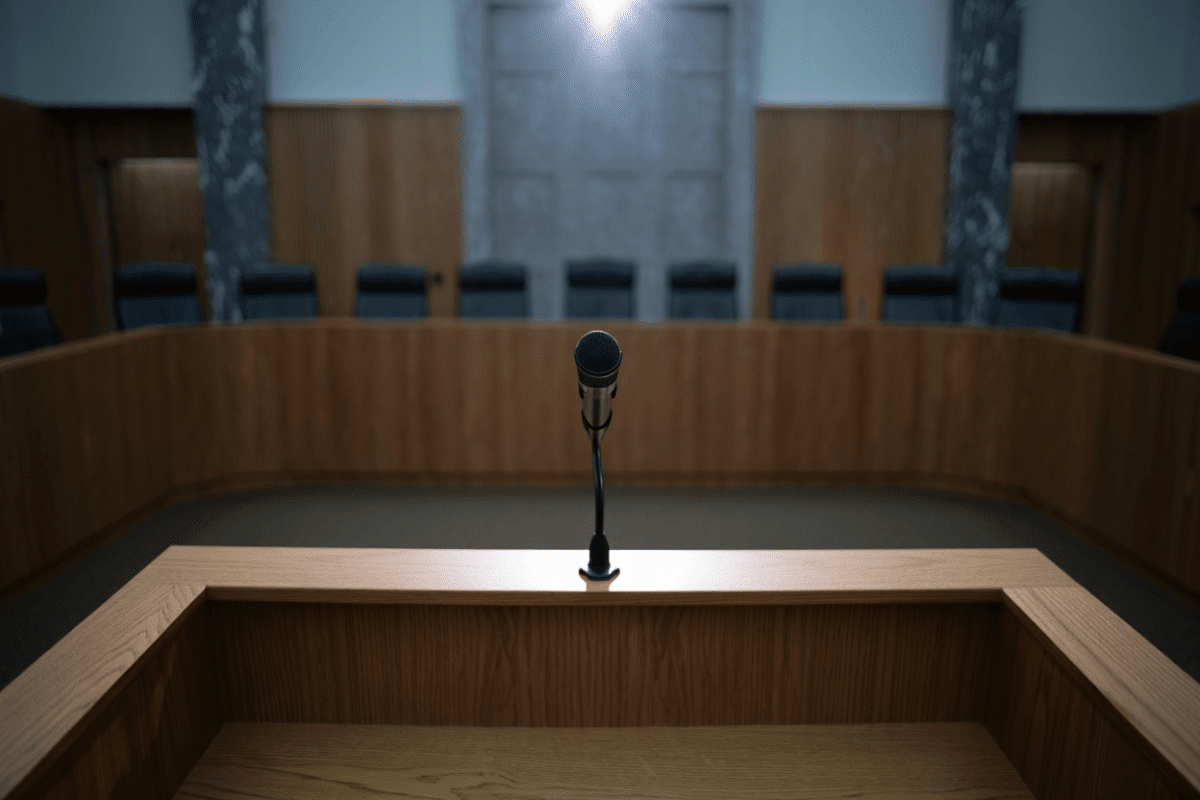
The highly unusual exchange occurred Thursday during the Supreme Court’s announcement of opinions in an asylum case. After Sotomayor finished reading a roughly 10-minute oral dissent, Alito responded from the bench, saying, “There’s much that I would have added to my bench statement had I known there would be a dissent read,” according to CNN and SCOTUSblog. The remark, delivered with visible frustration, broke from the normal protocol of opinion announcements, where justices typically maintain composure regardless of disagreement.
The case, decided 6-3 along ideological lines, involved a “metering” policy that allows federal immigration agents to turn away asylum seekers at the U.S.-Mexico border before they set foot on American soil. The policy was first used during the Obama administration and expanded under Trump’s first term. Alito’s majority opinion held that foreign nationals must physically be on U.S. soil to begin the asylum process, reversing the position of lower court judges who said refugees in the process of arriving could begin screening.
Sotomayor’s dissent drew on historical precedent to challenge the ruling. She opened by recounting the story of the M.S. St. Louis, the ship that carried approximately 900 Jewish refugees fleeing Nazi Germany in 1939 but was turned away by the United States, Cuba, and Canada. After the ship returned to Europe, more than 250 of those refugees were later killed in the Holocaust. Sotomayor argued that U.S. asylum protections established after World War II were designed to prevent such outcomes, and that the metering policy violated those principles by physically blocking asylum seekers from entering ports of entry.
In his spontaneous rebuttal, Alito noted that the policy had been used by administrations of both parties and described it as “orderly and humane.” He also pointed out that the policy had been employed to manage overwhelming conditions at ports of entry. According to reporting from SCOTUSblog, Alito appeared to pause expectantly at the end of his initial opinion summary, suggesting he may have known Sotomayor planned to dissent, though the court’s statement Friday indicated he claimed not to have been adequately notified.
The moment marked a rare departure from Supreme Court decorum. While oral dissents from the bench are uncommon—occurring only in cases where justices feel compelled to underscore strong disagreement—a majority opinion author responding verbally to a dissent is even rarer. According to SCOTUSblog, the closest historical parallel came in 2015 in Glossip v. Gross, when Justice Antonin Scalia delivered a brief rebuttal from the bench after Justice Stephen Breyer read a dissent challenging the constitutionality of capital punishment.
Alito has a documented history of expressing visible emotion during oral arguments and opinion announcements. Most notably, in 2013, his pronounced eye-rolling during Justice Ruth Bader Ginsburg’s opinion reading made headlines. At the 2010 State of the Union address, cameras caught him mouthing “not true” in response to President Barack Obama’s characterization of the Citizens United ruling.
The exchange underscores ongoing tensions at the Supreme Court as it nears the end of its term. The justices are set to hand down additional opinions Monday and are expected to wrap up the current session next week. Earlier this year, it was Sotomayor who issued an unusual public apology in April after she criticized Justice Brett Kavanaugh for his writing in an immigration case, saying “I regret my hurtful comments.”
Sources
- CNN — Supreme Court statement clarifying Alito was notified in advance; Alito’s quoted remarks from the bench; context on the asylum case and metering policy
- SCOTUSblog — Firsthand courtroom account of the exchange; Sotomayor’s dissent details and the M.S. St. Louis reference; historical precedent of Glossip v. Gross
- The Washington Post — Background on the metering policy’s use under Obama and Trump administrations
- The Hill — Sotomayor’s dissent language calling the majority “egregiously wrong”