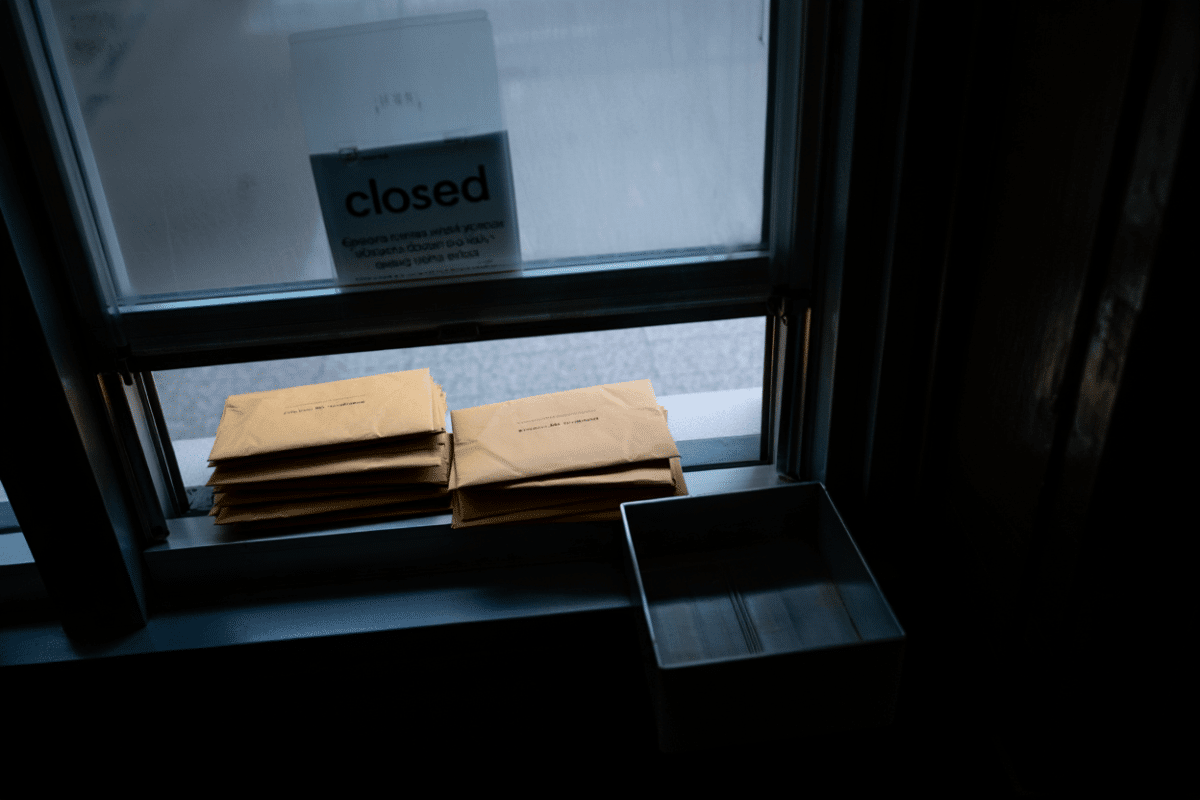
Postmaster General David Steiner confirmed Wednesday that under a proposed rule, the U.S. Postal Service will not deliver mail ballots in states that refuse to provide lists of voters who requested absentee ballots, linking ballot delivery to state compliance with a Trump administration demand for voter data.
Steiner made the statement during testimony before the Senate Homeland Security and Governmental Affairs Committee, answering directly when Senator Gary Peters asked whether USPS would refuse to deliver election mail if states refuse to divulge their voter lists. “Under our proposed regulation, no,” Steiner said, meaning USPS would not deliver ballots without the lists.
The proposed USPS mail ballot rule stems from President Donald Trump’s March 2026 executive order that aimed to restrict mail-in voting. According to the proposal, states would be required to send USPS a list of voters who have requested mail-in or absentee ballots at least 30 days before ballots are sent out under state law. If voters aren’t on the list, they will not receive a ballot, effectively creating a federal registration list for absentee voters.
Peters, the ranking Democrat on the committee, told Steiner the proposal would “coerce” states—particularly those like Oregon where mail voting is the default form of voting—into providing the Trump administration with sensitive voter data. “This is basically a back-door way for the federal government to get voting information that states control under the U.S. Constitution,” Peters said. “You are going to make a decision that people cannot vote by mail. That’s unacceptable.”
All 47 Democratic senators wrote a letter to the Postal Service on Wednesday urging the agency to drop the plan, calling it an “unconstitutional and illegal attempt to transform USPS into an election administration agency controlled by the White House and President Trump.” Democratic Senator Margaret Hassan urged Steiner to “immediately” withdraw the rule, calling it “blatantly illegal” and designed to “reduce participation in our democracy.”
Steiner defended the proposal by saying it would mandate best practices for election mail, but Peters noted the difference between recommended best practices and a punitive mandate tied to ballot delivery. Steiner also asserted that USPS is nonpartisan and has no role in administering elections, though he criticized a recent printing error in Maryland’s primary election during the hearing, suggesting the proposed rule would have prevented it—a claim election experts have disputed.
Multiple federal courts are already hearing lawsuits challenging Trump’s March executive order and the USPS proposal. A federal judge in Massachusetts last week allowed pro-voting groups and Democratic state attorneys general to proceed in challenging Trump’s order, ruling it would directly harm states’ ability to carry out elections if fully implemented. In response to a question from Senator Hassan, Steiner said the Postal Service would comply if a court blocks the proposal.
Sources
- Democracy Docket — Steiner’s testimony confirming USPS will not deliver mail ballots without voter lists, details of the proposed rule and its 30-day requirement, and background on Trump’s March 2026 executive order.
- Reuters — Steiner’s Senate testimony, the proposal’s requirement for voter names and barcodes, and the letter from all 47 Democratic senators opposing the plan.
- The New York Times — Confirmation of Steiner’s testimony and the proposed rule’s link to mail ballot delivery.