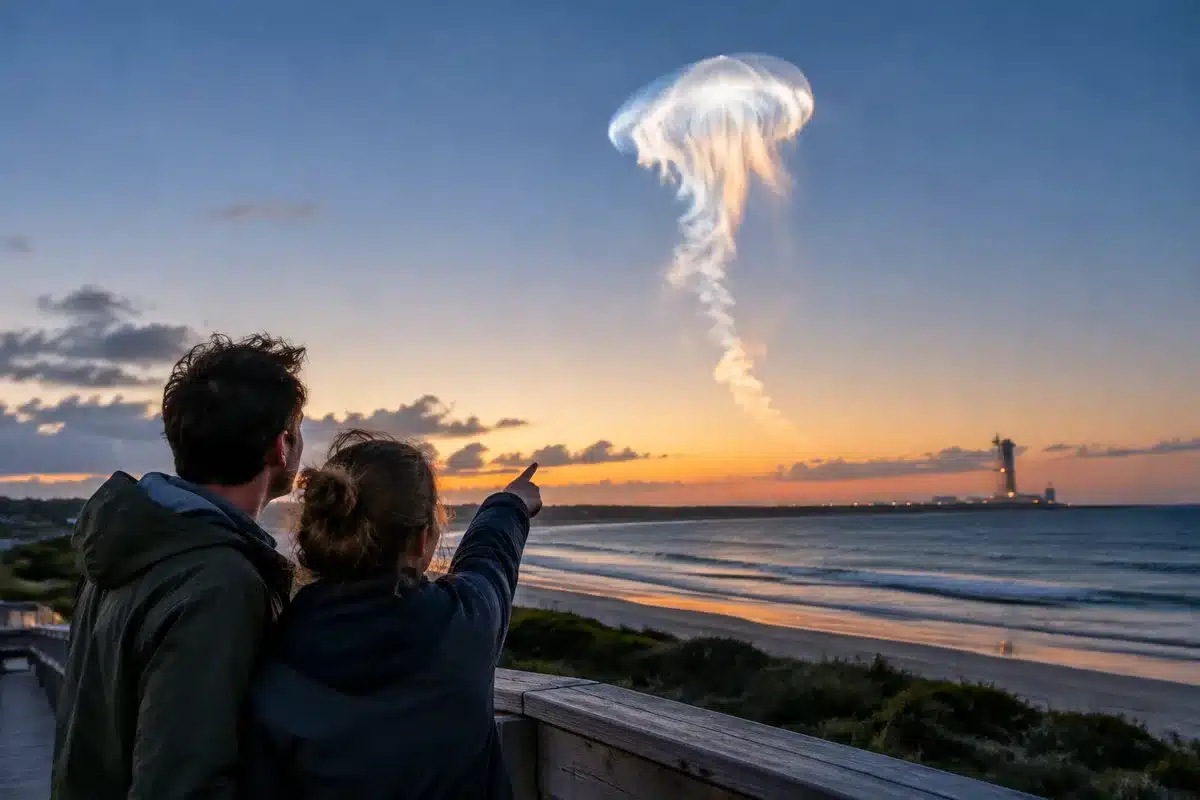
SpaceX launched its first Starfall reentry capsule on a Falcon 9 rocket from Cape Canaveral Space Force Station on Tuesday, June 23, advancing the company’s plan to deliver cargo and enable manufacturing in space. The launch occurred at 6:53 a.m. EDT, and the booster landed successfully on the drone ship ‘A Shortfall of Gravitas’ in the Atlantic Ocean, marking the 628th booster landing for SpaceX to date.
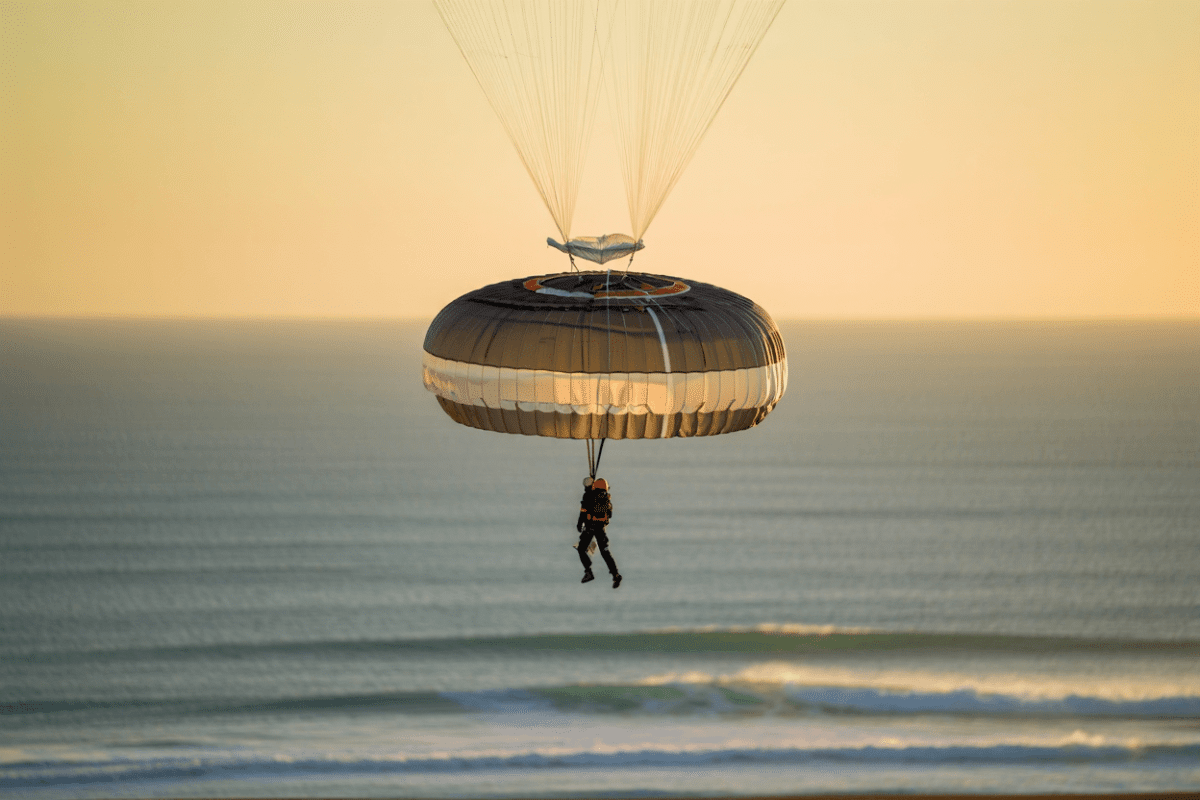
Starfall is a disk-shaped, uncrewed reentry capsule designed to return up to 1,000 kilograms of cargo from low-Earth orbit, according to Federal Aviation Administration documents. The capsule itself weighs approximately 2,100 kilograms when empty and uses a flat, low-profile structure that diverges from traditional conical capsule designs, maximizing payload efficiency and structural capacity.
SpaceX has kept the program largely private, withholding details about the mission’s payload and upper-stage operations from its public broadcast. The company did not disclose how many Starfall capsules were aboard this demonstration flight, though an FAA environmental assessment indicated SpaceX intended to perform two Starfall reentries to demonstrate capabilities for future transport and delivery of goods through space.
The Starfall capsule uses cold-gas attitude-control thrusters to orient itself in orbit but lacks a main propulsion system, meaning it relies on external deployment for de-orbit operations. After reentry, the capsule’s heat shield separates to deploy three parachutes—a drogue, pilot, and main landing parachute—for soft recovery in the Pacific Ocean, similar to SpaceX’s Dragon cargo spacecraft.
SpaceX’s stated purpose for Starfall centers on enabling point-to-point cargo delivery through space and creating a self-sustaining in-space manufacturing market. FAA documents describe the vision as transforming Starfall into a “proliferated successor” to the International Space Station, supporting what the company calls a self-sustaining manufacturing economy in space by offering access to microgravity, orbital loiter, and safe return as a service.
The capsule’s design supports in-orbit manufacturing for high-value products such as pharmaceuticals and semiconductors that benefit from microgravity conditions. SpaceX’s initial public offering materials included graphics depicting a satellite bus with slots for up to four Starfall capsules, labeled “In-orbit manufacturing,” signaling the company’s ambition to scale the capability across multiple missions.
The Falcon 9 first stage, booster B1078, completed its 29th flight on this mission, having previously launched NASA’s Crew-6, USSF-124, and other payloads. The booster’s successful landing on the drone ship marked the 157th recovery on that vessel.
Sources
- Spaceflight Now — live coverage of the Starfall Demo mission launch, booster landing, and technical specifications from FAA environmental assessment
- Space Daily — Starfall capsule design details and 1,000-kilogram payload capacity
- Tech Times — disk-shaped capsule design and cargo return specifications
- Satnews — FAA approval details and capsule dimensions
- WFTV — mission objective to test faster, cheaper cargo return from space