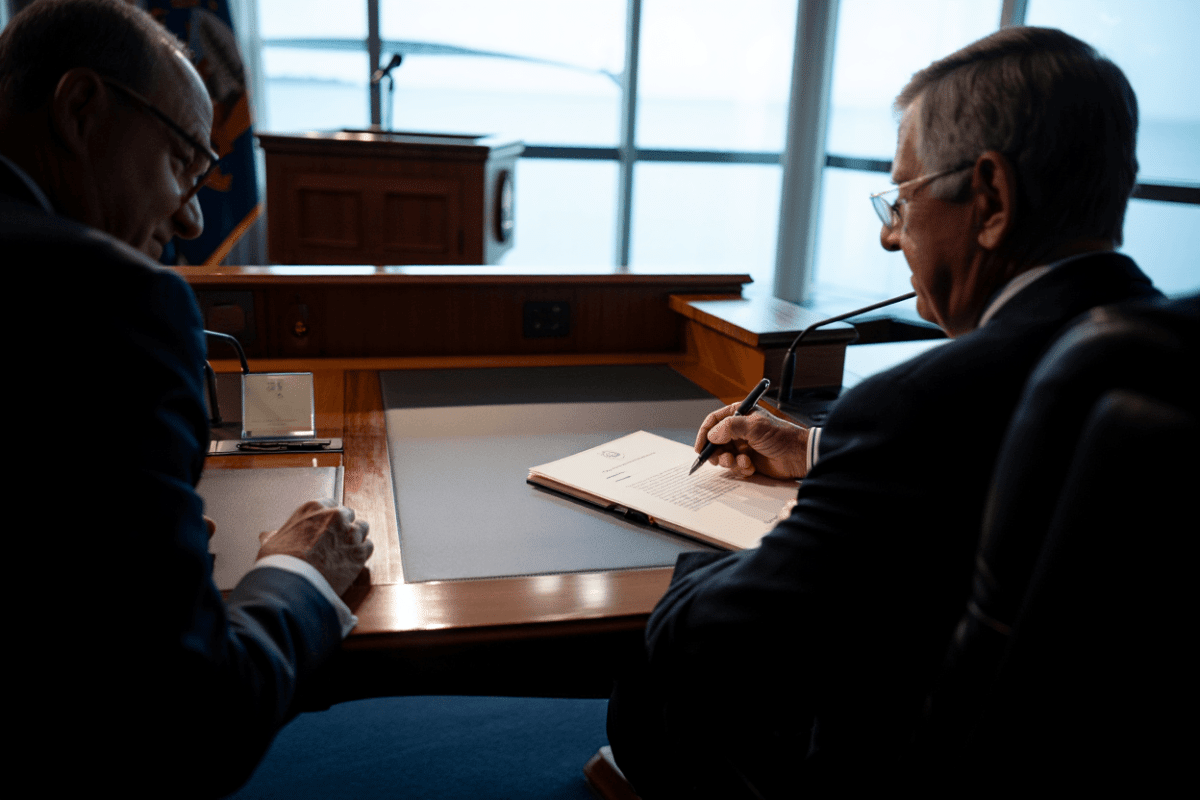
President Donald Trump announced a deal with Iran on June 14 to end the four-month war, ordering an immediate halt to the U.S. naval blockade of the Strait of Hormuz that has choked global oil shipments since April. The agreement marks a dramatic reversal from Trump’s military posture just days earlier, when he threatened fresh strikes on Iranian targets.
Trump confirmed the ceasefire agreement in a statement, saying the memorandum of understanding between the United States and Iran “is now complete,” according to PBS NewsHour. The deal calls for the Strait of Hormuz to reopen to unrestricted maritime traffic immediately upon signing, ending the blockade that has disrupted international commerce for two months.
Pakistan’s Prime Minister Shehbaz Sharif confirmed the agreement had been reached, telling media that a “final, agreed-upon text of the peace deal” between Washington and Tehran was in place, according to Al Jazeera. The deal follows months of failed negotiations and military escalation that began on February 28, 2026, when the U.S. and Israel launched coordinated strikes on Iran, according to The New York Times.
The war started with rising tensions over Iran’s nuclear program and ballistic missiles. The U.S. and Israel launched initial airstrikes on February 28, which Iran answered with its own missile and drone attacks, according to Britannica. By April 8, the two sides agreed to a two-week ceasefire mediated by Pakistan, but those talks collapsed when Trump ordered the naval blockade on April 13 after peace negotiations in Islamabad failed, according to NPR.
The proposed deal centers on reopening the Strait of Hormuz and lifting the blockade on Iranian ports. According to Reuters, the memorandum of understanding calls for the strait to reopen and the U.S. naval blockade to be lifted. The agreement also involves a 60-day ceasefire extension during which the strait would remain open to all shipping, according to Axios. Trump stated that the Strait of Hormuz would reopen “to all” immediately once the deal is signed, according to CBS News.
The blockade had strangled global energy markets. The Strait of Hormuz is one of the world’s most critical oil shipping routes, and Iran’s closure of it in response to the U.S. blockade compounded supply disruptions. When Trump announced the deal, oil prices extended losses, suggesting markets had been pricing in a resolution.
The path to the agreement was volatile. In early June, the U.S. and Iran exchanged military strikes, with Trump threatening new bombing campaigns before canceling them hours later, according to Radio Free Europe/Radio Liberty. The ceasefire had remained fragile for months, with both sides accusing each other of violations.
Sources
- PBS NewsHour — Trump’s announcement of the deal and order to end the naval blockade
- Al Jazeera — Confirmation of the agreement and Trump’s statement on the Strait of Hormuz reopening
- CBS News — Trump’s confirmation the deal is “complete” and the blockade end
- Reuters — Details on the memorandum of understanding and the Strait of Hormuz reopening
- Axios — Terms of the 60-day ceasefire extension and strait reopening
- The New York Times — Timeline of the war beginning on February 28, 2026
- Britannica — Background on the war’s origins in tensions over Iran’s nuclear program
- NPR — The April 8 ceasefire and April 13 blockade announcement
- Radio Free Europe/Radio Liberty — Trump’s threat and cancellation of new strikes in early June